Wedding Cake Serving Calculator
Cake Planning Guide
Based on 2025 industry data: 68% of couples choose 3-layer cakes for standard weddings. 3-tier cakes serve 80-100 guests (vs. 40-60 for 2-tier), but require careful planning for smaller celebrations.
Your Cake Calculator
Recommendation
Enter guest count to see recommendation
Layer Sizes & Costs
- Standard 3-tier 10-8-6 inches
- Typical Serving 80-100 people
- Cost Range €550-€800
- 2-tier Alternative 8-6 inches
- Serving Capacity 40-60 people
- Cost Difference +€150-€200
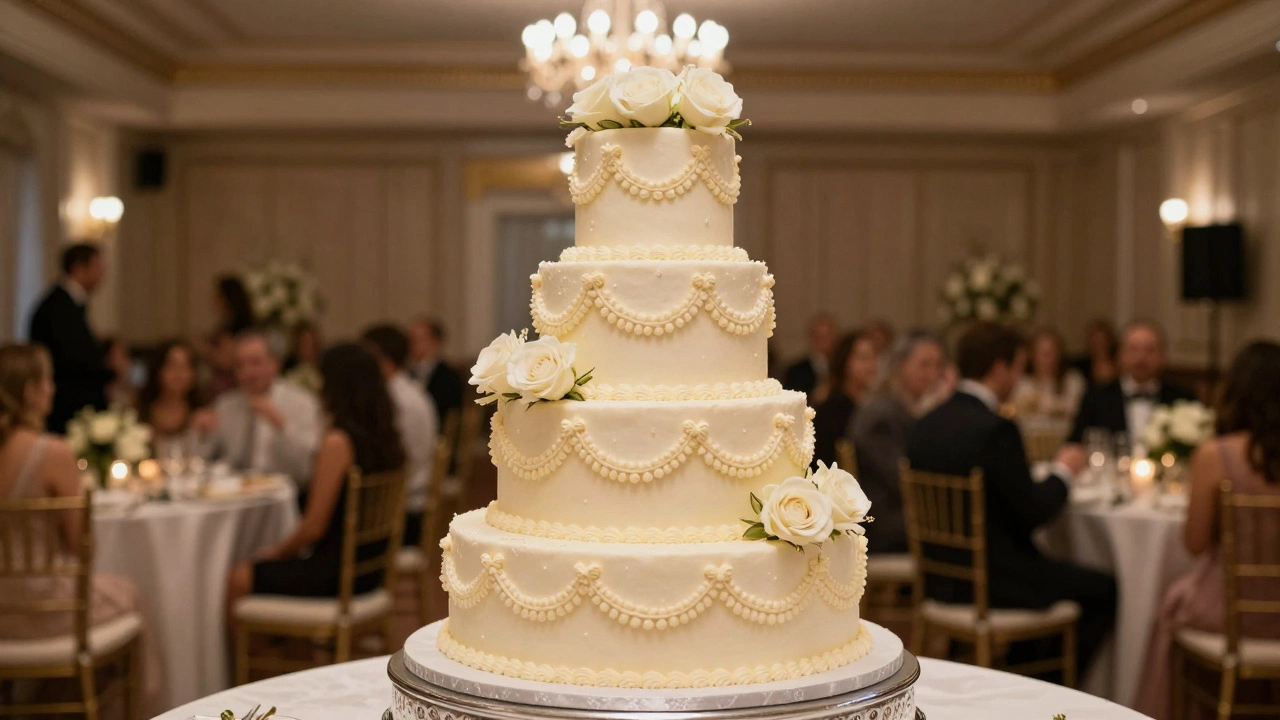
When you’re planning a wedding, the cake isn’t just dessert-it’s a centerpiece. And one of the first questions couples ask is: Are most wedding cakes 2 or 3 layers? The answer isn’t simple, but it’s practical. Most wedding cakes in 2026 are 3 layers. Not because it’s tradition, but because it works better for the way people celebrate now.
Why 3 Layers Are the New Standard
Five years ago, two-layer cakes were common. They looked elegant, cost less, and were easier to transport. But things changed. Couples started wanting more visual impact. Guests expect photos that pop on Instagram. A two-tier cake can look small next to a hundred people, especially in a ballroom or garden setup. Three layers give height, presence, and room for detail.
Bakers in Dublin, London, and New York have all seen the shift. A 2025 survey of 200 wedding cake designers found that 68% of clients now request three tiers. Only 22% stick with two. The rest go for four or more-but those are outliers, usually for very large weddings or themed events.
Three layers also mean more cake. A standard 3-tier cake serves 80-100 people. That’s the sweet spot for most weddings today. Two tiers? You’re looking at 40-60 servings. That’s fine for intimate elopements, but most couples have 100+ guests. Running out of cake isn’t a moment you want to relive.
What Each Layer Size Typically Looks Like
Not all three-layer cakes are the same. The most popular sizes follow a clear pattern:
- Bottom tier: 10 inches
- Middle tier: 8 inches
- Top tier: 6 inches
This combination gives a balanced, tapered look. It’s visually pleasing and structurally stable. The bottom tier holds the weight, the middle adds volume, and the top is often saved for the couple’s first anniversary. Some bakers swap the sizes-like 12-10-8-for a more dramatic effect, but 10-8-6 is the default for a reason.
Two-tier cakes usually go 8-6 or 9-7. They’re lighter, cheaper, and easier to move. But they don’t offer the same wow factor. A 6-inch top tier on a 9-inch base? It looks like an afterthought. A 6-inch top on a 10-inch base? It looks intentional.
Cost Difference Between 2 and 3 Layers
Yes, three layers cost more. But not as much as you think. On average, a two-tier cake runs €400-€600 in Ireland. A three-tier? €550-€800. That’s a €150-€200 jump. But here’s the catch: you’re getting 30-50% more cake. That’s not just more servings-it’s more flavor options.
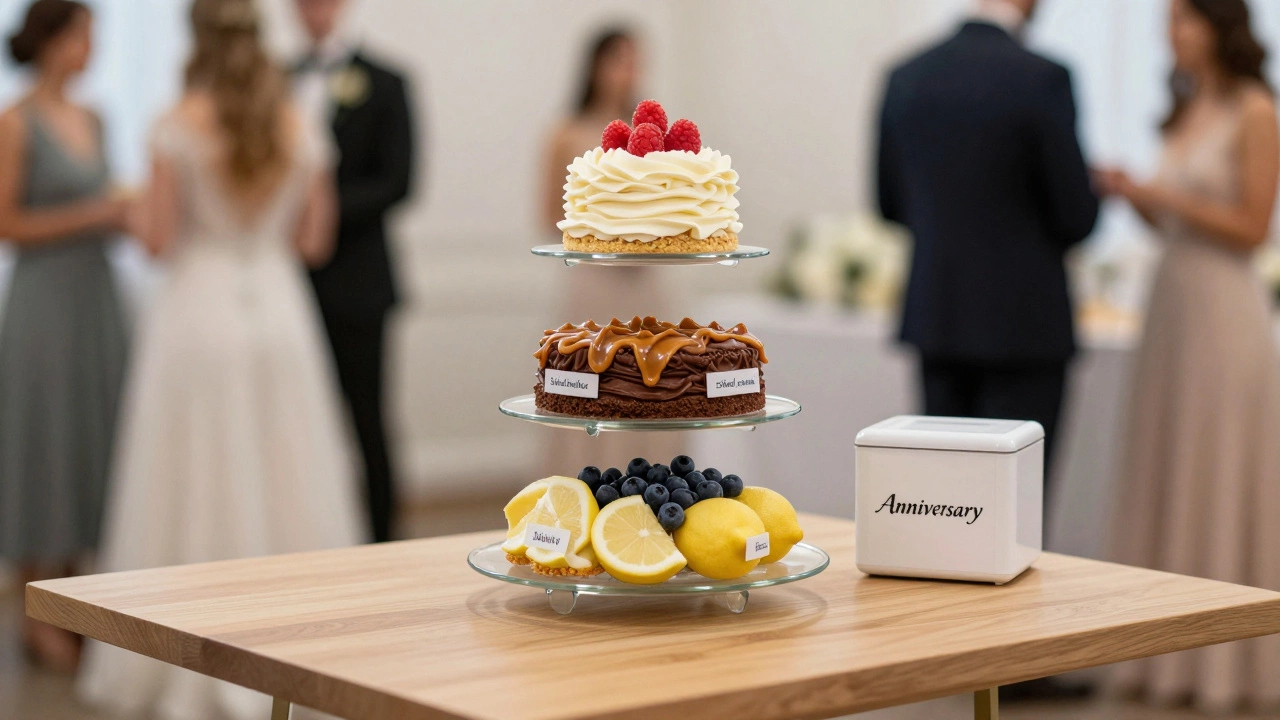
Most couples now pick two or three flavors across the tiers. Vanilla sponge with raspberry filling on the bottom, chocolate with salted caramel in the middle, lemon curd and blueberry on top. That kind of variety doesn’t fit neatly into two layers. Three tiers make it possible.
Some bakers charge extra for fondant or intricate piping. But the tier count itself? That’s mostly about cake volume and structural support. The labor doesn’t double when you add a third layer-it just increases by about 25%.

When a Two-Layer Cake Still Makes Sense
Three layers aren’t always better. Sometimes, less is more.
- Small weddings under 50 guests
- Outdoor venues with wind or uneven ground
- Couples on a tight budget
- Non-traditional weddings-think brunch, beach, or backyard
One baker in Galway told me about a couple who got married on a cliffside. They wanted a cake, but the wind was too strong for a tall structure. They went with a two-tier, 8-inch and 6-inch cake. It looked beautiful, stayed put, and served everyone perfectly. Sometimes, practicality wins.
Also, if you’re serving other desserts-cupcakes, macarons, a dessert bar-a two-tier cake can be enough. You’re not relying on it to be the only sweet option. That changes the math.
What Bakers Wish Couples Knew
Most cake makers have the same advice: don’t just pick a tier count because it’s popular. Think about your guests, your venue, and your budget together.
Here’s what they see over and over:
- Couples who order a 3-tier cake but only serve 40 people-then waste half the cake.
- Couples who pick a 2-tier cake thinking it’s cheaper, then end up ordering extra cupcakes to make up the difference.
- Couples who don’t realize the top tier is meant to be saved-and end up cutting it the same day.
Ask your baker: “How many people will this serve?” and “Can I freeze the top tier?” Those two questions will save you stress later.
Also, don’t assume bigger means better. A beautifully decorated two-tier cake with fresh flowers and hand-piped details can look more luxurious than a plain three-tier with no design. The tiers are just the skeleton. The art is in the details.
What’s Trending in 2026
This year, more couples are mixing tier counts with unexpected shapes. Oval tiers. Hexagons. Asymmetrical stacks. But even with those wild designs, the base is still usually three layers.
Flavors are getting bolder too. Matcha, tiramisu, spiced pear, and even savory options like rosemary olive oil cake are showing up. Three layers give you the space to experiment. Two? You’re stuck with vanilla and chocolate.
And don’t forget the cake topper. It’s not just a figurine anymore. Some couples use mini plants, framed photos, or handwritten notes. A three-tier cake gives you more surface area to make it meaningful.
Final Answer: Is 2 or 3 Layers More Common?
Yes, most wedding cakes today are three layers. It’s the default because it fits the modern wedding: bigger guest lists, more photos, more flavor, and more meaning. But it’s not the only right choice.
If you’re having a small, intimate celebration-or you’re budget-conscious-a two-tier cake still looks beautiful and serves its purpose. The key isn’t the number of layers. It’s whether the cake matches your day.
Talk to your baker. Show them your venue photos. Tell them how many people you’re serving. Let them help you decide-not Instagram.
Is a 3-layer wedding cake too big for a small wedding?
Not necessarily. A 3-layer cake can be made in smaller sizes-like 6-5-4 inches-to serve 30-40 people. It still looks impressive without overwhelming the space. The key is scaling the tiers down, not skipping them.
Can I have a 2-layer cake and still serve 100 guests?
Yes, but you’ll need to supplement it. Most bakers recommend adding a separate dessert table with cupcakes, cookies, or mini pies. A 2-tier cake serving 80 people is already pushing its limit. For 100, you’ll need backup.
Does the top tier always get saved for the anniversary?
It’s a tradition, but not a rule. Many couples eat the top tier the same day, especially if they’re not planning to freeze it. If you want to save it, tell your baker in advance-they’ll wrap it specially and give you freezing instructions.
Are 3-layer cakes harder to transport?
They’re heavier, yes, but professional bakers use special cake boxes, dowels, and stabilizers. Most wedding cake makers include transport in their price. Just make sure your venue has a flat, stable surface for setup.
What’s the most popular flavor combination for 3-tier cakes?
Vanilla sponge with raspberry filling on the bottom, chocolate with salted caramel in the middle, and lemon curd with fresh berries on top. It’s a crowd-pleaser: sweet, tangy, and rich without being overwhelming. But seasonal flavors like spiced apple or orange blossom are rising fast in 2026.