Bridal Party Beauty Cost Estimator
Use this tool to estimate your total beauty budget based on current market averages. Adjust the quantities and options below to see a real-time breakdown.
Estimated Breakdown
Enter details and click calculate to see costs.
Walk into any wedding planning group chat and you will likely see one question pop up more than others: who is actually paying for the hair and makeup? It is a topic that can turn a fun planning session into an awkward silence. The short answer is that there is no single legal rule, but there are strong cultural expectations that have shifted in recent years. If you are the bride, you are not automatically on the hook for everyone’s face. If you are a bridesmaid, you should not assume it is free either. Understanding how bridal makeup costs work helps you set boundaries before the big day arrives.
The Traditional Expectation vs. Modern Reality
Historically, the bride or her family covered the beauty services for the entire bridal party. This was seen as part of the "host" experience. You were hosting the event, so you provided the look. However, wedding budgets have changed dramatically over the last decade. With average wedding costs rising, many couples now view professional hair and makeup as a personal expense rather than a host-provided amenity.
In modern practice, the split often looks like this:
- The Bride: Almost always pays for her own makeup and hair. This is non-negotiable in most professional contracts.
- The Bridesmaids: Typically pay for their own services, unless the bride explicitly offers to cover them as a gift.
- The Mother of the Bride/Groom: Usually covers their own costs, though some families include them in the bride's package.
The key here is communication. A surprise bill sent to a bridesmaid three weeks before the wedding is a fast way to create friction. A clear conversation six months out prevents resentment.
How Much Does Professional Bridal Makeup Cost?
To figure out who should pay what, you need to know what the service actually costs. Prices vary significantly based on location, artist reputation, and complexity. In major cities like Dublin, London, or New York, rates are higher than in rural areas due to overhead and demand.
| Service Type | Average Cost (USD/EUR) | What's Included |
|---|---|---|
| Bride's Full Package | $450 - $800 / €400 - €700 | Trial run, wedding day service, touch-up kit, travel fee |
| Bridesmaid Service | $150 - $250 / €130 - €220 | Wedding day application only (no trial usually) |
| Mother/Family Member | $100 - $180 / €90 - €160 | Lighter application, less time per person |
| Travel Fee | $50 - $150 / €45 - €130 | Charged if venue is outside the artist's local zone |
Notice the significant gap between the bride's cost and the bridesmaids' cost. The bride pays more because she requires a trial session to perfect the look, longer application time for intricate details, and often a premium product line. Bridesmaids usually get a streamlined version of the same style. This price difference is why it makes financial sense for bridesmaids to pay for themselves; they are receiving a different tier of service.
Who Should Pay for the Trial Run?
This is where confusion often lies. A trial run is a rehearsal where the makeup artist tests products and techniques on the bride's skin. It ensures the final look holds up under camera lights and lasts through tears and hugs.
Here is the standard breakdown:
- The Bride: Always pays for her own trial. It is a core part of her contract.
- The Bridesmaids: Rarely pay for trials. Most artists do not offer individual trials for attendants unless requested and paid for separately. Instead, the bride might ask the artist to demonstrate the bridesmaid look during her own trial, or the bridesmaids might agree to a "group trial" at a reduced rate if they want to see the exact shade match beforehand.
- The Photographer: Often attends the bride's trial to ensure the makeup translates well on camera. They rarely pay the artist directly but may be present to give feedback.
If you are a bridesmaid and your bride suggests a group trial, expect to pay half the cost of a full application, or a flat fee around $50-$75. It is worth it if you have sensitive skin or specific allergies, but it is not mandatory.
Negotiating with Your Makeup Artist
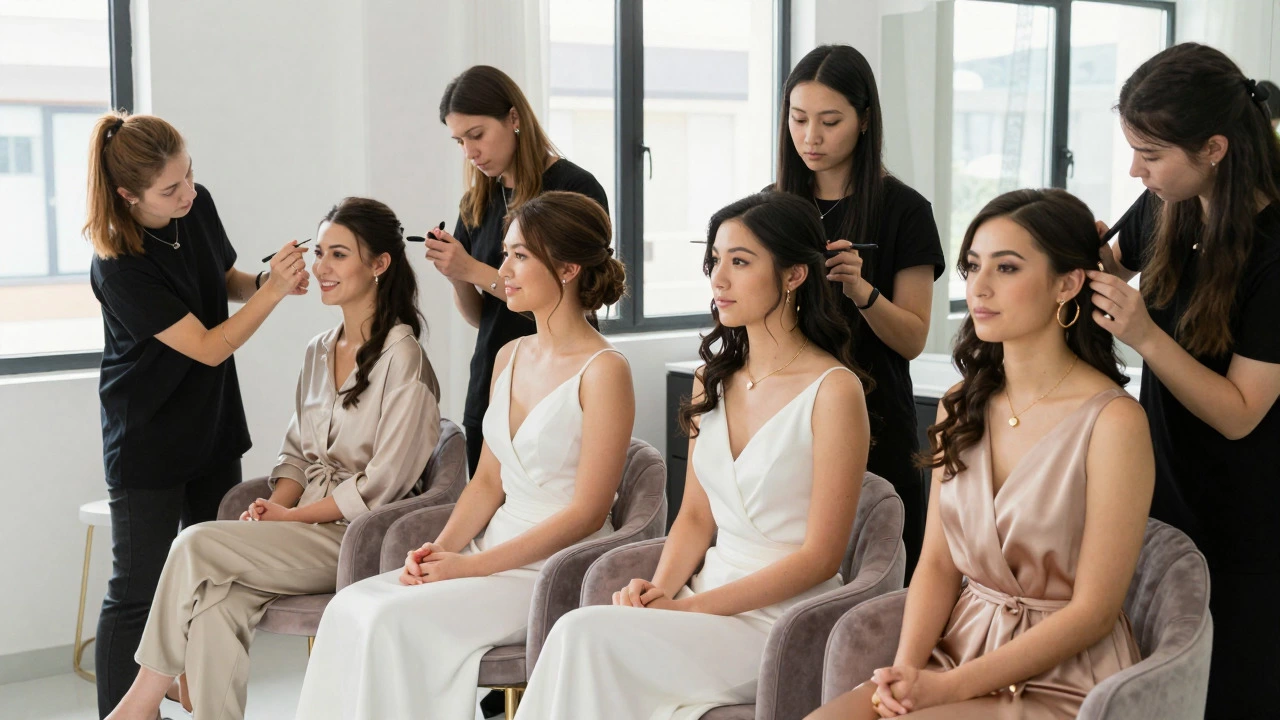
Many brides try to bundle services to save money. This is smart, but you need to understand how artists calculate their time. An artist charges for hours, not just faces. If you book five bridesmaids, the artist needs to block out four to five hours of chair time, plus setup and cleanup.
Here are some negotiation tips that keep relationships intact:
- Book Early: Artists fill up 6-12 months in advance. Booking early locks in current prices and avoids rush fees.
- Offer a Referral Bonus: Some artists offer a small discount if you refer another couple or post about them on social media. Ask politely if this applies.
- Clarify Travel Fees: If your venue is far from the city center, confirm if the travel fee is a flat rate or hourly. In Dublin, for example, travel to County Wicklow might incur a higher fee than staying within the city limits.
- Ask About Minimums: Some artists require a minimum number of clients (e.g., 3 people) to book a date. If you only have two bridesmaids, you might hit this minimum and pay slightly more per head to secure the date.
Etiquette: How to Handle the Conversation
The biggest mistake couples make is assuming everyone knows the rules. They don't. Here is how to handle the money talk without hurting feelings.
If you are the bride:
"Hi girls, I’ve booked [Artist Name] for our wedding. Her rate for the bridal party is $200 per person. Since we’re all doing similar looks, I’d love for us to book together. Do you mind covering your own share? I’ll send you the invoice link."
If you are a bridesmaid:
"Thanks for booking [Artist Name], she looks amazing! What’s the rate for us? I’m happy to pay my portion directly so we can sort out the logistics."
Notice that neither example is vague. Specific numbers prevent awkwardness later. If the bride wants to treat the bridesmaids, she should say so explicitly: "I’d love to cover your makeup as a thank-you gift." Otherwise, assume it is self-pay.
Common Pitfalls to Avoid
Even with good intentions, things can go wrong. Watch out for these common issues:
- The "Touch-Up Kit" Surprise: Some artists charge extra for a mini-kit (lipstick, powder, blotting papers) to take home. Confirm if this is included in the base price or an add-on ($20-$40).
- Product Preferences: If you have a favorite brand, tell the artist early. Using unfamiliar products can lead to allergic reactions or poor longevity. High-end brands like MAC, NARS, or Charlotte Tilbury are standard in the industry, but drugstore alternatives are acceptable if communicated upfront.
- Skin Prep Neglect: Makeup sits better on prepped skin. Hydrate your face the week before. Dehydrated skin causes foundation to crack and settle into fine lines, making the artist’s job harder and potentially increasing the time (and cost) required.
What If the Budget Is Tight?
Not every wedding has a luxury beauty budget. If money is tight, consider these alternatives:
- DIY with Help: One skilled friend does the makeup while others do hair. This saves thousands but requires trust and practice.
- Student Artists: Beauty schools often offer discounted services for portfolio building. The quality can be excellent, but book well in advance and check reviews.
- Split the Difference: The bride pays for the bridesmaids’ makeup, but the bridesmaids pay for their own hair. Or vice versa. This splits the cost roughly 50/50.
Whatever you choose, document it in writing. A simple email confirmation saying "Bride covers makeup, Bridesmaids cover hair" prevents 90% of disputes.
Does the bride have to pay for her mother's makeup?
It depends on family dynamics. Traditionally, the mother of the bride might be included in the bride's package, but in modern weddings, mothers often pay for themselves. If the bride wants to treat her mother, she should communicate this clearly. Otherwise, assume the mother will pay her own fee, which is typically lower than the bride's rate.
Can bridesmaids use their own makeup products?
Yes, but bring them to the trial or inform the artist beforehand. Mixing products can sometimes cause compatibility issues. If you have a specific lipstick or foundation you love, let the artist know so they can plan the workflow. However, for the actual application, the artist will likely use their professional kit to ensure consistency and speed.
How much tip should I give my makeup artist?
A tip of 15-20% is standard in the US and increasingly common in Europe. For a $200 service, a $30-$40 tip is appropriate. If the artist traveled far or worked late, a larger tip is appreciated. Cash is preferred for tips as it avoids processing fees.
What happens if the makeup artist runs late?
Good artists build buffer time into their schedule. If they are running late, they should communicate immediately. If the delay affects your photographer’s schedule, check your contract for liability clauses. Most artists are reliable, but having a backup plan (like a trusted friend who can do quick touch-ups) is wise.
Is it rude for the bride to pay for everyone?
No, it is considered generous. However, some bridesmaids may feel indebted or uncomfortable. If you choose to pay, frame it as a gift rather than an expectation. Say, "I'd love to cover your makeup as a thank-you," rather than "You don't have to pay." This removes pressure.