Wedding Day Makeup Readiness Calculator
Check Your Routine
Select the options that match your current wedding makeup plan to see how well you are prepared.
Ready to Check
Select your options above to analyze your bridal makeup strategy against professional standards.
You’ve probably seen the photos. The bride looks like she stepped out of a magazine, glowing under harsh flash photography, while her best friend looks... well, normal. You might wonder if it’s just better lighting or if there is actually a different product in that makeup bag. There is. And it’s not just about using more expensive cream.
The difference between bridal makeup and your everyday look isn’t just aesthetic; it’s structural. It comes down to longevity, photography compatibility, and emotional durability. If you treat a wedding day like a Tuesday night dinner, you will be wiping away foundation by the third dance. Let’s break down exactly what changes when you switch from daily wear to wedding-ready artistry.
The Longevity Factor: Surviving 14 Hours
Your regular makeup is designed for an eight-hour workday or a six-hour social event. You might reapply lipstick after lunch. You might blot your nose at 3 PM. Bridal makeup has no such luxury. A typical wedding day involves getting ready, a ceremony, cocktail hour, dinner, speeches, dancing, and often a send-off. That is easily 12 to 16 hours.
Regular makeup is formulated for daily comfort and easy removal. It often relies on lighter textures that breathe with the skin. Bridal makeup, however, is built like armor. It requires a specific layering technique known as "baking" or heavy setting to lock products in place against sweat, tears, humidity, and hugging relatives.
- Everyday: Touch-ups are expected and acceptable.
- Bridal: Zero touch-ups allowed until the reception, if ever. The look must stay intact through crying, eating, and outdoor weather.
If you have oily skin, this is where the difference hits hardest. Regular foundations oxidize (turn orange) or slide off within four hours. Bridal artists use silicone-based primers and powder-setting techniques that create a matte, transfer-resistant barrier. You don’t want to leave a white mask on your groom’s shirt during the first kiss.
Photography and Flash: The White Balance Problem
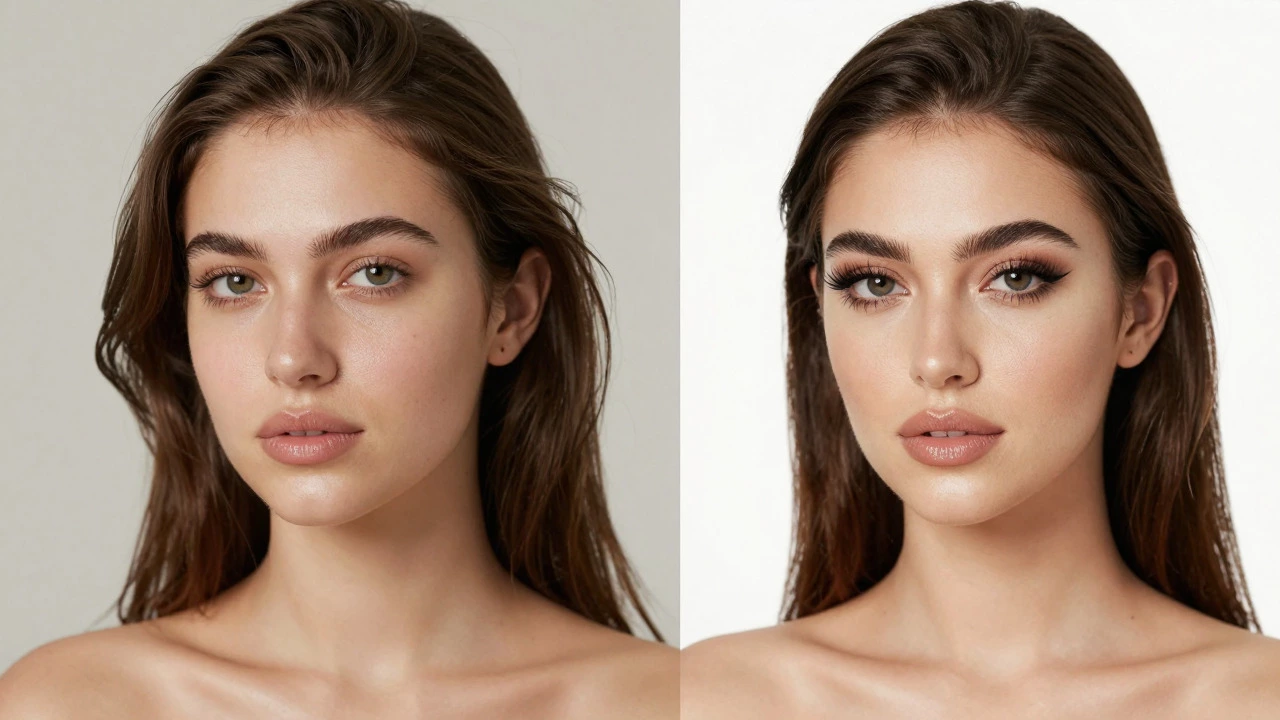
This is the biggest technical difference. Your eyes see color differently than a camera sensor does. In natural light, your everyday makeup looks balanced. Under the direct flash of a professional photographer’s strobe, regular makeup can look flat, gray, or even ghostly pale.
Cameras flatten dimension. To counteract this, bridal makeup uses higher contrast and more intense pigment. Think about contouring. In your daily life, you might use a subtle bronzer to add warmth. For a wedding, that same bronzer disappears in photos. Bridal artists use deeper shades and sharper placement to recreate shadows that the camera eats up.
| Feature | Regular Makeup | Bridal Makeup |
|---|---|---|
| Contour Intensity | Subtle, natural warmth | High contrast, defined structure | Blush Placement | Apples of cheeks, soft blend | Highest cheekbone, lifted effect | Lip Color | Tinted balm, nude, or soft pink | Defined liner, saturated pigment | Eye Definition | Mascara only or light shadow | False lashes, winged liner, cut crease |
Have you ever looked at a photo and thought, "I didn't look that tired"? That’s usually because your eyelids were washed out by the flash. Bridal eye makeup focuses on opening the eye. This means tightlining the upper waterline, using neutral but pigmented shadows to create depth, and almost always applying false eyelashes. Real lashes get lost in high-resolution images. False lashes provide the frame needed for your eyes to pop in both candid shots and posed portraits.
Skin Finish: Matte vs. Dewy
There is a trend right now toward "glass skin" and dewy finishes. It looks beautiful in person. It looks terrible in wedding photos if not handled correctly. Oil reflects light. When a flash hits an oily T-zone, it creates hot spots-bright white patches that distract from your face.
Bridal makeup generally aims for a semi-matte or satin finish. This doesn’t mean looking dry or cakey. It means controlling shine strategically. Artists will use hydrating serums underneath but set the surface with translucent powders. The goal is a velvety texture that diffuses light rather than reflecting it directly back into the lens.
If you love a dewy look, you can achieve it in bridal makeup, but it requires specific products. Instead of oily illuminators, artists use cream highlighters placed only on the high points of the face (cheekbones, brow bone, cupid’s bow) and then baked heavily around those areas to prevent migration. It’s a delicate balance that most people don’t master without professional training.
The Emotional Component: Tears and Stress
We talk a lot about sweat, but we forget tears. Weddings are emotional. You will cry. Maybe during the ceremony, maybe during the father-daughter dance. Regular mascara runs. Regular eyeliner smudges into raccoon eyes within minutes of watering.
Bridal makeup is waterproof and sweatproof by default. But it’s also applied with precision to minimize fallout. Eyeshadow is set with a matching eyeshadow primer to prevent creasing. Liner is often smoked out slightly so that if it does move, it doesn’t create a harsh black line under your eye. It’s about resilience.
Consider the stress factor too. You are running around, managing vendors, dealing with family dynamics. You don’t have time to check your reflection every twenty minutes. Bridal makeup gives you the confidence that you look put-together even when you’re exhausted. It’s a psychological safety net.
Product Selection: Drugstore vs. Professional Grade
You can buy great makeup at drugstores. I do it myself. But for a wedding, the price point shifts. Why? Because professional brands offer higher pigment load and better binding agents.
Professional makeup brands formulate products for stage and screen performance. Brands like MAC, Estée Lauder, Charlotte Tilbury, and Hourglass are staples in bridal kits. Their foundations contain polymers that grip the skin longer. Their lipsticks have waxes that resist bleeding onto teeth or cups.
Does this mean you need to spend $500 on products? Not necessarily. But it means you shouldn’t rely on tinted moisturizer or BB creams for the main event. Those products are too thin. They separate when mixed with skincare oils over long periods. Bridal base layers are dense. They cover redness, pores, and imperfections fully because cameras magnify everything by 10x.
How to Prepare Your Skin for Bridal Makeup
The best makeup artist in the world can’t fix bad skin prep. If you introduce new products two days before your wedding, you risk a breakout or allergic reaction. Bridal makeup success starts weeks in advance.
- Stick to your routine: Use the cleanser, moisturizer, and sunscreen you know works. No experiments.
- Hydrate internally: Drink water. Dehydrated skin holds makeup poorly and looks flaky.
- Exfoliate gently: Two days before, do a mild chemical exfoliation (AHA/BHA) to remove dead skin cells. Avoid physical scrubs that cause micro-tears.
- Skip the facial: Don’t get a deep cleaning facial 48 hours before. It causes inflammation and redness that takes days to subside.
On the morning of the wedding, cleanse and moisturize lightly. Let the makeup artist apply their own primer. Primers are tailored to skin type (oil-control for oily skin, hydrating for dry skin). Mixing your own primer with theirs can cause pilling-the little balls of product that ruin a smooth base.
Should You Do Your Own Bridal Makeup?
If you are skilled, yes. Many brides do their own makeup successfully. But ask yourself: Can you apply flawless wings while standing up? Can you mix foundation shades perfectly in one try? Can you handle the pressure of a ticking clock?
Hiring a professional isn’t just about vanity. It’s about buying peace of mind. A pro brings backup supplies, knows how to adjust for lighting conditions, and has the speed to get you done without rushing. They also act as a calm presence in the chaos of getting ready.
If you DIY, book a trial run. Not just swatching colors on your hand, but doing a full face application. Test it in sunlight. Take photos with your phone’s flash. See how it wears after eating a sandwich. Treat the trial like a dress rehearsal.
Common Mistakes to Avoid
I see these errors all the time, and they are easy to fix if you know what to look for.
- Too much contour: In person, it looks dramatic. In photos, it looks muddy. Keep it subtle unless you have very fair skin that needs definition.
- Ignoring neck color: Nothing ruins a photo faster than a face that is two shades lighter than the neck. Blend your foundation down to your collarbone.
- Heavy lower lash line: Dark liner under the eye makes you look older and tired. Use a brown pencil instead of black, and keep it soft.
- Skipping setting spray: This is the final seal. It melds powder and cream products together, reducing the powdery look and increasing hold.
Remember, bridal makeup is not about changing who you are. It’s about enhancing your features so they survive the day. It’s about ensuring that when you look back at those photos in ten years, you recognize yourself-and look like the best version of yourself.
How long does bridal makeup last compared to regular makeup?
Regular makeup typically lasts 6-8 hours before needing touch-ups. Properly applied bridal makeup is designed to last 12-16 hours without significant fading, thanks to specialized primers, setting powders, and waterproof formulas.
Can I use my own makeup for my wedding?
Yes, but it depends on your skill level and product quality. Drugstore makeup may not withstand long hours or flash photography. If you use your own products, ensure they are long-wearing, highly pigmented, and tested in a full-face trial run under similar lighting conditions.
Why does bridal makeup look heavier in person?
Cameras flatten facial features and wash out color. To compensate, bridal artists use higher contrast, deeper contours, and more pigment. What looks bold in the mirror appears balanced and dimensional in photographs. This is known as "camera-ready" enhancement.
Is HD makeup necessary for weddings?
HD (High Definition) makeup is highly recommended for weddings. These products are specifically formulated to reflect light evenly and avoid showing texture or pores under high-resolution cameras and bright flashes, ensuring a flawless finish in photos.
How do I prevent my makeup from melting in summer heat?
Use an oil-control primer, matte foundation, and generous amounts of translucent setting powder. Apply setting spray as a final step. Avoid creamy blushes and highlighters; opt for powder versions instead. Blotting papers can help manage shine throughout the day without disturbing the base.