Wedding Decor: DIY vs. Professional Cost Estimator
Your Project Details
The Real Math
*True DIY Total accounts for material costs, necessary tool purchases, and the monetary value of your labor.
Quick Takeaways
- DIY is cheaper for simple, high-volume items like centerpieces and signage.
- Professional decor is often more cost-effective for complex installations like floral arches or lighting.
- The "hidden costs" of DIY include tool purchases, shipping, and the value of your own time.
- Bulk buying and repurposing existing items are the most effective ways to cut costs.
To understand if DIY wedding decorations will actually save you money, we need to look at the real math. When you hire a professional, you're paying for their inventory, their labor, and their eye for design. When you DIY, you're replacing that professional fee with your own sweat equity and a trip to the craft store. But here's the catch: professional decorators often get wholesale pricing on materials that you can't access as an individual.
Where DIY Actually Saves You Money
There are certain areas where the markups from event planners are astronomical. For these, going the handmade route is a genuine win for your wallet. Let's look at a few examples.
Table Centerpieces is the art of arranging decorative elements in the middle of guest tables to create a visual focal point. If you're planning on using simple jars, floating candles, or greenery from your own garden, you can save hundreds. A professional might charge $50 to $150 per table for a simple arrangement. If you buy bulk eucalyptus from a wholesaler and use Mason jars from a warehouse club, you can drop that cost to under $10 per table.
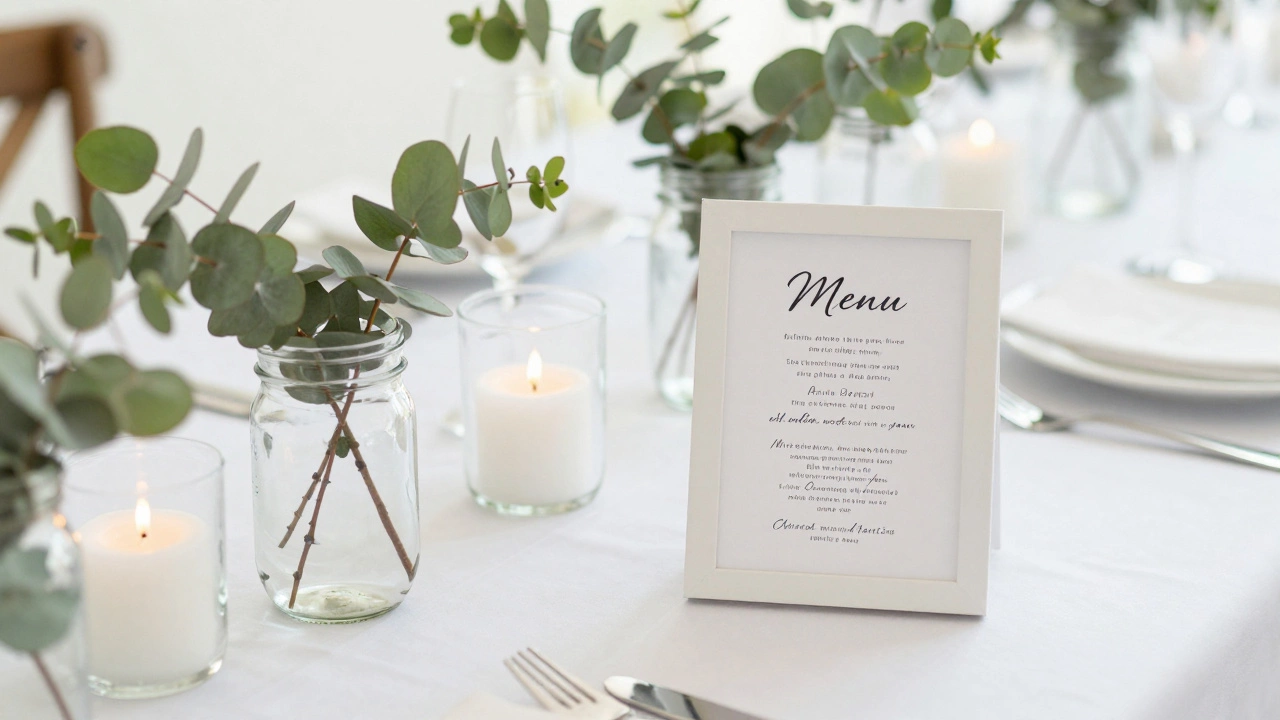
Another big win is Wedding Signage, which includes welcome signs, seating charts, and menu cards used to guide guests. A custom acrylic sign from a boutique studio can easily run $200. However, if you buy a second-hand chalkboard or use a high-quality printer and a nice frame from a thrift store, you're looking at maybe $30. The difference here isn't just the material; it's the lack of a "designer fee."
The Hidden Costs of Doing it Yourself
This is where the "budget' wedding can suddenly get expensive. Most people calculate the cost of the final product but forget the infrastructure needed to make it. If you decide to make your own wooden lanterns, you might need a drill, a saw, and a specific type of sandpaper. If you don't already own those tools, that's an immediate $100+ addition to your budget.
Then there is the shipping. When you order "cheap" bulk items from overseas platforms, the shipping costs for heavy or bulky items-like wooden crates or large fabric bolts-can sometimes double the price of the item itself. You also have to account for the "mistake tax." When you're making 100 of something, you will inevitably mess up ten of them. That means you have to buy 10% more material than you think you need.
| Item | DIY Estimated Cost | Professional Estimated Cost | DIY Verdict |
|---|---|---|---|
| Welcome Sign | $20 - $50 | $150 - $300 | Huge Saving |
| Floral Arch | $100 - $300 | $400 - $800 | Moderate Saving |
| Mood Lighting/Up-lighting | $200 - $400 | $300 - $600 | Low Saving |
| Table Runners/Linens | $50 - $150 | $200 - $400 | Moderate Saving |
When Professional Decor is Actually Cheaper
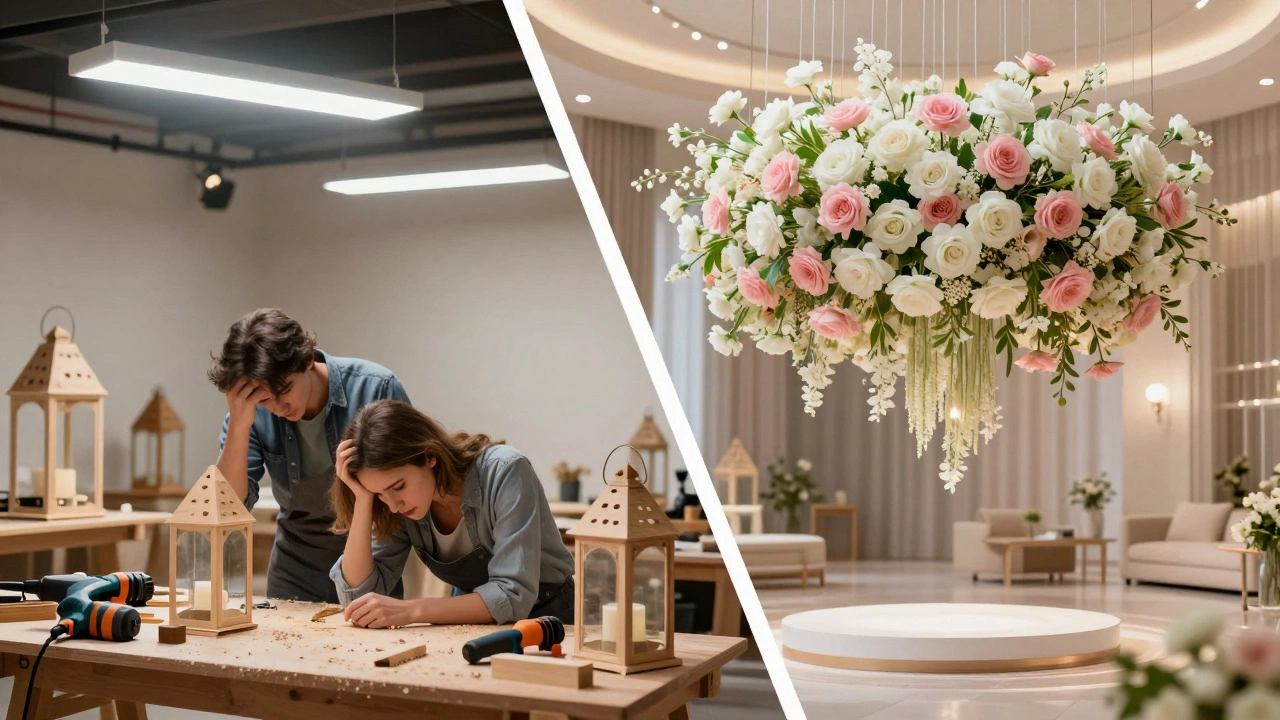
It sounds counterintuitive, but sometimes paying a pro is the cheaper option. This usually happens with high-risk or high-complexity items. Take Floral Installations, which are large-scale arrangements like hanging flower clouds or massive backdrops. These require professional-grade foam, water tubes, and heavy-duty rigging to ensure they don't fall on a guest's head. If you try to DIY a hanging installation, you'll likely spend a fortune on trial-and-error materials and potentially pay for damages to the venue if you use unapproved adhesives.
Lighting is another area. While you can buy a few strings of fairy lights, a full Lighting Design package from a rental company often includes the equipment, the setup, and the teardown. If you buy the lights yourself, you're stuck with the labor of hanging them (which can take hours) and the problem of what to do with 500 feet of cable after the wedding. Selling them on a marketplace rarely recovers the full cost.
The 'Time vs. Money' Trade-off
Let's talk about the most expensive resource: your time. If you spend 100 hours making decorations to save $500, you are essentially paying yourself $5 an hour. Is that a good deal? For some, the joy of crafting is part of the wedding experience. For others, it's a source of immense stress.
Consider the "Wedding Week Stress Scale." If you are finishing your DIY projects the night before the ceremony, you aren't just spending time-you're spending your mental health. Professionals provide a service called "turnkey delivery," meaning everything arrives, is set up, and is removed without you lifting a finger. That peace of mind has a monetary value that doesn't show up on a spreadsheet but definitely shows up in your stress levels.
Smart Strategies for a Hybrid Approach
You don't have to choose one or the other. The most budget-savvy couples use a hybrid model. They DIY the "low stakes" items and hire pros for the "high stakes" ones.
- DIY the Stationery: Use a high-quality home printer and heavy cardstock for place cards and menus. These are easy to produce in batches and have high perceived value.
- Rent the Big Stuff: Rent your linens and chairs. Buying 100 white tablecloths is a waste of money and storage space. Rental companies provide them clean and pressed, which is a huge time-saver.
- Use Natural Elements: Instead of buying expensive faux greenery, use seasonal branches or potted plants that you can keep after the wedding.
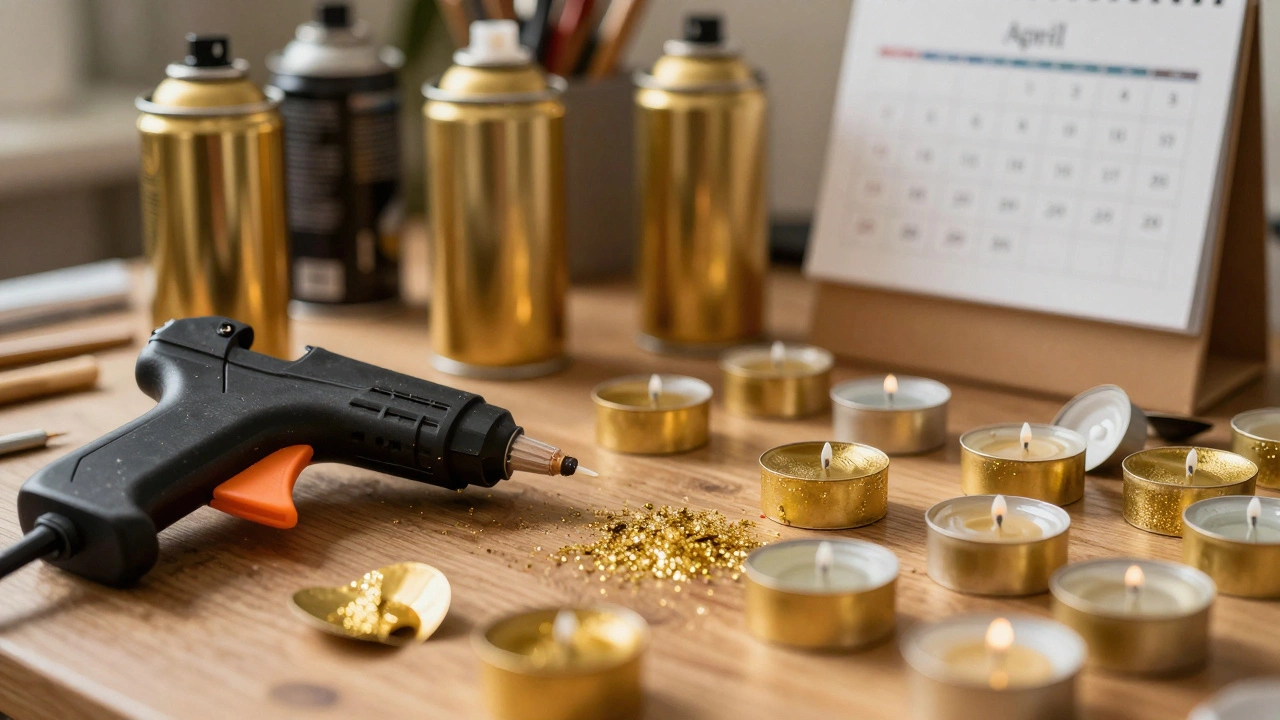
- Thrift the Vibe: Look for brass candlesticks or vintage frames at local charity shops. A quick coat of spray paint can make mismatched thrift store finds look like a cohesive collection.
What are the most expensive mistakes in DIY wedding decor?
The biggest mistake is underestimating the amount of material needed and the time required for assembly. Many couples buy just enough for the design but forget to account for breakage or errors. Another common pitfall is buying cheap tools that break halfway through the project, forcing another trip to the store and adding to the cost.
Can I really save money on flowers by doing it myself?
Yes, but only if you are comfortable sourcing from wholesalers or using local greenery. If you buy flowers from a standard grocery store, you're paying retail prices and will likely spend almost as much as a pro florist would. To truly save, look for "bulk bloom" warehouses or use dried flowers that can be bought months in advance.
How do I know if a project is too complex to DIY?
Ask yourself: Does this require a power tool I don't own? Does it need to be securely anchored to a ceiling or wall? Does it involve perishable items that must stay fresh for 8 hours? If the answer to any of these is "yes," it's usually safer and more cost-effective to hire a professional who has the equipment and experience to do it right the first time.
Where is the best place to buy bulk DIY supplies?
Warehouse clubs (like Costco or Sam's Club) are great for basic glass and candles. For more specific craft items, online wholesalers are cheaper than local craft stores, provided you order early to avoid expedited shipping fees. Local thrift stores are the gold mine for "base" items like vases and frames that can be customized.
Will DIY decorations look "cheap" compared to professional ones?
Not necessarily. The secret to a high-end DIY look is a limited color palette and consistency. When you mix too many different styles of ribbons or glitters, it can look cluttered. Stick to two or three primary colors and one consistent material (like all gold or all wood) to make your handmade decor look like it was curated by a professional.
Next Steps for Your Budget Plan
If you're still undecided, start by creating a "Decor Inventory List." Write down every single item you think you'll need, from the smallest tea light to the largest backdrop. Then, mark each item as "Easy DIY," "Risky DIY," or "Pro Only."
For the "Easy DIY" items, set a strict budget. If the cost of materials exceeds 60% of the professional quote, reconsider. For the "Risky" items, try making a small-scale prototype. If it takes you four hours to make one centerpiece, imagine the toll of making fifty. That's your signal to put that item in the professional column and reclaim your sanity for the wedding countdown.