Wedding Ring Budget Calculator
Calculate Your Ring Budget
Determine if your ring budget is in line with current trends. The average couple spends $1,800 total on wedding rings combined (down from $2,400 in 2018).
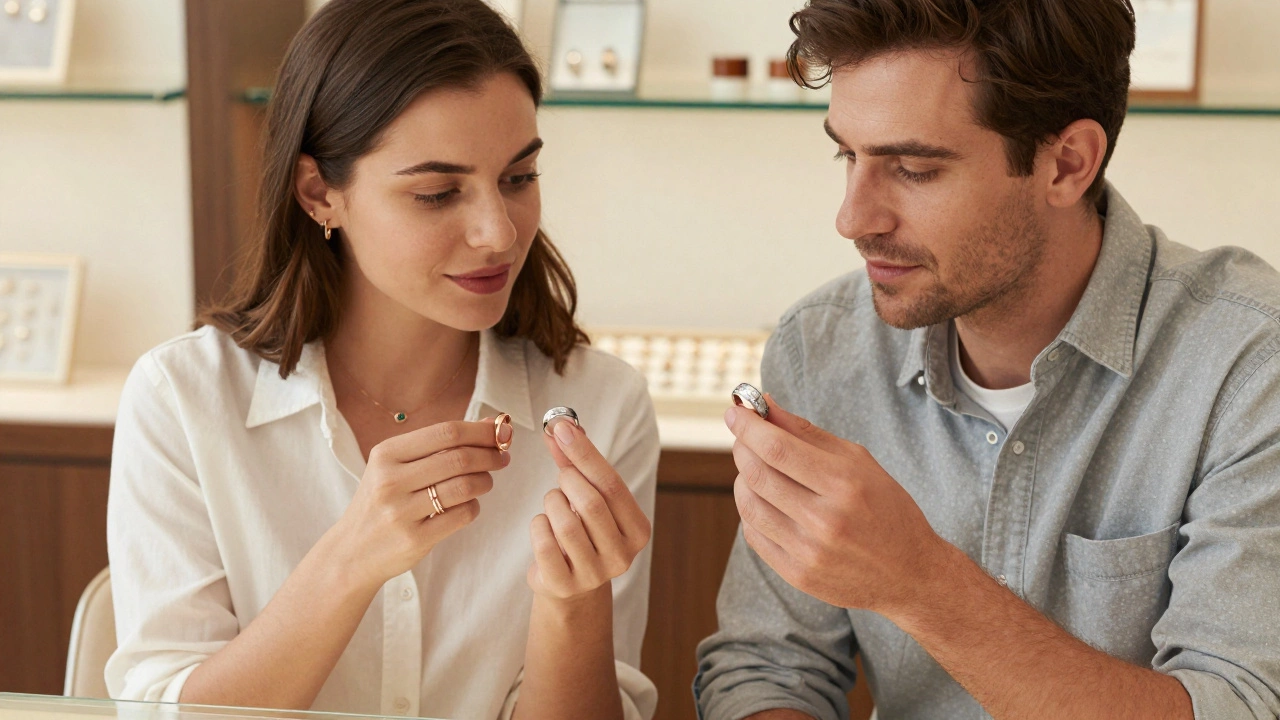
For decades, the image has been clear: a man gets down on one knee, pulls out a ring box, and surprises his partner with a sparkler she never saw coming. But that story? It’s fading fast. Today, more couples are sitting side by side in jewelry stores, comparing platinum bands, testing comfort fits, and arguing over whether to go for a solitaire or a halo. The old surprise model isn’t gone - but it’s no longer the norm.
It’s Not About Surprise Anymore - It’s About Partnership
Surprise proposals still happen, sure. But the ring itself? That’s often chosen together. A 2025 survey by the American Gem Society found that 68% of couples now pick their wedding rings as a team. That’s up from just 42% in 2015. Why the shift? Simple: people want rings they’ll actually wear every day. And that means comfort, style, and personal meaning matter more than tradition.
One couple from Portland, Sarah and Marcus, spent three weekends visiting six jewelers. They didn’t want a ring that looked like everyone else’s. Sarah didn’t like the classic diamond solitaire. Marcus didn’t want a thick band. They ended up with a custom two-tone ring - rose gold with a small emerald on the side for Sarah’s grandmother. "It felt like ours," she said. "Not something bought for me. Something we built together."
How Do Couples Actually Do It?
There’s no single way, but most couples follow one of three paths:
- The Joint Shopping Trip - Both partners visit stores, try on styles, and talk through budgets. This is the most common now. Many jewelers even offer private consultation rooms for couples.
- The Sneaky Poll - One person asks friends, posts polls on Instagram, or subtly checks their partner’s Pinterest board. They still buy alone, but they’re not guessing anymore.
- The Hybrid Approach - One person picks the engagement ring, the other picks the wedding band. Then they match them together. This works well when one partner loves tradition and the other wants modern.
It’s not about who pays. It’s about who feels seen. A ring isn’t just a piece of metal. It’s a symbol of shared life. And symbols matter more when both people helped choose them.
What Do People Actually Look For?
When couples shop together, they don’t just pick shiny things. They talk about real stuff:
- Comfort - Can you wear this while washing dishes? Working out? Typing all day? A 2024 study from the Jewelry Industry Council showed 73% of couples prioritize comfort over size or sparkle.
- Longevity - Will this still look good in 20 years? Many now choose platinum or palladium instead of white gold because they don’t need replating.
- Meaning - A hidden engraving, a birthstone, a pattern from a shared place. 41% of couples now include a personal detail, up from 22% five years ago.
- Matching (or not) - Some want identical bands. Others want complementary styles. No rule. Just what feels right.
One couple from Dublin, Lena and Tom, chose rings with matching inner engravings: "The day we stopped asking if we were ready." They found it on a rainy Tuesday in a small shop on Grafton Street. No pressure. No audience. Just two people deciding what they wanted to carry with them.
The Budget Talk - Still Hard, But Less Awkward
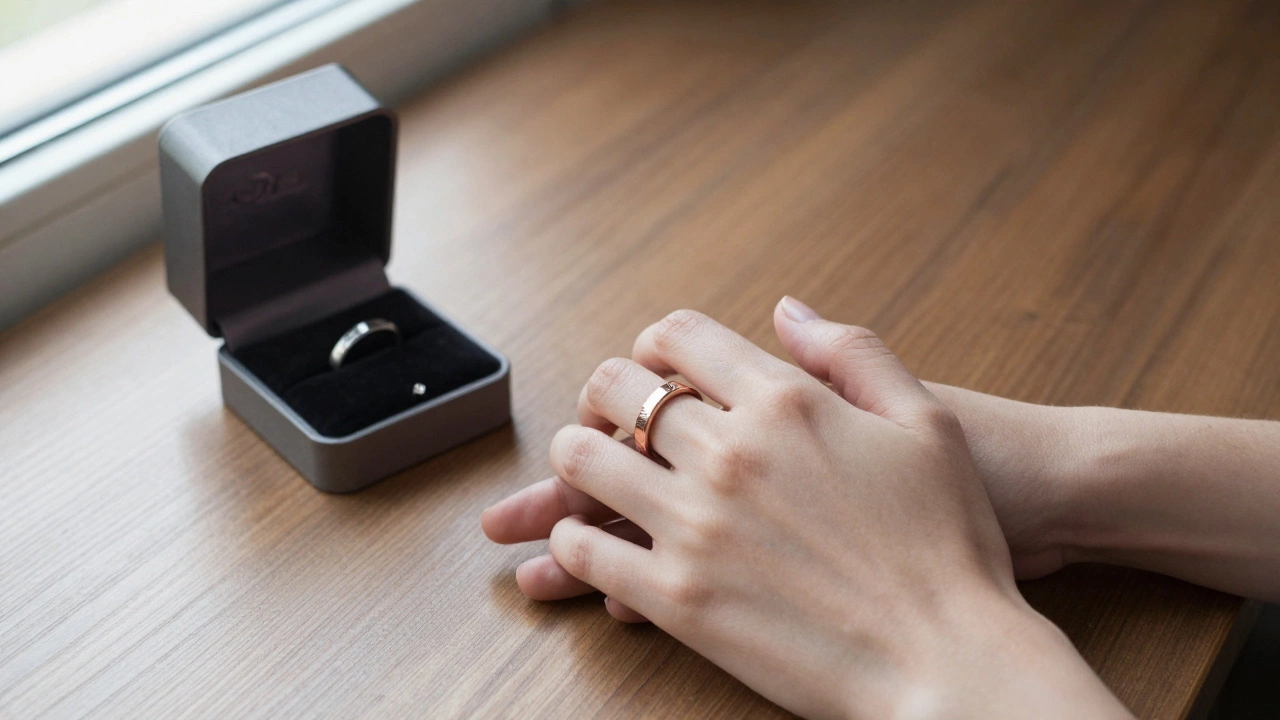
Money is still the biggest hurdle. But couples are talking about it earlier. Instead of one person secretly budgeting, they’re setting a range together. "We decided we’d spend no more than $2,500 total," said Priya, 31, from Austin. "That meant we could get a ring we both loved without going into debt."
There’s no "right" amount. But the pressure to spend a month’s salary? That’s fading. A 2025 report from The Knot showed the average couple now spends $1,800 on wedding rings combined - down from $2,400 in 2018. More people are choosing lab-grown diamonds, vintage bands, or even non-traditional materials like titanium or wood.
Why This Change Matters
This isn’t just about rings. It’s about how relationships are changing. Couples today don’t want to perform a script. They want to build something real. Choosing a ring together is a small act - but it’s loaded with meaning.
When you pick a ring alone, you’re saying: "I know what you want." When you pick it together, you’re saying: "I want to understand what you want." That shift changes everything. It turns a gift into a conversation. A purchase into a partnership.
What If You’re Still Unsure?
Still wondering if you should surprise your partner? Here’s a simple test:
- Do they have a Pinterest board for rings? If yes, check it.
- Have they ever said "I wish I had a ring like that"? Take note.
- Do they hate wearing jewelry? Maybe a simple band is better than a diamond.
- Are they practical? They might prefer durability over dazzle.
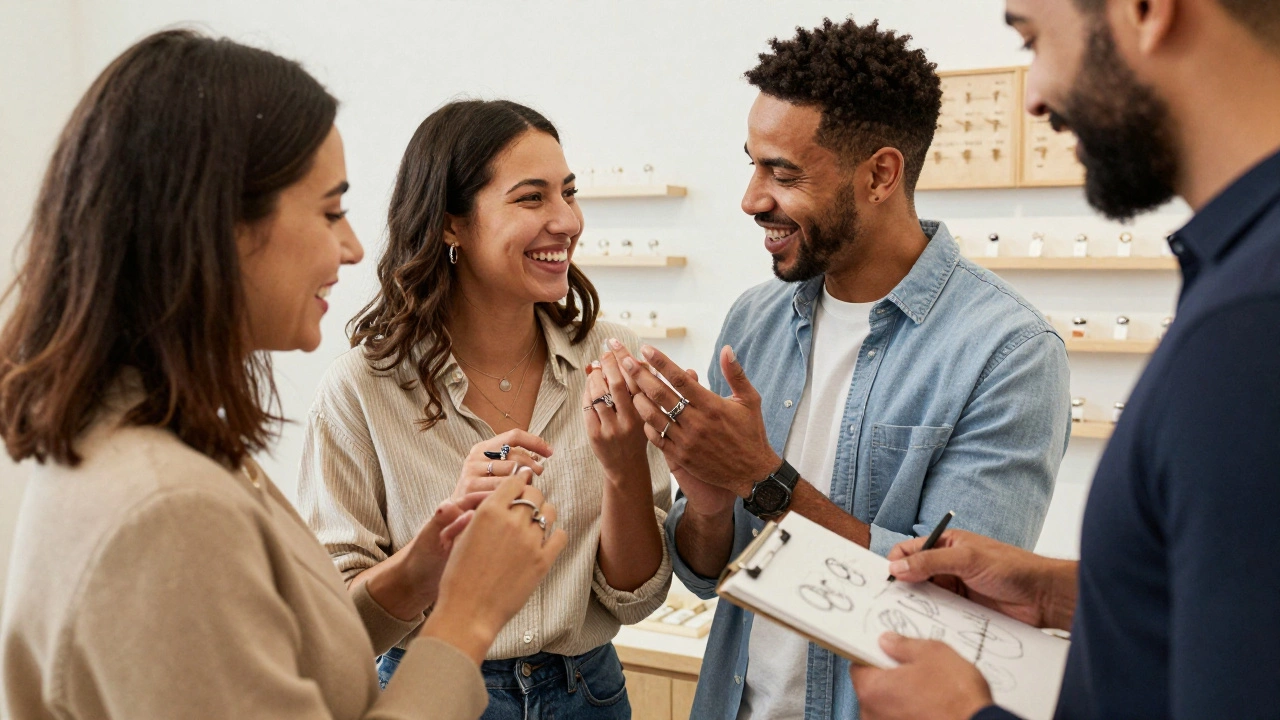
And if you’re still stuck? Ask. Just say: "I want to get something meaningful. What would you love to wear every day?" You might be surprised.
Final Thought: The Ring Is Just the Start
The wedding ring isn’t the end goal. It’s the first thing you’ll wear together. And if you choose it together - even if it’s a little messy, a little awkward, or a little different from what you imagined - it becomes part of your story. Not a tradition you followed. A choice you made.
So yes - couples are choosing wedding rings together. Not because tradition changed. But because love did.
Do couples still surprise each other with wedding rings?
Yes, but it’s becoming less common. Around 32% of couples still surprise each other with engagement rings, according to a 2025 survey by the American Gem Society. However, even in those cases, many partners quietly influence the choice - through hints, Pinterest boards, or comments about friends’ rings. The surprise is often more about the proposal moment than the ring itself.
Is it okay to choose a wedding ring without my partner?
Absolutely. There’s no rule that says rings must be chosen together. Some people prefer the surprise, others want full control over design. The key is honesty: if you’re choosing alone, make sure the ring reflects your partner’s style and lifestyle. Ask their friends, check their social media, or even borrow a ring they’ve admired. The goal isn’t tradition - it’s a ring they’ll love wearing every day.
What’s the most popular ring style couples choose together?
There’s no single winner, but the most common combo is a classic engagement ring paired with a simple, comfort-fit wedding band. Many couples now opt for matching metals (like both in platinum) but different designs - for example, a diamond solitaire with a textured band. Lab-grown diamonds are rising fast, especially among couples under 35. Custom engravings and non-traditional stones like sapphires or moissanite are also trending.
How much should couples spend on wedding rings together?
There’s no set amount. The average couple spends about $1,800 total on both rings in 2025, down from $2,400 in 2018. Many now set a budget before shopping - often between $1,000 and $2,500. What matters more than the number is whether the ring fits your life. A $500 ring made of durable platinum that lasts 30 years is better than a $5,000 ring that needs constant repairs.
Can we choose different metals for our rings?
Yes - and more couples are doing it. You might choose a white gold engagement ring and a rose gold wedding band. Or one partner picks platinum while the other chooses titanium. The key is making sure the metals don’t clash visually. Many jewelers offer side-by-side comparisons. If you’re unsure, try wearing both metals on your hand for a day. You’ll know which feels right.
Are lab-grown diamonds a good choice for couples?
Yes. Lab-grown diamonds are chemically identical to mined ones but cost 40-60% less. They’re also ethically sourced and environmentally cleaner. In 2025, 38% of couples under 35 chose lab-grown diamonds, up from 19% in 2020. Many couples appreciate that they can get a larger stone or higher clarity for the same price. Jewelers now offer lifetime warranties on them too.