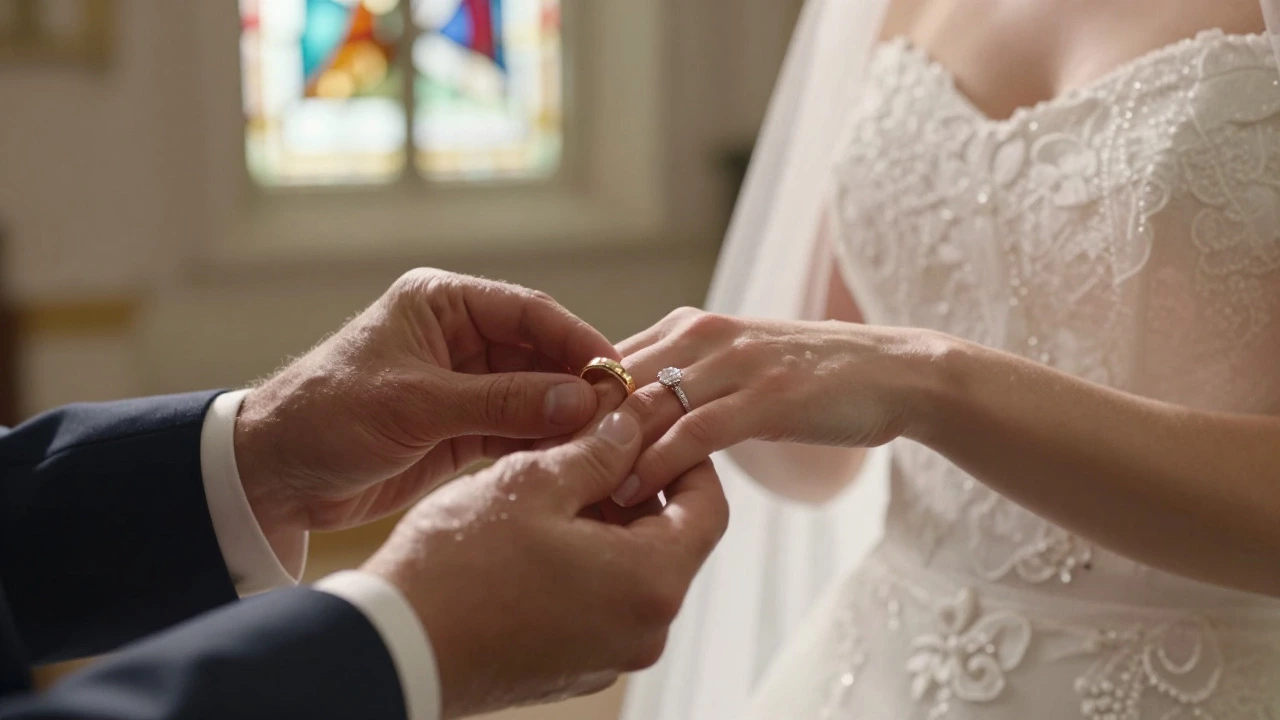
Wedding Ring Ceremony Simulator
Select a scenario below to see how the rings should be positioned on your hands.
The Traditional Approach
How it works:
Before walking down the aisle, move your engagement ring to your right hand. This keeps your left ring finger clear for the wedding band.
Ceremony Steps:
- Switch engagement ring to right hand before processional.
- Groom places wedding band on left hand.
- After vows, slide engagement ring back onto left hand over the band.
Picture this: you’re standing at the altar, heart pounding, ready to say "I do." You look down at your left hand and realize something is missing-or perhaps there’s too much metal on that finger. This is one of those wedding day dilemmas that causes unnecessary stress for brides everywhere. Do you wear your engagement ring down the aisle? Should it stay in a safe place until later? Or is there a clever trick to keep both rings secure during the ceremony?
The short answer is yes, you can wear it, but tradition suggests a specific way to handle it so the exchange of vows goes smoothly. Let’s break down exactly how to manage your engagement ring on your big day without worrying about losing it or getting tangled up.
The Traditional Approach: Left Hand vs. Right Hand
In many Western cultures, including the United States, Canada, and the UK, the wedding band is traditionally placed on the left ring finger first. Why? Because historically, people believed a vein ran directly from that finger to the heart (the *vena amoris*). Placing the wedding band closest to the heart symbolizes that your marriage is your primary bond.
If you wear your engagement ring on your left hand during the ceremony, it physically blocks the path for the wedding band. You have two main options here:
- Switch Hands: Move your engagement ring to your right hand before the processional. After the officiant places the wedding band on your left hand, you can slide the engagement ring back onto the same finger, sitting above the band.
- Leave It Off: Some brides prefer to leave their engagement ring off entirely during the ceremony. This keeps things simple and ensures no jewelry gets misplaced.
This isn’t just about aesthetics; it’s about logistics. If you try to put the wedding band on over an engagement ring with intricate settings, you risk scratching the diamonds or bending the prongs. Keeping the left hand clear allows the groom to slide the band on easily.
Who Handles the Ring During the Ceremony?
If you decide to switch your engagement ring to your right hand, who actually does it? And what if you forget? Don’t panic. Here are the most common strategies couples use to ensure the ring stays safe:
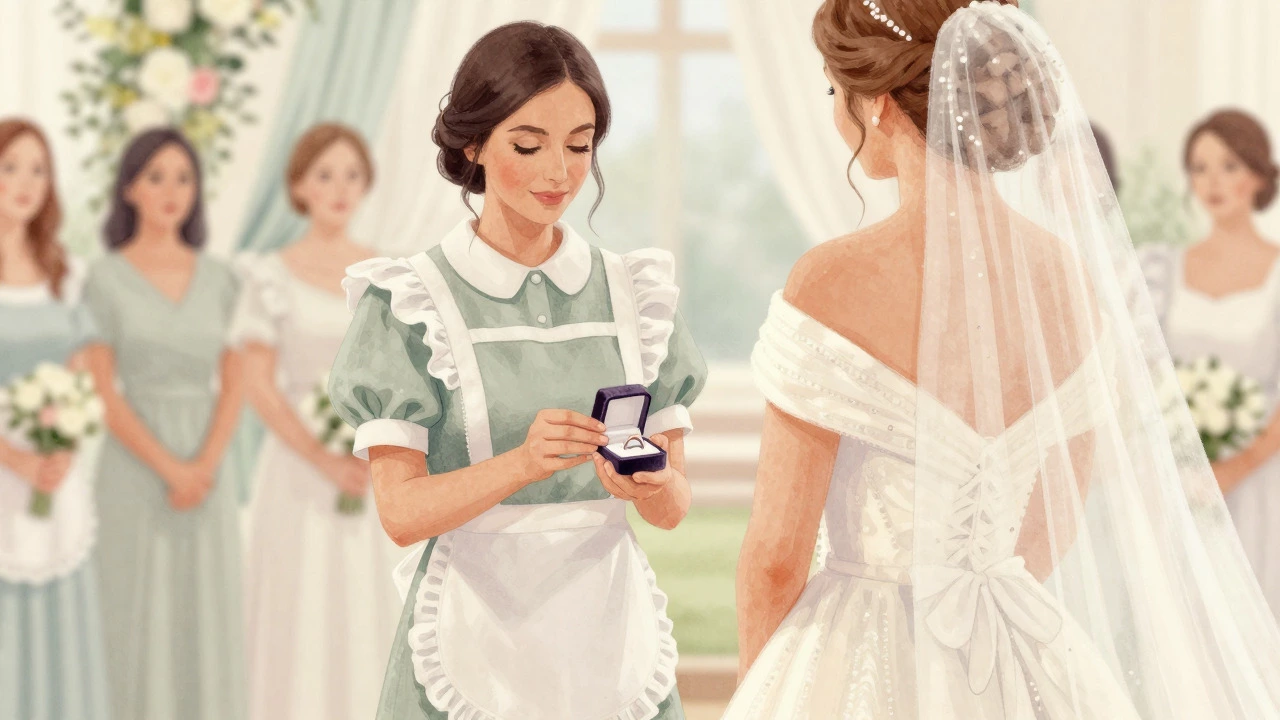
- The Maid of Honor Method: Give your engagement ring to your maid of honor or best man before you start walking down the aisle. They hold it securely until the ring exchange moment. Once the wedding band is on, they hand the engagement ring back to you so you can slip it on.
- The Groom’s Pocket: Some grooms carry the engagement ring along with the wedding bands. He places the wedding band on your finger, then hands you the engagement ring to put on yourself. This adds a sweet, personal touch to the ritual.
- The "Right Hand" Trick: Simply move the ring to your right hand yourself before you exit the dressing room. It’s quick, easy, and requires no extra helpers. Just make sure you don’t forget to switch it back after the ceremony!
I’ve seen brides get flustered because they didn’t plan this step. Treat it like part of your rehearsal. Practice moving the ring around so your fingers know what to do when the nerves kick in.
What About Cultural Differences?
Not every culture follows the "left hand only" rule. In countries like Russia, Greece, India, and parts of Eastern Europe, the wedding ring is worn on the right hand. If you or your partner come from these backgrounds, the dynamic changes completely.
If you’re wearing the wedding band on your right hand, you might keep your engagement ring on your left hand throughout the entire ceremony. There’s no conflict because the bands go on different fingers. However, if you want to unify the look, you might still choose to move the engagement ring to the right hand after the ceremony so both rings sit together.
It’s worth discussing this with your families early on. Blending traditions can be beautiful, but it requires clear communication. For example, a bride from Germany might wear her engagement ring on the right hand while growing up, but switch to the left for the wedding band to match her American husband’s expectations.
Safety First: Protecting Your Jewelry
Engagement rings are often expensive, sentimental, and sometimes fragile. Whether you’re wearing a delicate vintage solitaire or a bold modern halo, you want to protect it. Here are some practical tips:
- Avoid Loose Settings: If your engagement ring has loose stones or damaged prongs, get it checked by a jeweler weeks before the wedding. Nerves can make you fidget, and fidgeting can lead to lost stones.
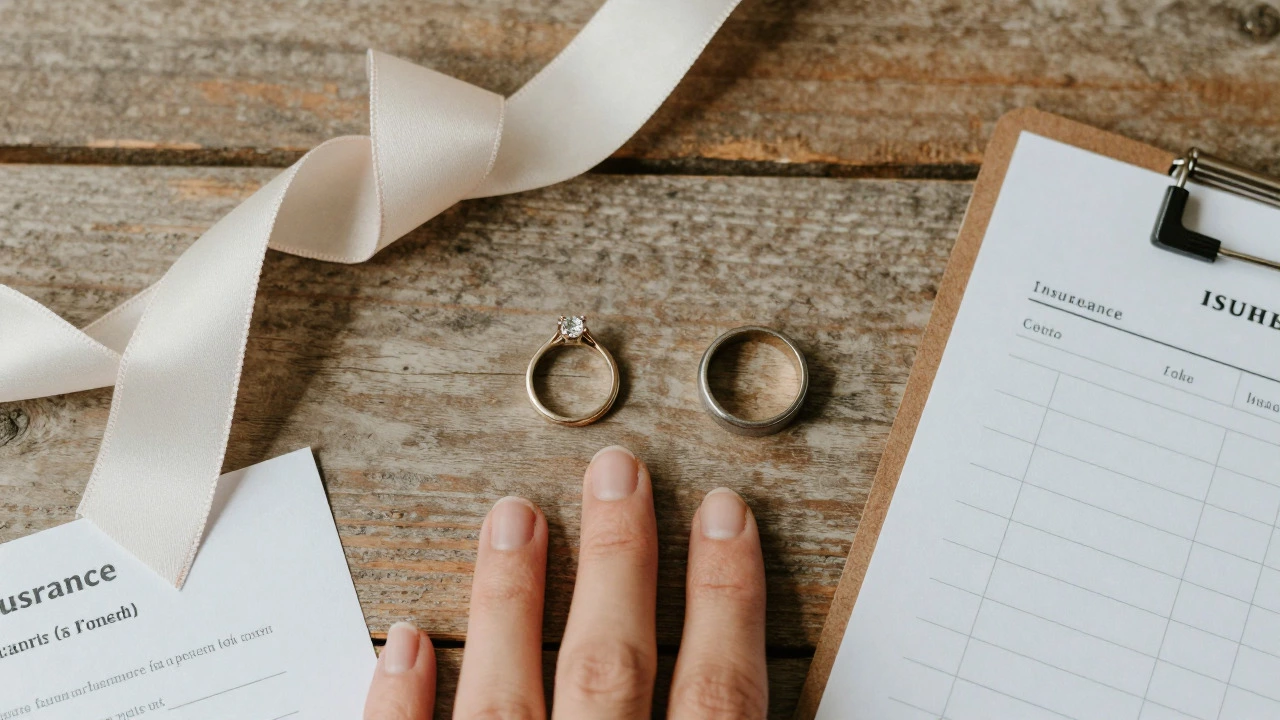
- Consider Insurance: Make sure your homeowner’s or renter’s insurance covers high-value jewelry. Take photos of the ring for documentation.
- Secure Storage: If you leave the ring off, store it in a small pouch held by a trusted person. Don’t just set it on a table where someone could accidentally bump it into a chair leg.
One bride I knew had a very low-profile setting, so she decided to keep the engagement ring on her left hand. She told the officiant beforehand so he could gently lift the engagement ring slightly to slide the wedding band under it. It worked perfectly, but it required coordination. Talk to your officiant if you plan to do this.
Alternatives to Wearing the Ring
Some brides simply don’t like the idea of handling multiple pieces of jewelry during the emotional peak of the ceremony. That’s totally fine! Here are some alternatives:
| Option | Pros | Cons |
|---|---|---|
| Wear on Right Hand | Ring is visible and safe; traditional flow maintained | Must remember to switch back later |
| Leave Off Entirely | No risk of loss; simpler ceremony | Might feel bare-handed in photos |
| Groom Holds It | Romantic gesture; shared responsibility | Groom must be careful not to drop it |
| Maid of Honor Holds It | Bride focuses on emotions; ring is secure | Relies on another person’s reliability |
Another option is to wear a temporary placeholder. Some brides use a silk ribbon tied around the finger or a simple silver band just for the ceremony. This gives the visual cue of being married without risking the actual engagement ring. After the photos, you swap out the placeholder for the real deal.
Photography Considerations
Your photographer will likely capture close-ups of your hands during the ring exchange. If you leave your engagement ring off, your left hand might look empty in those shots. While this is authentic to the moment, some couples prefer the full look.
If you care about having both rings in the ceremony photos, coordinate with your photographer. They can stage a shot immediately after the exchange where you slide the engagement ring back on. This way, you get the clean exchange shot and the complete bridal look.
Also, consider the lighting. Diamonds sparkle beautifully, but they can also create harsh reflections in certain lighting conditions. If your venue has bright spotlights, ask your photographer if they’ll need to adjust angles to avoid glare from your engagement ring.
Final Checklist for the Big Day
To ensure everything goes smoothly, add these items to your wedding day checklist:
- Decide your method: Choose whether to switch hands, leave it off, or have someone else hold it.
- Assign a ring bearer: Designate a specific person (maid of honor, best man, groom) to hold the engagement ring if needed.
- Rehearse the switch: Practice moving the ring between hands during your rehearsal dinner or morning prep.
- Inform the officiant: Let them know your plan so they can guide the exchange correctly.
- Check the fit: Ensure your ring fits comfortably. Swollen fingers from heat or stress can make it hard to remove or put on.
Remember, there’s no single "right" way to do this. Your wedding day should reflect your personality and comfort level. Whether you’re a traditionalist who follows every custom or a modern couple creating new rituals, the goal is to enjoy the moment without worrying about jewelry logistics.
Should I wear my engagement ring during the rehearsal dinner?
Yes, most brides wear their engagement ring to the rehearsal dinner. It’s a celebratory event, and you’ll likely take photos. Just be mindful if you’re doing activities that might scratch the ring, like eating messy foods or dancing vigorously.
What if I lose my engagement ring during the ceremony?
Stay calm. If you gave it to a trusted person like your maid of honor, check with them first. If you were holding it, retrace your steps slowly. Most venues have security cameras or staff who might have seen it. Keep a spare photo of the ring for insurance purposes if it’s truly lost.
Can I wear my engagement ring on my right hand all day?
Absolutely. Many brides find it easier to just keep the engagement ring on their right hand for the entire day and night. You can switch it back to the left hand the next morning if you prefer the traditional look for daily wear.
Does the order of putting on rings matter?
Traditionally, the wedding band goes on first, closest to the heart, followed by the engagement ring. This symbolizes that the marriage bond is central. However, if you live in a culture where the right hand is used, the order may vary. Follow what feels meaningful to you.
What if my engagement ring doesn’t fit anymore?
Fingers can swell due to heat, humidity, or stress. If your ring feels tight, consider sizing it down slightly before the wedding or using a temporary ring guard. Alternatively, leave it off during the ceremony and put it on later when your fingers return to normal size.