Groom Suit Color Advisor
Not sure if you should stick with black? Answer three simple questions about your wedding details to get a personalized recommendation for your suit color.
Your Recommended Suit Strategy
Why this choice?
Styling Tips
Walk into any wedding venue in September 2026, and you will likely see a sea of black. It is the safe bet, the default setting, the color that says "I respect tradition" without saying a word. But here is the thing: tradition is not law. The question isn't whether your suit can be black; it is whether it should be. For decades, the black tuxedo has been the gold standard for evening wear, but modern weddings have shifted dramatically toward personal expression and seasonal appropriateness.
If you are staring at a rack of navy, charcoal, or even burgundy suits and wondering if you are about to commit a fashion faux pas, take a breath. You are not breaking any hard-and-fast rules. In fact, wearing a non-black suit can often make you look more polished, especially depending on the time of day, the season, and the overall vibe of your wedding. Let’s break down exactly when you should ditch the black, what colors work best, and how to pull off the look without looking like you wandered in from a different event.
The Myth of the Mandatory Black Tuxedo
Black tie etiquette originated in the late 19th century as a way to distinguish formal evening wear from daytime business attire. Historically, black was chosen because it absorbed light, creating a sleek silhouette under gaslight and later, electric bulbs. It wasn’t necessarily about style preference; it was about optics and formality levels. Today, however, we have LED lighting, outdoor venues, and daylight ceremonies. The rigid structure of traditional etiquette has loosened significantly.
Most modern couples care less about adhering to Victorian-era codes and more about cohesion. If your wedding is at 4 PM in a botanical garden, a heavy black wool suit might actually look out of place-too stark against the greenery, too hot for the weather. Conversely, if you are hosting a gala-style dinner in a ballroom, black remains powerful. The key takeaway? Context dictates color, not just convention.
| Factor | Traditional View (Black Only) | Modern View (Contextual Color) |
|---|---|---|
| Venue Type | Indoor Ballrooms, Churches | Beaches, Gardens, Rooftops, Barns |
| Time of Day | Evening (Post-6 PM) | All day, with lighter colors for day |
| Formality Level | Strict Black Tie | Cocktail, Semi-Formal, Casual Formal |
| Groom’s Goal | Blending in with tradition | Standing out slightly, matching theme |
When Black Is Actually the Wrong Choice
You might think sticking to black is the safest route, but sometimes it creates visual dissonance. Consider a summer beach wedding. A black suit absorbs heat, making you sweat through your shirt by the ceremony’s end. More importantly, visually, black can feel heavy and somber against bright whites, pastels, and natural light. It can cast harsh shadows on your face in photography, which is a nightmare for retouchers.
Daytime weddings are another area where black struggles. Etiquette experts generally agree that dark, solid colors belong to the evening. Wearing a full black tuxedo to a 2 PM ceremony can signal that you didn’t put much thought into the schedule. It feels like you showed up straight from a funeral or a nightclub, rather than a celebration. If your invitation says "Garden Party" or "Daytime Reception," leaving the black in the closet is a smart move.
Seasonal Considerations
Fabric weight and color interact directly with temperature and mood. Here is a quick rule of thumb for 2026 seasons:
- Spring/Summer: Go lighter. Navy, light gray, tan, or pastel shades reflect sunlight and keep you cooler. Linen blends in beige or sage green are trending for their breathable nature.
- Fall/Winter: Darker tones work well here. Charcoal, deep forest green, or midnight blue complement autumn foliage and winter snow without being as severe as pure black.
The Best Alternatives to Black for Grooms
If you are ready to branch out, you need options that still scream "formal" without shouting "funeral." Not all colors are created equal. Some hues enhance your skin tone and the wedding palette better than others. Here are the top contenders that have proven themselves in recent years.
Navy Blue: The King of Versatility
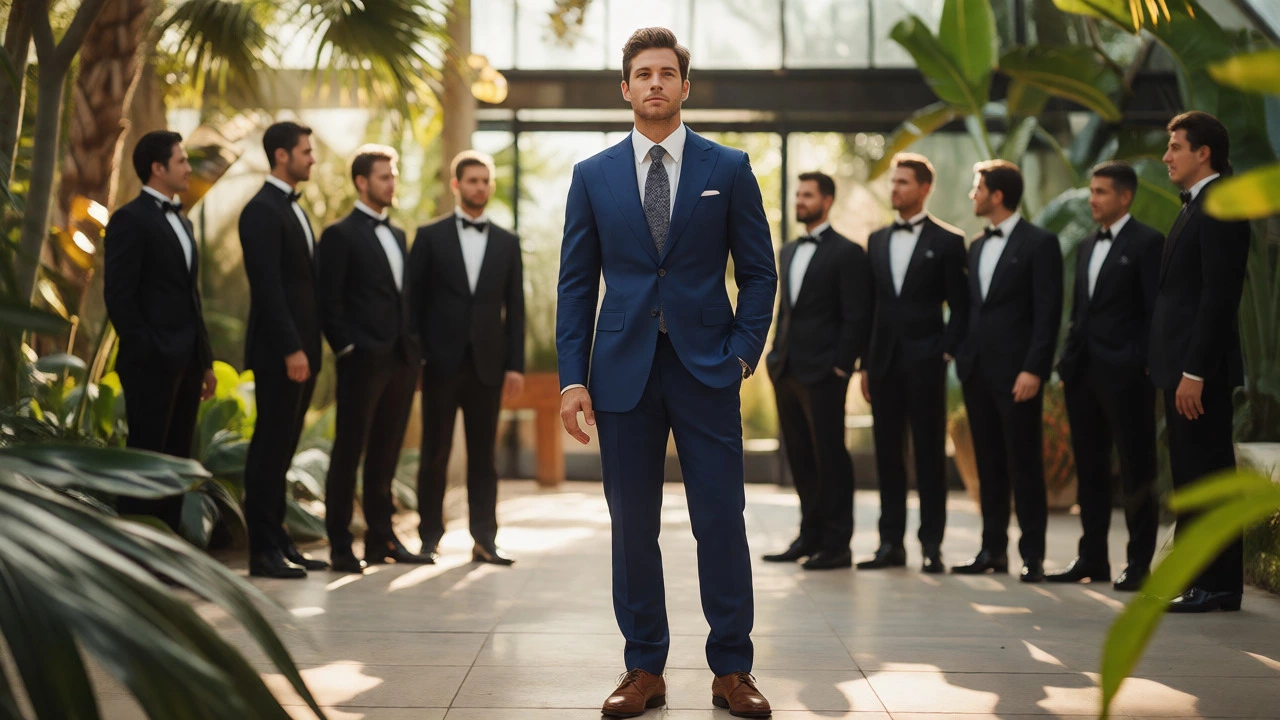
Navy blue is widely considered the most versatile alternative to black. It offers the same slimming effect and seriousness but feels slightly softer and more approachable. Unlike black, navy looks fantastic in both daylight and artificial light. It pairs effortlessly with almost any tie color, from silver to burgundy, and works with brown shoes-a major plus if you want to avoid the stiffness of black oxfords.
Why it works: Navy provides contrast against white shirts without the high-contrast harshness of black. It also flatters most skin tones, particularly those with warm or olive undertones.
Charcoal Gray: The Professional Middle Ground
Charcoal sits between black and medium gray. It is darker than typical office suits but lighter than a tuxedo. This makes it ideal for semi-formal weddings or indoor events during the day. Charcoal has a textured appearance that adds depth to photographs, preventing you from looking like a flat cutout. It is sophisticated, understated, and incredibly forgiving regarding wrinkles compared to lighter grays.
Burgundy and Deep Red: For Bold Statements
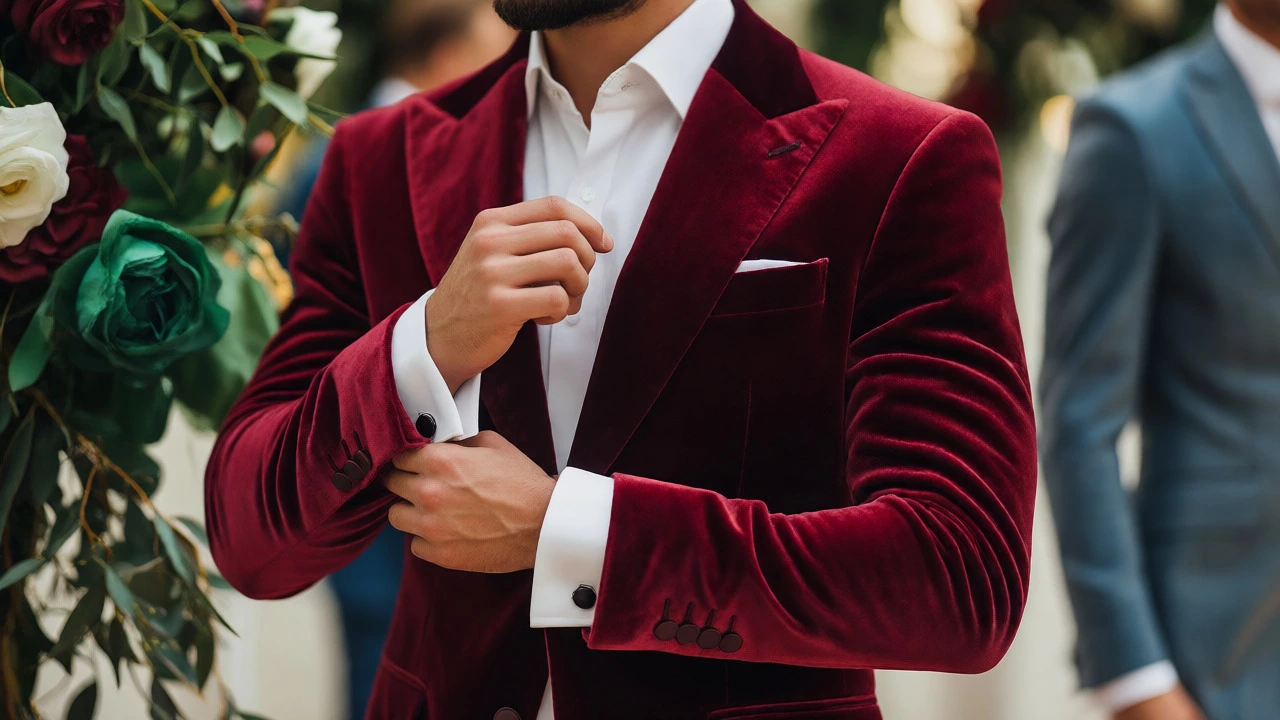
Want to stand out? Burgundy velvet blazers or suits have surged in popularity for fall and winter weddings. This color exudes warmth and richness. It is perfect for grooms who want to be memorable but not eccentric. Pair a burgundy suit with a crisp white shirt and a black or dark gray tie to keep it grounded. Avoid pairing it with other loud patterns unless you have a stylist guiding you.
Tan and Beige: The Summer Essential
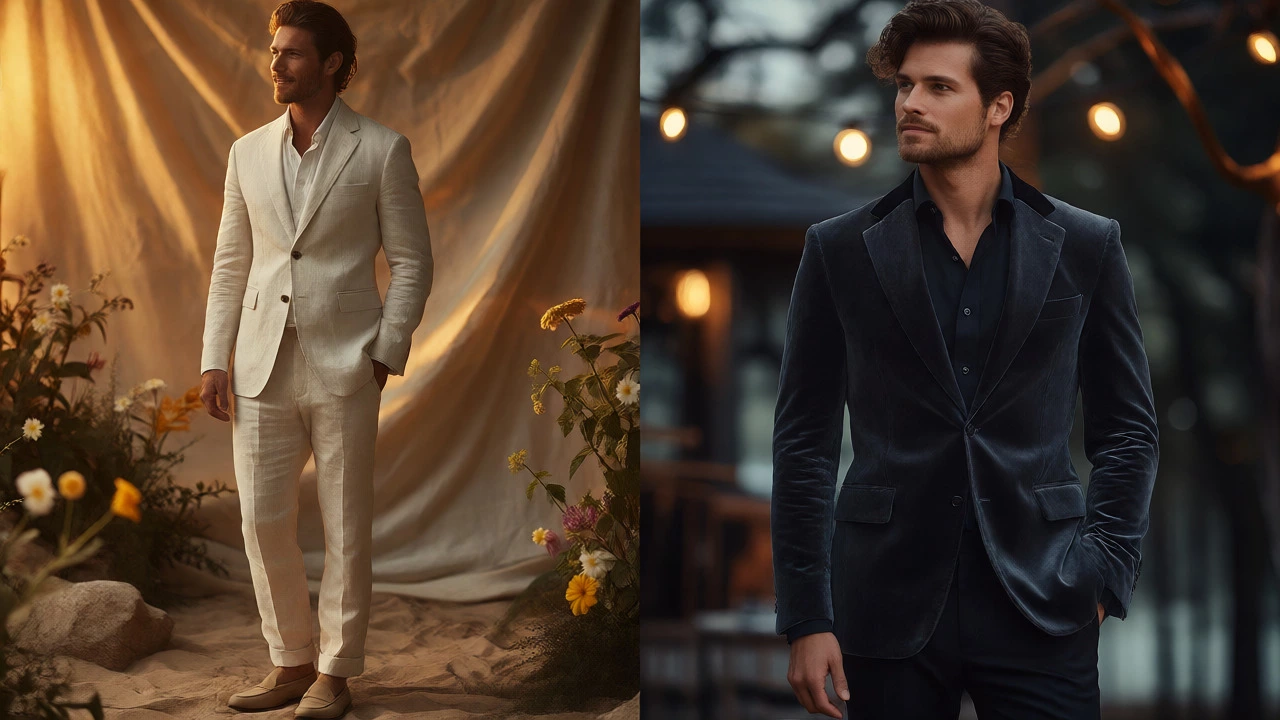
For destination weddings or outdoor summer nuptials, nothing beats a well-tailored tan or beige suit. These earth tones blend seamlessly with natural environments. They signal relaxation and joy. However, fit is critical here. Lighter fabrics show every crease and poor tailoring job. Ensure your suit is custom-fitted or tailored meticulously to avoid looking sloppy.
How to Coordinate With Your Wedding Theme
Your suit doesn’t exist in a vacuum. It needs to talk to your partner’s dress, the bridesmaids’ dresses, and the floral arrangements. If your wedding palette is monochromatic-shades of cream, ivory, and champagne-a black suit might feel too jarring. A taupe or light gray suit would harmonize beautifully. Conversely, if your theme features bold jewel tones like emerald or sapphire, a navy or charcoal suit allows those colors to pop without competing.
Consider the "Anchor Effect." As the groom, you are an anchor point in photos. If everyone else is wearing pastels, you need a darker color to ground the image. If the room is filled with dark suits (for the groomsmen), you might choose a slightly different shade to differentiate yourself subtly, such as a midnight blue instead of black, while keeping the rest of the party in black.
Matching vs. Contrasting
Do you match your suit to your partner’s outfit? Usually, no. Brides often wear white, ivory, or blush. Matching these colors with a suit is tricky and rarely looks right. Instead, aim for complementary tones. If she wears a bohemian lace gown, a textured linen suit in sand or stone works. If she wears a structured satin gown, a sharp navy or charcoal suit mirrors that structure.
Practical Tips for Pulling Off a Non-Black Suit
Choosing a different color changes how you accessorize. You cannot just grab whatever tie you had lying around. Here is how to ensure your look is cohesive.
- Shoe Choice Matters: With black suits, you must wear black shoes. With navy, you can wear dark brown, oxblood, or black. Brown shoes add warmth and break up the monotony. With tan suits, stick to tan or brown loafers or derbies.
- Tie Textures: Since you aren’t using the ultimate neutral (black), play with texture. A knitted silk tie in navy adds dimension. A bow tie in velvet complements a wool suit in colder months.
- Shirt Contrast: White is always safe. Light blue adds freshness, especially with navy or gray suits. Avoid patterned shirts unless the suit is very simple.
- Fit Over Fashion: A poorly fitted navy suit looks worse than a perfectly fitted black one. Spend money on tailoring. The hem, sleeve length, and jacket button stance define the polish of the outfit.
What About the Groomsmen?
This is often the biggest worry. "If I wear blue, do they all have to wear blue?" No. In fact, mixing shades within a family of colors looks intentional and stylish. For example, if you wear a dark navy suit, your groomsmen could wear medium navy, slate blue, or even gray-blue suits. This creates a gradient effect that looks great in group photos.
Alternatively, keep the groomsmen in uniform (e.g., all gray) and let you stand out with a unique element, like a vest, pocket square, or a slightly different shade. Just communicate clearly with them. Send swatches. Don’t assume "blue" means the same thing to everyone. One guy’s royal blue is another’s navy.
FAQ: Common Questions About Groom Suit Colors
Is it rude to wear a non-black suit to a traditional church wedding?
Not at all, provided the suit is formal. A dark navy or charcoal suit is respectful and appropriate for religious settings. The only time black is strictly expected is if the invitation explicitly states "Black Tie Optional" or "White Tie," though even then, dark alternatives are usually accepted in modern contexts.
Can I wear a brown suit to a wedding?
Yes, especially for daytime, outdoor, or rustic weddings. Medium to dark browns are sophisticated and pair well with earthy wedding palettes. Avoid very light beige if the wedding is highly formal or indoors at night, as it can appear too casual.
Do I have to match my suit color to my bridesmaids' dresses?
No, you don’t need to match exactly. In fact, exact matching can look dated. Aim for complementary colors. If the bridesmaids are in sage green, a gray or navy suit works well. If they are in burgundy, a charcoal or black suit balances the intensity.
What is the most flattering suit color for most men?
Navy blue is statistically the most universally flattering color. It enhances complexion, hides sweat marks better than gray, and looks good in both day and night lighting. Charcoal is a close second for those who prefer a darker, more serious look.
Can I wear a patterned suit instead of a solid color?
Subtle patterns like pinstripes, herringbone, or windowpane checks are excellent choices. They add visual interest without overwhelming the scene. Avoid large, loud prints unless your wedding has a specific themed or quirky vibe.