Wedding Neckwear Advisor
Wedding Details
Suit Details
Your Preferences
Choosing between a tie and a bowtie for your wedding suit isn’t just about style-it’s about comfort, confidence, and how you want to show up on your wedding day. Too many grooms stress over this decision because they’ve heard conflicting advice or seen too many outdated wedding photos. The truth? There’s no single right answer. But there is a smart way to decide based on your suit, your personality, and the vibe of your wedding.
What’s the Real Difference?
A necktie and a bowtie might look similar from a distance, but they’re built differently and serve different purposes. A necktie is a long strip of fabric that’s tied in a knot, usually the four-in-hand or half-Windsor. It’s flexible, easy to adjust, and stays put once tied. A bowtie, on the other hand, is pre-shaped or self-tied into a symmetrical bow. It sits higher on the neck and has a more formal, classic look.
Historically, bowties were worn for black-tie events. That’s why you still see them at fancy weddings, galas, or evening ceremonies. But modern grooms are breaking that rule. A well-fitted necktie can look just as elegant-and way more comfortable-if you’re getting married in the afternoon or in a relaxed setting.
When to Choose a Tie
If your wedding is daytime, outdoors, or has a semi-formal or casual dress code, go with a necktie. It’s the easier option for most men. You don’t need to master tying it the night before. You can buy a pre-tied version if you’re short on time or nervous about fumbling with fabric on your wedding morning.
Think about this: if you’re dancing all night, a necktie won’t get caught in your suit jacket like a bowtie might. It also pairs better with modern, slim-fit suits that have narrower lapels. A slim necktie looks balanced. A wide bowtie on the same suit? It can feel mismatched.
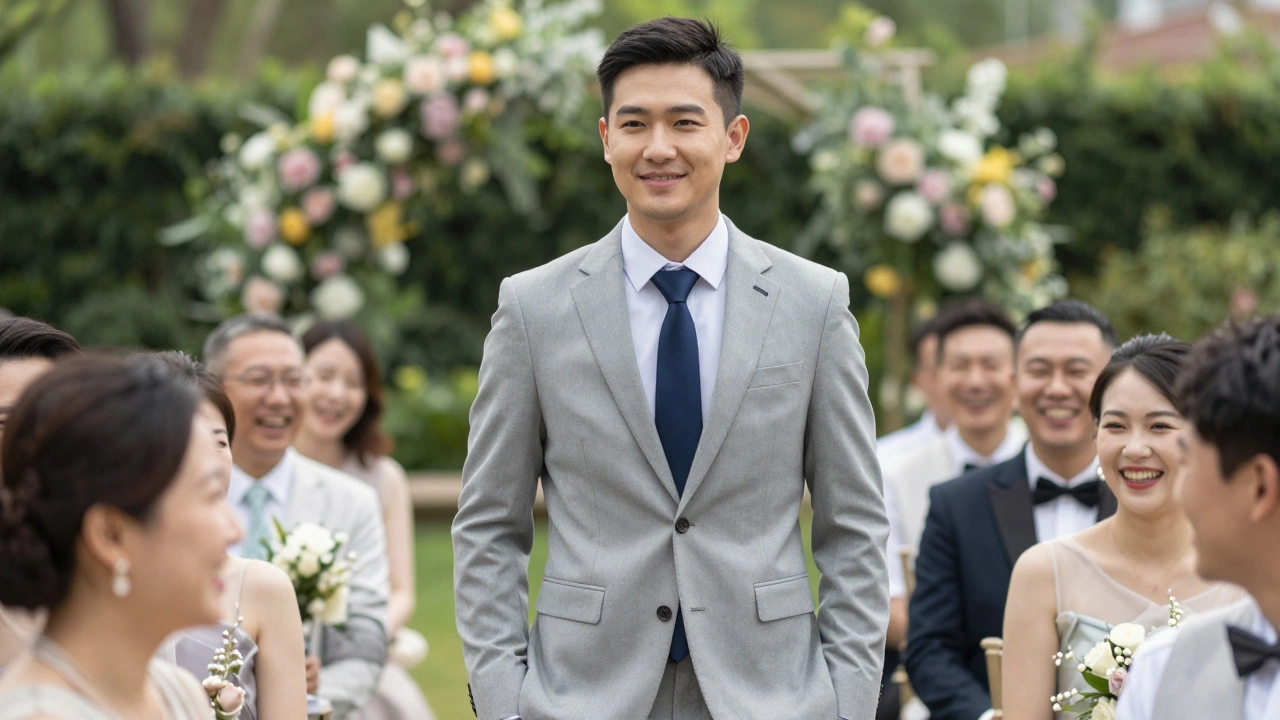
Real-world example: A groom in Cork got married in a light grey suit with a navy silk necktie at a garden reception. He said, "I didn’t want to spend 45 minutes tying a bowtie while my groomsmen were already done. I just wanted to enjoy the day."
When to Choose a Bowtie
Bowties shine in formal settings-think black-tie weddings, evening ceremonies, or venues with chandeliers and marble floors. They signal attention to detail. A self-tied bowtie, in particular, shows effort. It’s not just fashion; it’s a statement.
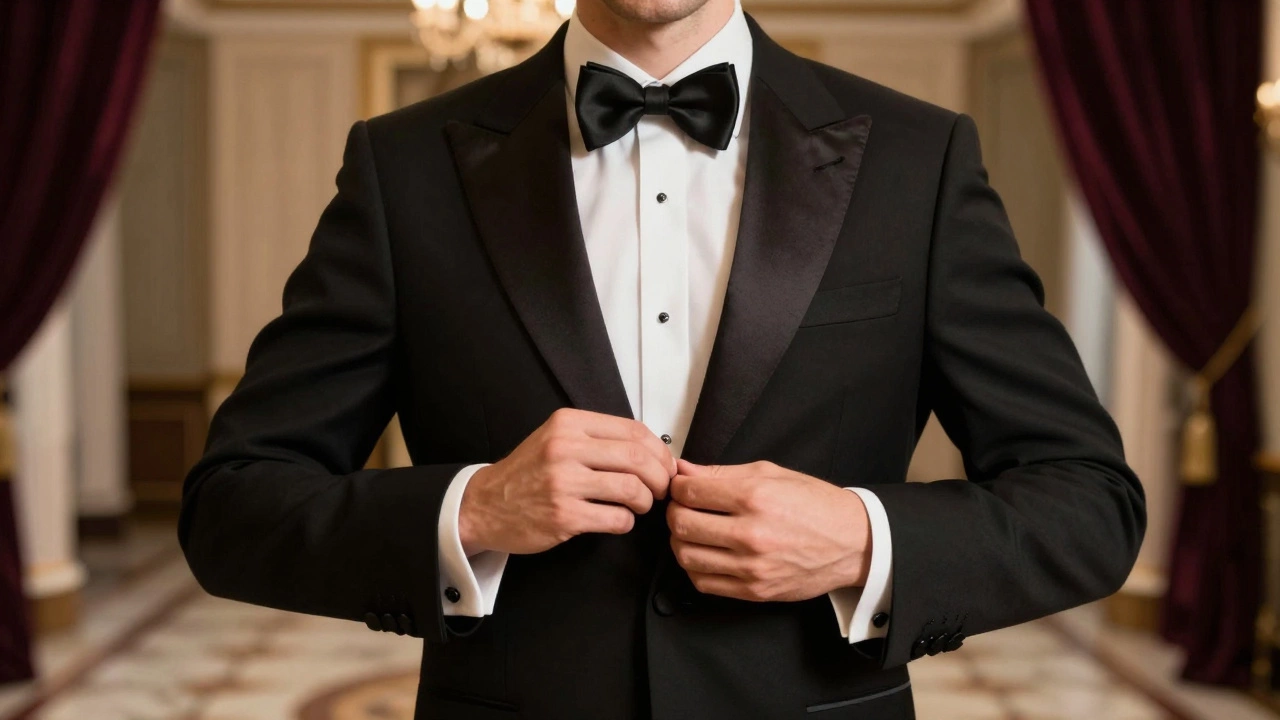
They also work well with tuxedos. If you’re wearing a peak-lapel tuxedo with satin trim, a bowtie is the traditional match. It closes the look. A necktie on a tuxedo? It’s not wrong, but it’ll look out of place to people who know formalwear.
Here’s the catch: bowties need to be the right size. Too big, and they look like a butterfly with a cold. Too small, and they get lost under your collar. The ideal width? About 1.5 inches at the widest point. That’s the sweet spot for most body types.
Fit Matters More Than You Think
Whether you pick a tie or bowtie, fit is everything. A tie that’s too long drags on your stomach. A bowtie that’s crooked looks sloppy. The right length? The tip of the tie or bowtie should touch the top of your belt buckle. No more, no less.
And don’t forget the collar. A spread collar works best with bowties-it gives the bow room to breathe. A point collar? That’s a tie’s best friend. If you’re wearing a button-down collar, go with a tie. Bowties look awkward with them.
Also, check your suit’s lapel width. If your lapels are wide (over 4 inches), a wide bowtie balances it. Narrow lapels? Stick with a slim necktie. Mismatched proportions make you look like you’re trying too hard.
What the Experts Say
Irish tailors in Dublin who’ve been fitting grooms for 30+ years say this: "Most men choose the bowtie because they think it’s more formal. But 7 out of 10 end up regretting it. They’re uncomfortable. They can’t eat. They’re adjusting it all night."
That doesn’t mean bowties are bad. It means most men don’t plan for the reality of wearing one. If you’ve never worn a bowtie before, try one on for dinner the week before the wedding. Sit down. Drink a glass of water. Move around. See how it feels. If you’re constantly tugging at it? Go with a tie.
Color and Fabric Choices
Both ties and bowties come in silk, satin, wool, and even linen. For weddings, silk is the go-to. It catches light beautifully. Satin is shinier and works best with tuxedos. Wool or linen? Only if you’re having a rustic, outdoor, or summer wedding.
Color-wise, match your tie or bowtie to your suit and your wedding palette. If your suit is navy, a burgundy or deep green tie looks rich. If you’re in charcoal, try a silver or navy bowtie. Avoid white unless you’re in a full tuxedo with a wing collar. White ties on regular suits? They look like you’re going to a funeral.
What About Pre-Tied vs Self-Tied?
Pre-tied bowties are convenient. They’re cheaper. They look okay from a distance. But up close? They’re flat. They don’t have the natural dimple of a hand-tied bow. A self-tied bowtie has movement. It looks alive.
Here’s the truth: if you’re going to wear a bowtie, learn to tie it. It’s not hard. Watch a 5-minute YouTube video. Practice once. It takes 20 seconds. You’ll feel proud. And your partner will notice the effort.
Pre-tied neckties? Skip them. They look stiff. If you’re not confident tying a necktie, get a clip-on. It’s better than a pre-tied bowtie.
Real Grooms, Real Choices
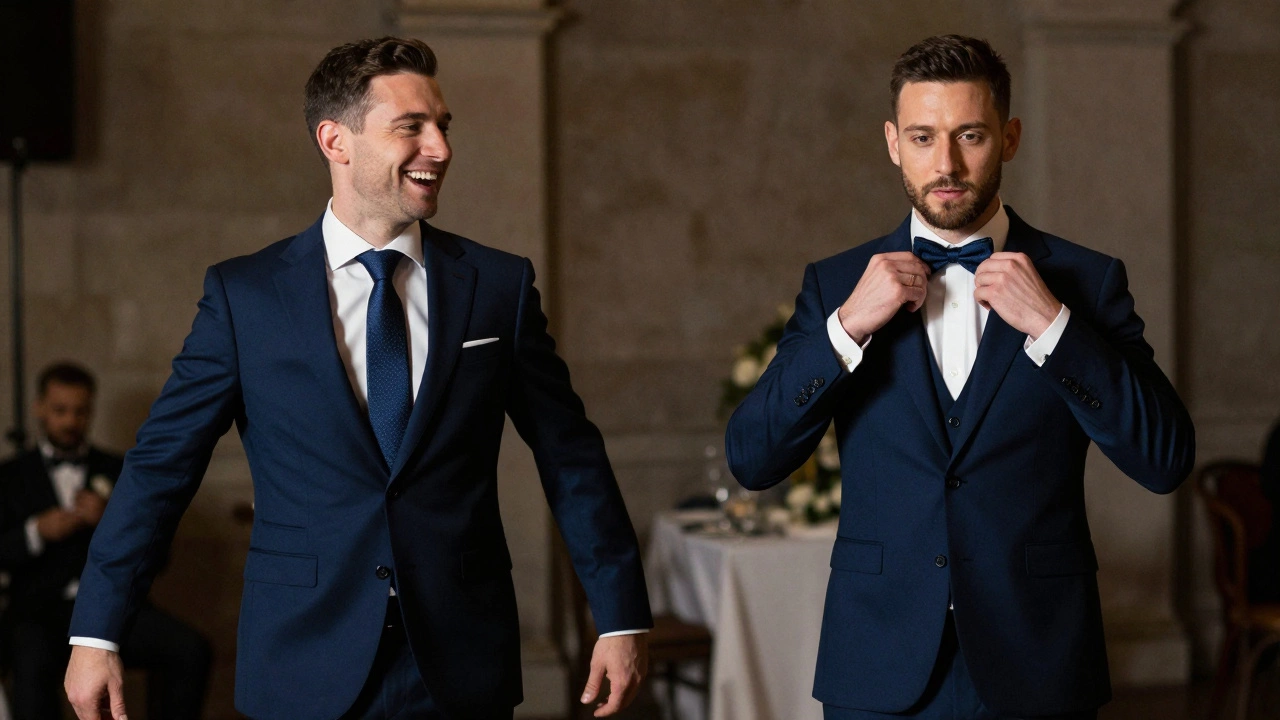
Last year, two grooms in Dublin had nearly identical weddings-same venue, same season, same suit. One wore a navy silk tie. The other wore a black silk bowtie.
The tie-wearer danced all night. He didn’t touch his collar once. His photos looked relaxed. He smiled in every shot.
The bowtie-wearer? He spent half the reception adjusting it. He skipped dessert because he was afraid of spilling. His photos? He looked stiff. Even his mom said, "You looked like you were in a board meeting."
They both looked sharp. But one was comfortable. The other? He was fighting his outfit.
Final Rule: Choose What Feels Like You
There’s no rule that says grooms must wear bowties. That’s an old tradition. Today’s grooms wear what makes them feel like themselves. If you’re laid-back, go with a tie. If you’re classic, go with a bowtie. If you’re unsure? Try both on with your suit. Stand in front of a mirror. Ask yourself: "Do I feel like me?"
Weddings aren’t about following rules. They’re about showing up as the man you are. Your tie or bowtie should feel like an extension of you-not a costume.
Can I wear a bowtie with a regular suit, not a tuxedo?
Yes, you can. A bowtie with a suit works if the suit is well-tailored and the bowtie is slim and made of silk or satin. It’s a stylish, modern twist-but only if the rest of your outfit is balanced. Avoid it with casual suits or patterns that clash.
Is a pre-tied bowtie okay for a wedding?
It’s better than nothing, but not ideal. Pre-tied bowties look flat and unnatural. If you’re going for elegance, invest time in learning to tie one yourself. If you’re pressed for time, choose a necktie instead. It’ll look better and feel more comfortable.
What color tie or bowtie goes with a navy suit?
Navy suits pair beautifully with burgundy, deep green, wine, or charcoal. Avoid black unless it’s a black-tie event. Silk fabric adds shine and depth. Patterned ties? Stick to subtle stripes or dots-no loud prints.
Do I need to match my tie or bowtie to my boutonniere?
Not at all. Matching them exactly looks staged. Instead, pick a color from your bouquet or wedding palette. If your boutonniere has red roses, try a burgundy tie. It creates harmony without being matchy-matchy.
What if I’m not sure which one to pick?
Try both on with your suit. Wear them around the house for 20 minutes. Sit, stand, move. See which one you forget about. That’s the one to choose. Comfort beats tradition every time.