Groom Suit Timeline Calculator
When should you get your wedding suit?
Enter your wedding date to get recommended timeline for your suit.
Buying a suit for your wedding isn’t just about picking something that looks sharp. It’s about timing, fit, and making sure you’re not rushing at the last minute. Too many grooms wait until a month before the wedding and end up stressed, ill-fitting, or worse-stuck with something they hate. So, how far out should a groom get his suit? The answer isn’t one-size-fits-all, but here’s the real timeline most wedding professionals follow.
Start Shopping 6 to 8 Months Before the Wedding
You want to start looking at suits at least six months before your wedding day. That’s not because you need to buy it then, but because you need time to explore options, try things on, and let the process unfold naturally. Wedding suit shops aren’t like regular clothing stores. They don’t keep every size in stock. Most custom or made-to-measure suits take 8 to 12 weeks to make. Even off-the-rack suits need alterations, and tailors get booked solid in peak wedding season.
Think about it: if you wait until four months out, you’re already cutting it close. What if your favorite style is out of stock? What if the fabric you love has a six-week lead time? What if you need two fittings and the tailor only has openings in five weeks? You don’t want to be stuck with a suit that doesn’t fit because you waited too long.
Book Your First Fitting 5 to 6 Months Out
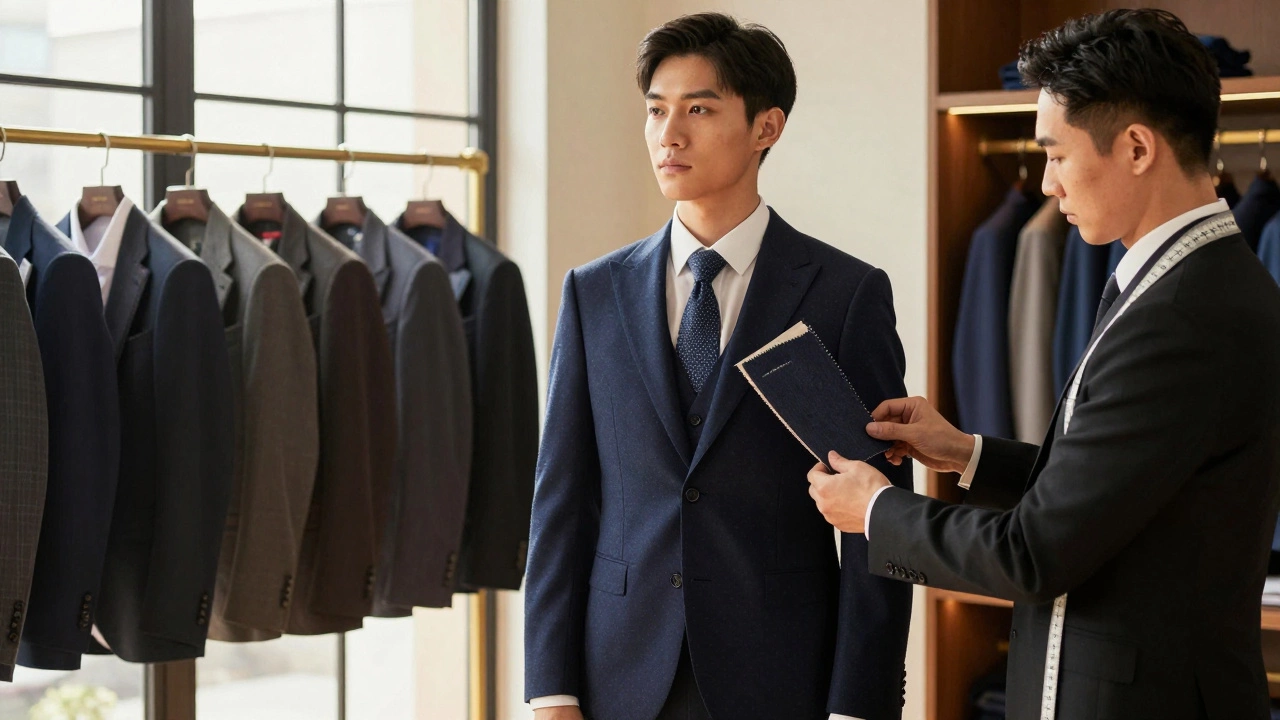
Once you’ve narrowed down your style-classic tuxedo, modern notch lapel, or slim-fit wool suit-book your first fitting. This is when you try on the suit in the fabric and cut you’ve chosen. Most groomsmen will do this around the same time. A good tailor or suit specialist will help you pick the right lapel width, button stance, and trouser break based on your body type.
At this stage, you’re not buying yet. You’re confirming what works. Many shops let you hold a suit for free for a week or two while you think it over. Use that time. Wear it around the house. Sit in it. Walk. See how it feels after an hour. You’ll notice things you didn’t think about-like how the jacket pulls when you raise your arms or if the trousers are too tight across the hips.
Place Your Order 4 to 5 Months Before the Wedding
This is the sweet spot. If you’re ordering a custom suit, 4 to 5 months gives you enough time for the manufacturer to cut, sew, and ship. Off-the-rack suits? You still need 6 to 8 weeks for alterations. Don’t assume tailors can squeeze you in. In cities like Dublin, wedding season peaks from May to September. Tailors are often booked solid by January for June weddings.
Also, don’t forget about accessories. Shoes, ties, cufflinks, pocket squares-they all need to match. Ordering those early means you can test them with the suit during fittings. A dark brown shoe might look fine in the store but clash under wedding lighting. Better to find out now than on your wedding day.
First Fitting for Alterations: 2 to 3 Months Out
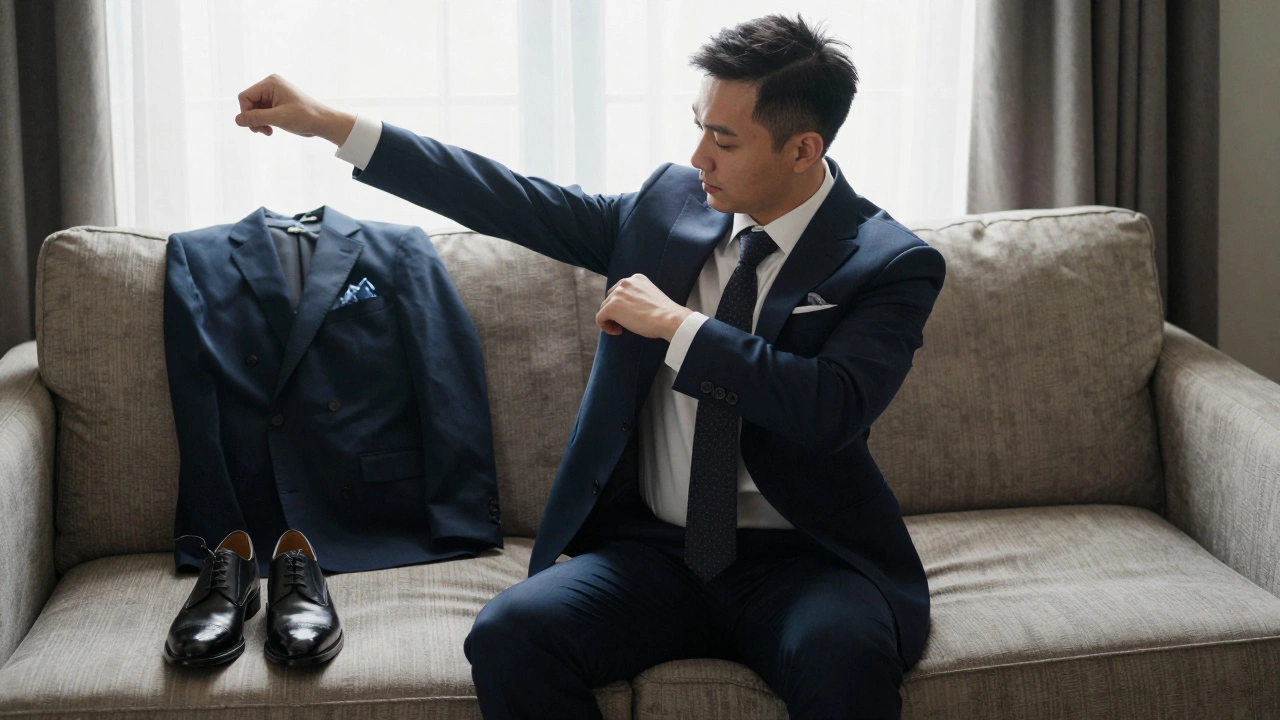
Once your suit arrives, schedule your first alteration fitting. This is where the magic happens. The tailor will pin the jacket to shorten sleeves, taper the waist, adjust the shoulder line, and hem the trousers. You’ll be surprised how much a good alteration changes the look. A suit that’s 90% perfect can become flawless with minor tweaks.
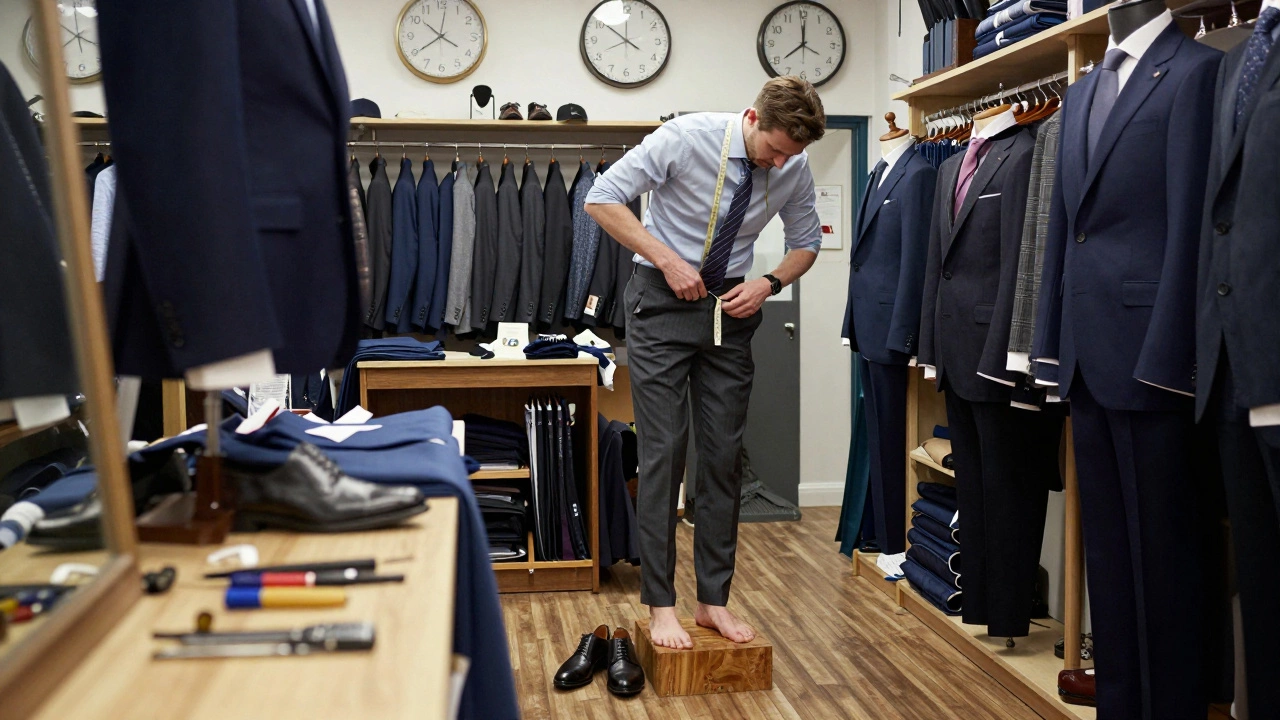
Bring the shoes you’ll wear on the wedding day. That’s critical. The trouser break changes depending on whether you’re wearing dress shoes, loafers, or boots. A suit hemmed without shoes can end up too long-or worse, too short-once you’re standing in your actual footwear.
Final Fitting: 2 to 3 Weeks Before the Wedding
Your final fitting should happen at least two weeks before the big day. This gives your tailor time to fix any last-minute issues. Maybe the jacket feels tight after you’ve eaten a few too many wedding rehearsal dinners. Maybe the trousers need a half-inch adjustment after you’ve lost a pound or two. These things happen.
And yes, you should wear the same undergarments you’ll wear on your wedding day. No one talks about this, but a thick undershirt or bulky boxer briefs can change how a suit sits. If you’re planning to wear a vest or waistcoat, bring it to this fitting too.
What If You’re Last-Minute?
Let’s be real-some grooms wait until three weeks out. Maybe the wedding was moved up. Maybe you got engaged unexpectedly. If that’s you, don’t panic. Here’s what works:
- Go to a store that offers same-day or next-day alterations. Many high-end menswear shops in Dublin have emergency alteration services.
- Choose a ready-to-wear suit in a neutral color like charcoal or navy. Avoid black unless it’s a formal evening wedding-black suits can look like funeral attire under daylight.
- Don’t try to do everything yourself. Hire a tailor. Even a 30-minute session can fix 80% of fit issues.
- Order shoes and accessories online with free returns. That way, you can try them on at home before committing.
It’s not ideal, but it’s doable. Just don’t make it a habit.
Why Timing Matters More Than You Think
It’s not just about the suit fitting right. It’s about your peace of mind. Wedding planning is stressful enough. You don’t need to add “suit emergency” to the list. Getting your suit early means:
- You can relax knowing you look good.
- You have time to change your mind if you’re not happy.
- You can coordinate with your groomsmen without rushing them.
- You avoid paying rush fees or settling for poor quality.
And let’s not forget: photos. Your wedding photos will last forever. You’ll look back at them for decades. Do you want to remember a suit that was a little too tight, or one that made you feel confident and comfortable?
What to Avoid
- Buying online without trying on first. Suits vary wildly between brands. What fits in Zara won’t fit the same in Hugo Boss.
- Waiting until the day before the wedding. No tailor in their right mind will take on a last-minute job without charging triple.
- Choosing a suit based on what your groomsmen are wearing. Your body is different. Your style should be too.
- Ignoring the trousers. Most guys focus on the jacket and forget that ill-fitting pants ruin the whole look.
Pro Tip: Keep the Suit
After the wedding, don’t just pack it away. Have it cleaned and stored properly. A well-made suit can last 10 years or more. Wear it to job interviews, anniversaries, or even a fancy dinner. It’s an investment. The right suit doesn’t just look good on your wedding day-it becomes part of your style for years to come.
How far in advance should a groom order a custom suit?
A groom should order a custom suit 5 to 6 months before the wedding. Custom suits take 8 to 12 weeks to make, and tailors need time for fittings. Ordering early avoids delays and ensures you have time for adjustments.
Can I buy a suit 2 months before the wedding?
Yes, but it’s risky. Off-the-rack suits can be altered in 4 to 6 weeks, but tailors get busy during peak wedding months. If you’re buying 2 months out, choose a store with fast alteration service and be prepared to pay extra for rush work.
Should the groom get his suit before or after the groomsmen?
The groom should get his suit first. This sets the tone for color, fabric, and style. Groomsmen can then match their suits to yours, not the other way around. It’s easier to adjust multiple suits to one standard than to change the groom’s suit to fit everyone else.
Is it okay to wear a rental suit for a wedding?
Rental suits are fine if you’re on a tight budget or have no plans to wear the suit again. But they often don’t fit well, and the fabric quality is lower. If you can afford it, buying a suit-even a basic one-is better. You’ll look sharper, feel more confident, and have something to keep.
What’s the best fabric for a wedding suit?
Wool is the best choice for most weddings. It’s breathable, durable, and drapes well. For summer weddings, consider lightweight wool or linen blends. Avoid polyester blends-they look cheap and don’t breathe well. Navy, charcoal, and light gray are the most versatile colors.