Bridal Bouquet Flower Calculator
Calculate the ideal flower count for your wedding bouquet based on shape, flower volume, and budget. The tool uses real wedding data from Ireland, UK, and US to provide realistic recommendations.
Your Ideal Bouquet
Estimated flower count:
Key Recommendations
There’s no single answer to how many flowers are in a bridal bouquet-because it’s not about counting petals. It’s about balance, budget, and the bride’s vision. But if you’re standing in a florist’s shop wondering if 50 roses is too much or 12 carnations is too little, here’s what actually works in real weddings today.
What Most Brides Actually Use
Most bridal bouquets fall between 20 and 40 flowers total. That’s not a rule-it’s the sweet spot most florists design for. Why? Because anything under 15 looks sparse in photos, and anything over 50 becomes heavy, hard to hold, and can overwhelm the dress. A bouquet with 30 flowers, including filler and greenery, is the most common size you’ll see in weddings across Ireland, the UK, and the US.
Let’s break that down. A typical 30-flower bouquet might include:
- 5-7 main flowers (like roses, peonies, or ranunculus)
- 8-12 secondary flowers (such as spray roses, lisianthus, or hydrangea clusters)
- 10-15 filler flowers and greenery (eucalyptus, ferns, waxflower, or baby’s breath)
This mix gives fullness without bulk. It’s the kind of bouquet that looks lush in photos but still fits comfortably in one hand. I’ve seen brides carry bouquets with 60+ flowers-but those are usually for large, formal weddings with dramatic gowns. For 90% of brides, less is more.
Flower Choice Changes Everything
Not all flowers are created equal when it comes to volume. A single peony is the visual weight of four roses. A hydrangea head counts as five to eight blooms in one. That’s why a bouquet with just 12 hydrangeas can look just as full as one with 35 roses.
Here’s a quick reference:
- High-volume flowers: Hydrangeas, peonies, dahlias, chrysanthemums
- Medium-volume flowers: Roses, ranunculus, tulips, carnations
- Low-volume flowers: Spray roses, lisianthus, stephanotis, waxflower
If you’re on a budget, start with high-volume blooms. You’ll get fullness with fewer stems. A bouquet made of 10 hydrangeas and 15 eucalyptus branches can look more expensive than 40 roses. Florists know this. They’ll often suggest swapping out a few expensive blooms for filler that does the same job.
Size Matters-But Not How You Think
There are three standard bouquet shapes, and each has a different flower count:
- Cascading: 40-60 flowers. This is the classic, trailing design often seen in formal or vintage weddings. It’s dramatic but requires strong arms to hold. Best for tall brides or those wearing ball gowns.
- Round: 25-40 flowers. The most popular choice. Compact, balanced, and easy to carry. Works with almost any dress style.
- Hand-tied: 20-35 flowers. Modern, loose, and romantic. Often includes wildflowers or seasonal blooms. Feels effortless and is perfect for outdoor or rustic weddings.
Don’t let Pinterest fool you. A 70-flower cascading bouquet might look stunning on a runway-but it’s not practical for a 4-hour reception where you’ll be hugging guests, holding a glass of champagne, and posing for photos. Most brides regret carrying something too heavy. I’ve seen brides swap their bouquets halfway through the day for a smaller one.
Season and Budget Are the Real Deciders
Flower prices swing wildly by season. In January, a single rose can cost €5 in Dublin. In May, it’s €1.50. If you’re working with a €300 bouquet budget, you can’t afford 40 imported peonies. You can afford 15 local tulips, 10 freesias, and a handful of foraged branches.
Here’s what real budgets look like:
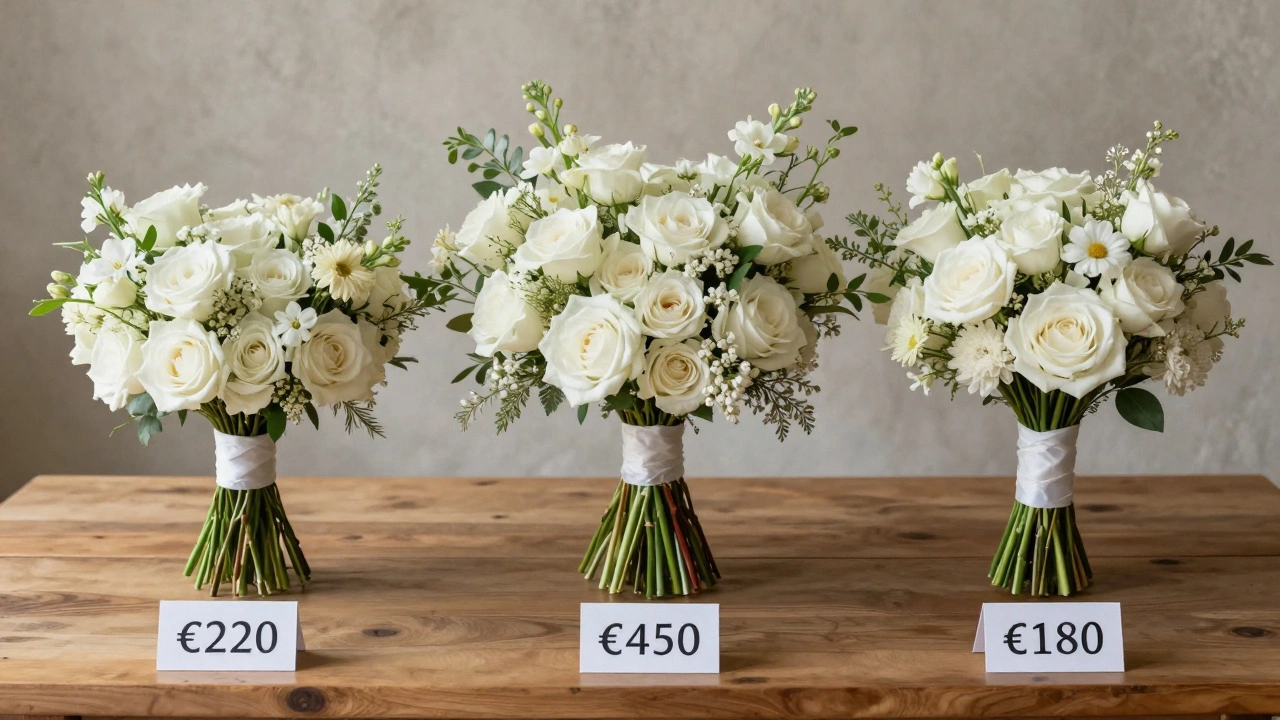
- €150-€250: 20-30 flowers. Focused on one or two main blooms with plenty of greenery. Often includes seasonal or local flowers.
- €250-€400: 30-45 flowers. Mix of premium blooms and fillers. More variety, more texture.
- €400+: 45-70 flowers. Often includes imported flowers, luxury blooms like orchids or gardenias, and more intricate designs.
Many brides don’t realize they can save 30-40% by choosing in-season flowers. A bouquet of dahlias in September costs half what it does in February. Your florist can help you pick blooms that look expensive but are affordable because they’re local and in season.
What to Avoid
Here are three mistakes I see over and over:
- Trying to match your dress exactly. A white dress doesn’t need all-white flowers. A pop of color or greenery adds depth. Most photos look better with contrast.
- Choosing flowers that wilt fast. Calla lilies, tulips, and hydrangeas are beautiful-but they need constant hydration. If your ceremony is outdoors in the sun, avoid them unless your florist knows how to prep them properly.
- Overloading with filler. Baby’s breath and ferns are great for texture-but if your bouquet looks like a bush, it’s too much. Less is more in photography.
Also, don’t assume more flowers = more beautiful. I’ve seen bouquets with 50 roses that looked flat because they were all the same size and color. A bouquet with 25 different types of flowers-varying in shape, texture, and shade-looks far more dynamic.
How to Know You’ve Got It Right
Ask yourself these three questions before you say yes:
- Can I hold this bouquet for 20 minutes without my arms aching?
- Does it look good next to my dress in the mirror-not just in the florist’s vase?
- Would I still love this bouquet if I saw it in a photo 10 years from now?
Most brides know when it’s right. It’s not about the number. It’s about how it feels in your hands and how it looks when you walk down the aisle. The perfect bouquet isn’t the biggest. It’s the one that feels like you.
Real Examples from Irish Weddings
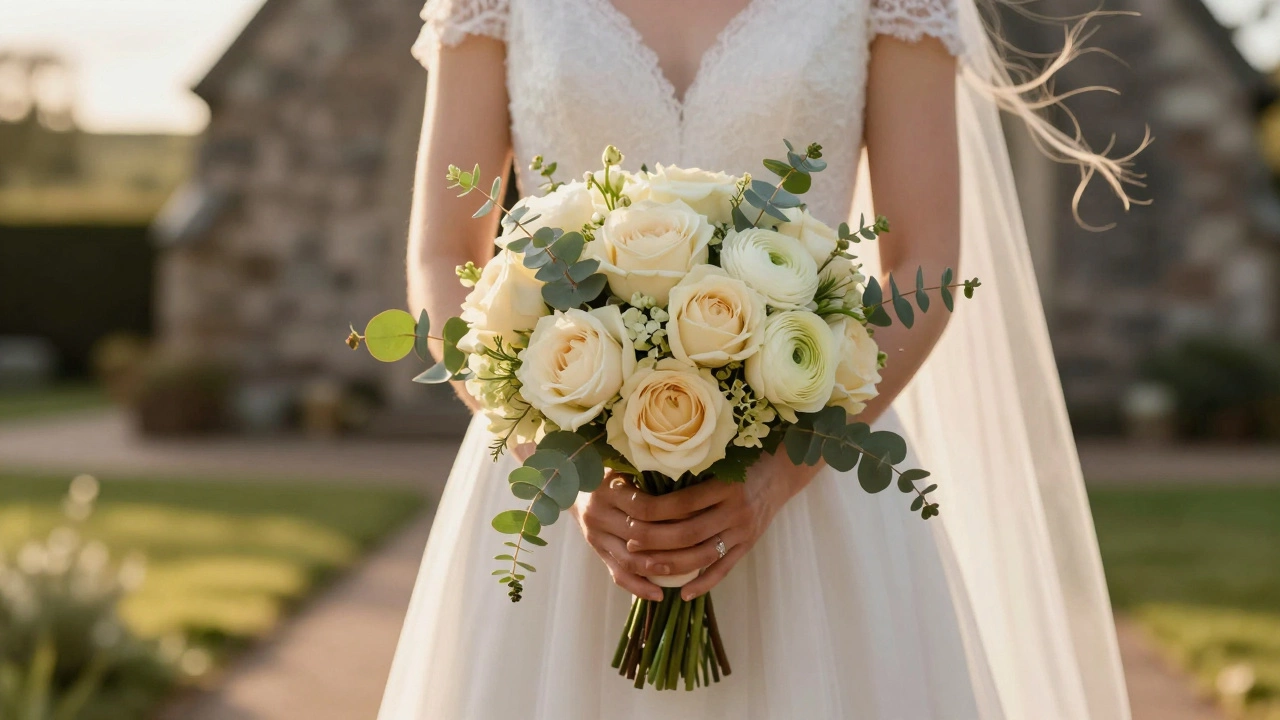
Last spring, a bride in Kilkenny carried a bouquet with 28 flowers: 8 cream roses, 6 ranunculus, 4 hydrangeas, and 10 eucalyptus branches. It cost €220. She said it felt light, looked elegant in photos, and didn’t clash with her lace dress.
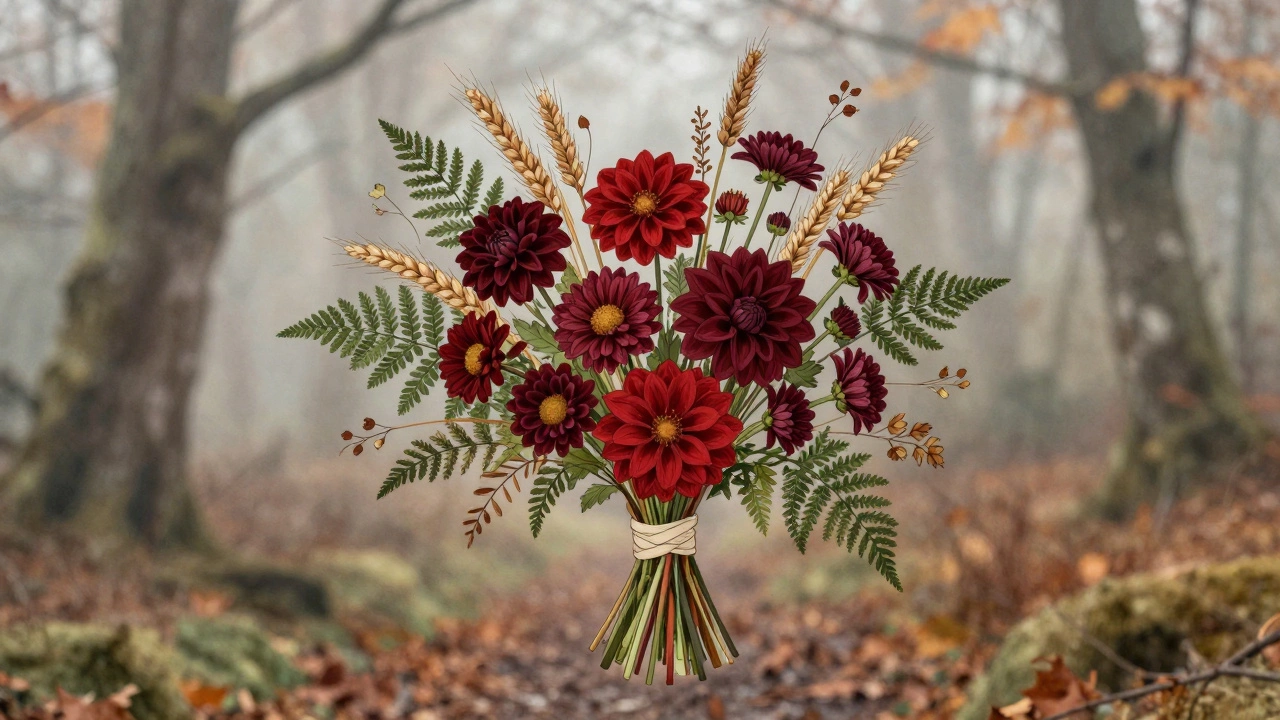
A couple in Galway had a fall wedding with 32 flowers: 10 deep red dahlias, 8 burgundy chrysanthemums, 6 dried wheat stems, and 8 ferns. It cost €270. It was rustic, seasonal, and totally unique.
Neither bouquet had 50 flowers. Both were perfect.