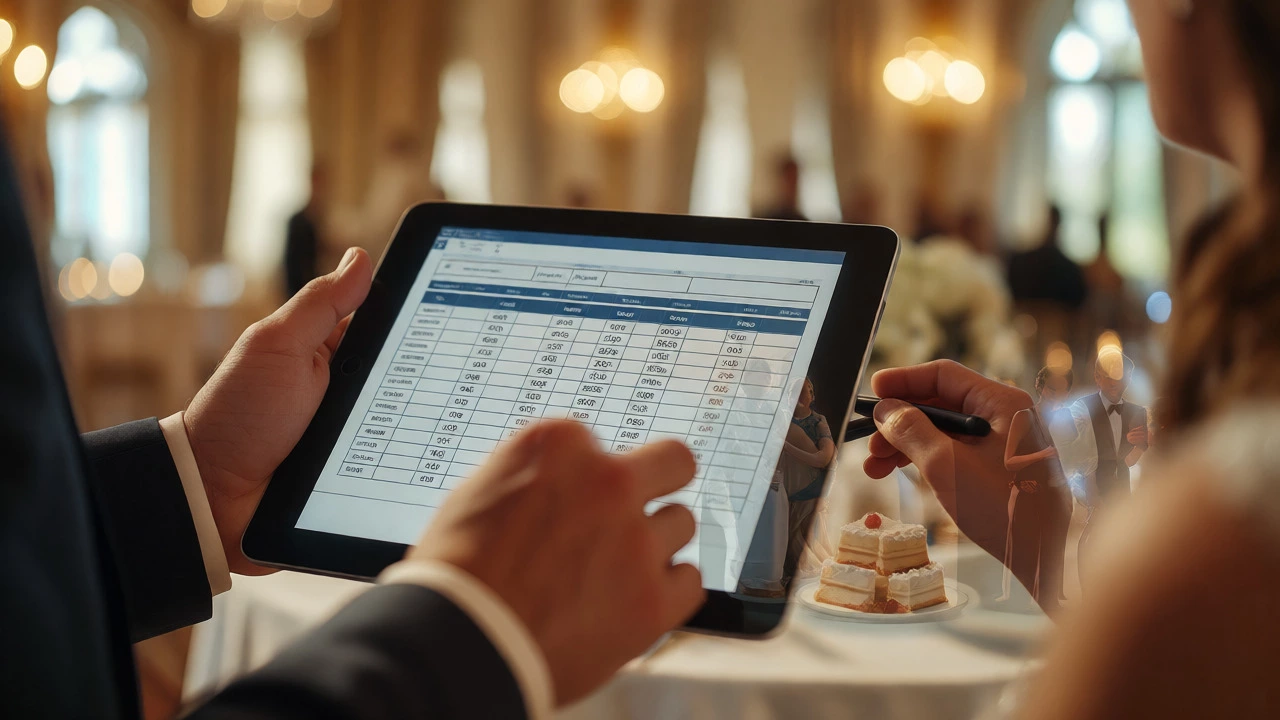
Wedding Cake Serving Calculator
Event Details
Recommended Plan
Enter your details and click calculate to see how much cake you need.
Risk Assessment
Recommended Tier Configuration
Pro Tips
You’re staring at a spreadsheet, trying to figure out if that three-tier masterpiece you just saw on Pinterest will actually feed your aunt Linda, her husband, and their two kids who always sneak seconds. It’s the most common panic attack in wedding cake serving size planning: Will there be enough cake? The short answer is yes, but only if you do the math right before you sign the contract.
Most people guess wrong. They think one slice per person means buying exactly 100 slices. But here’s the reality: not everyone eats cake. Some guests are diabetic, some are too full from dinner, and some are saving room for the late-night pizza. Yet, others will want two pieces because it’s free sugar. So, how much cake is needed for 100 guests? Let’s break down the actual numbers so you don’t end up with a mountain of leftovers or an empty plate.
The Golden Rule of Wedding Cake Portions
There is no single magic number, but there is a widely accepted industry standard. For a seated reception where cake is served as dessert, you generally need about 1.5 servings per guest. Why more than one? Because of the "seconds" factor. If you plan for exactly 100 slices for 100 people, you will likely run out by table 8. Conversely, if you buy 200 slices, you’ll have half a cake left over that tastes stale by Monday.
For a cocktail-style reception or a daytime event where cake might be the main sweet treat, bump that up to 2 servings per guest. For formal dinners where cake is strictly a ceremonial cut followed by plated dessert, you can drop it to 1 serving per guest, provided you have backup options like petit fours or macarons.
| Event Style | Servings Per Guest | Total Servings for 100 Guests | Risk Level |
|---|---|---|---|
| Formal Seated Dinner (Plated Dessert) | 1.0 - 1.2 | 100 - 120 | Low (if other desserts exist) |
| Standard Reception (Cake is Dessert) | 1.5 | 150 | Moderate |
| Cocktail Hour / Daytime Event | 2.0 | 200 | High (if under-catered) |
Understanding Tier Sizes and Yield
Once you know you need roughly 150 servings, you need to translate that into inches. This is where things get tricky because tiered cakes come in different shapes-round, square, and hexagonal-and each yields different amounts depending on how the baker cuts them.
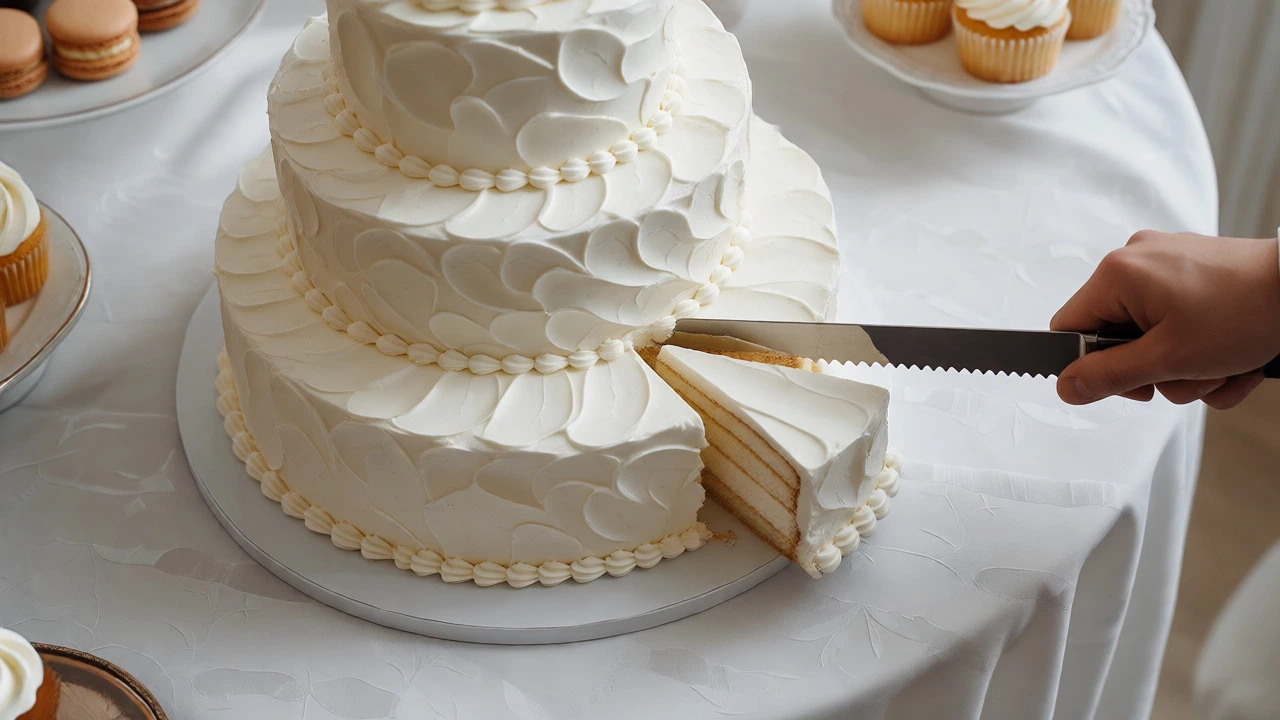
Most bakers use the "standard service" method, which cuts a slice that is 1 inch wide at the back and tapers to a point at the front. This is efficient but often leaves guests feeling cheated if they prefer a chunkier piece. Alternatively, the "party cut" creates rectangular slabs (1x2 inches), which are easier to serve quickly but yield fewer servings per tier.
Here is a realistic look at what common round tiers yield using standard wedge cuts:
- 6-inch tier: Yields approximately 8-10 servings.
- 8-inch tier: Yields approximately 14-16 servings.
- 10-inch tier: Yields approximately 22-24 servings.
- 12-inch tier: Yields approximately 30-34 servings.
- 14-inch tier: Yields approximately 40-44 servings.
To hit that 150-serving target for 100 guests, a typical configuration might look like this:
- A 14-inch bottom tier (approx. 42 servings)
- A 12-inch middle tier (approx. 32 servings)
- A 10-inch top tier (approx. 24 servings)
- An 8-inch accent tier (approx. 16 servings)
- A decorative dummy tier or smaller top tier (adds visual height without food cost)
This stack gives you about 114 real servings. Wait, didn’t we say 150? Yes. Here is the pro tip: Dummy tiers. Many couples opt for a large, impressive-looking cake where the bottom two tiers are real cake, and the upper tiers are styrofoam dummies covered in fondant. This saves money and weight while still looking grand. If you go all-real, you’d need a massive five-tier monster. If you use dummies, you can keep the real cake manageable.
The "Headcount Buffer" Strategy
Your RSVP list says 100. Your final headcount might be 92 or 105. Bakers usually require a final count 7-14 days before the wedding. What happens if 10 extra people show up? Or if your cousin Dave brings his new girlfriend who wasn’t on the list?
Always order for 110% of your confirmed guest count. For 100 guests, plan for 110 servings minimum, ideally 120-150 depending on the dessert mix. Why? Because cutting errors happen. Sometimes a tier collapses slightly during transport. Sometimes the server cuts a slice too thin, or too thick. Having a buffer prevents the awkward moment when the last guest gets a crumb instead of a slice.
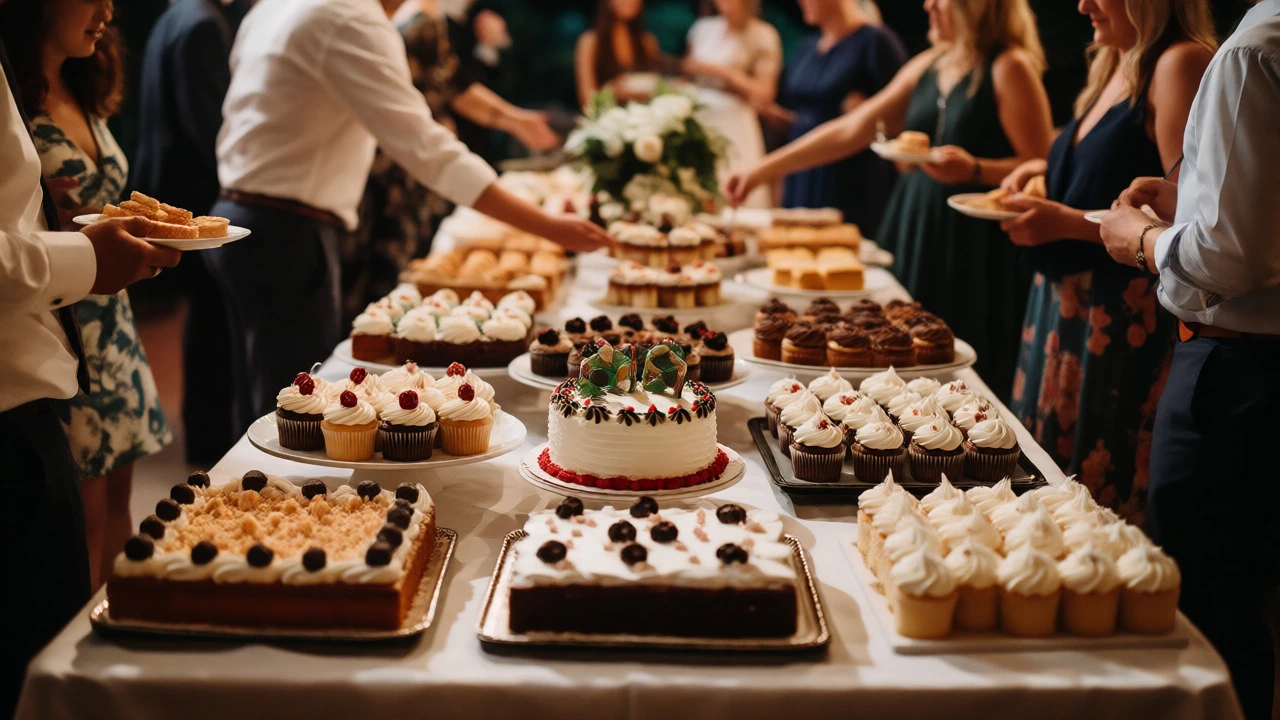
If you’re working with a strict budget, consider adding a dessert bar alongside the main cake. You can scale down the main cake to 80-100 servings and fill the gap with cupcakes, cake pops, or brownies. These are cheaper per unit and easier to distribute. Plus, variety wins hearts. Not everyone likes vanilla sponge; some prefer chocolate or lemon.
Factors That Change How Much Cake You Need
Not all weddings are created equal. Several variables shift the needle on how many slices you actually need to buy.
Alcohol Service
If you’re serving heavy cocktails or champagne, people tend to eat less solid food. However, alcohol also lowers inhibitions, leading to more "just one more piece" requests. In dry counties or non-alcoholic events, expect higher cake consumption because sweets become the primary indulgence.
Time of Day
Lunch weddings see lower cake uptake because guests haven’t had time to build up an appetite for dessert after a light meal. Evening weddings, especially those ending late, see higher demand as guests seek a sugar rush before heading home. If your reception ends at 9 PM, stick to the 1.5 rule. If it goes until midnight, push toward 2.0.
Other Desserts
Are you serving ice cream? Fruit tarts? Macarons? If yes, reduce your cake count. If the cake is the sole source of sweetness, double your estimate. I’ve seen brides order a tiny cake because they forgot they weren’t serving any other sweets, resulting in chaos when 60 people rushed the table simultaneously.
How to Calculate Exact Servings for Your Specific Cake
Don’t rely solely on the baker’s quote. Do your own sanity check. Most professional bakers use a chart based on the American Institute of Baking standards, but these vary. Ask your baker specifically: "How many servings does this specific tier size yield using your standard cut?"
Here’s a quick formula to verify their math:
Area of Circle = π × r²
For an 8-inch cake, radius is 4. Area ≈ 50 square inches. If a standard slice is roughly 1 inch wide at the outer edge and 4 inches deep, the area is small, but the volume matters. Generally, assume 1 serving per 2-3 square inches of surface area for standard wedges. For party cuts (rectangles), assume 1 serving per 2 square inches.
Let’s test it. An 8-inch cake has ~50 sq inches. At 2.5 sq inches per serving, that’s 20 servings. But wait, my earlier list said 14-16. Why the discrepancy? Because you can’t pack rectangles perfectly into a circle without waste. Always underestimate the yield by 10-15% to account for trim loss and irregular cuts.
Common Mistakes When Ordering Cake for 100 Guests
I’ve made every mistake in the book, and so have my clients. Here’s what to avoid:
- Ignoring the "Top Tier" Tradition: Traditionally, the top tier is saved for the first anniversary. If you’re doing this, subtract those servings from your total. Don’t let your guests eat the keepsake.
- Underestimating Children: Kids don’t care about elegant plating. They want a big chunk. If you have 20+ children attending, add extra servings or provide separate mini-cupcakes for them to save the main cake inventory.
- Forgetting Staff: Your photographers, videographers, DJs, and venue staff need to eat. Usually, they eat during breaks, but they will grab cake. Order 5-10 extra servings specifically for the crew.
- Choosing Fancy Over Functional: A tall, narrow cake looks great in photos but is hard to cut and serves fewer people than a wider, shorter cake. Prioritize width over height if feeding capacity is your main concern.
Alternative Solutions to Traditional Tiered Cakes
If the math stresses you out, ditch the tiered cake entirely. Modern weddings are increasingly moving toward dessert tables.
With a dessert table, you control portions precisely. You can buy 150 cupcakes and 50 slices of sheet cake. Sheet cake is incredibly efficient. A standard quarter-sheet pan feeds 24-30 people. Two sheet cakes plus a small tiered centerpiece covers 100 guests easily and costs significantly less than a custom tiered design.
Another option is "cake bars." Small individual cakes, truffles, or cookies arranged beautifully. This eliminates the cutting line entirely. No waiting for servers to slice and plate. Guests grab and go. It’s faster, cleaner, and ensures everyone gets a fair share.
Final Checklist Before Signing the Contract
Before you hand over your deposit, ask these questions:
- "What is the exact serving count for this design?"
- "Do you charge extra for additional servings if my headcount increases?"
- "Is delivery included, and do you provide cutting tools?"
- "Can we have a tasting to ensure the density matches our expectations?" (Dense mud cakes satisfy quicker than airy sponges.)
- "What happens if we have leftovers? Can we take them home?"
Planning for 100 guests doesn’t have to be a guessing game. By understanding the difference between RSVPs and actual consumption, accounting for seconds, and choosing the right format, you’ll ensure everyone walks away happy-and well-fed.
Do I really need 2 servings per guest?
No, not always. 2 servings per guest is recommended for casual, cocktail-style, or daytime events where cake is the primary dessert. For formal seated dinners with plated desserts, 1 to 1.2 servings per guest is sufficient. The average safe bet for most weddings is 1.5 servings per guest to account for those who want seconds and those who don't eat cake.
How many tiers do I need for 100 guests?
Typically, a 3-to-4 tier cake is required to feed 100 people if all tiers are edible. For example, a combination of 12-inch, 10-inch, and 8-inch tiers yields around 100-120 servings. To achieve a larger visual impact without increasing food cost, many couples use dummy tiers (styrofoam) for the top layers, allowing for a 5-tier appearance while only baking the bottom 2 or 3 tiers.
What is the difference between a 'standard' and 'party' cut?
A standard cut is a triangular wedge, typically 1 inch wide at the back. It looks traditional but yields fewer servings due to shape inefficiency. A party cut consists of rectangular slabs (usually 1x2 inches). Party cuts maximize the amount of cake you can get from a tier, yielding 20-30% more servings, but they look less elegant on a plate. Choose party cuts for high-volume events or buffet-style service.
Should I include the top tier in my serving count?
If you plan to freeze the top tier for your first anniversary, exclude it from your serving count. For a 100-guest wedding, this might mean reducing your total available slices by 10-20 servings. Ensure your baker knows this so they can adjust the overall size or suggest a separate small cake for the ceremony cut if you want to preserve the whole top tier intact.
What if I have more guests than expected?
Most bakers allow you to increase your final count by 10-15% up to 7-14 days before the event. If you exceed this, you may need to purchase backup desserts like cupcakes or sheet cake from a grocery store bakery on the day of the wedding. Always communicate with your caterer or venue coordinator about having a contingency plan for unexpected guests.