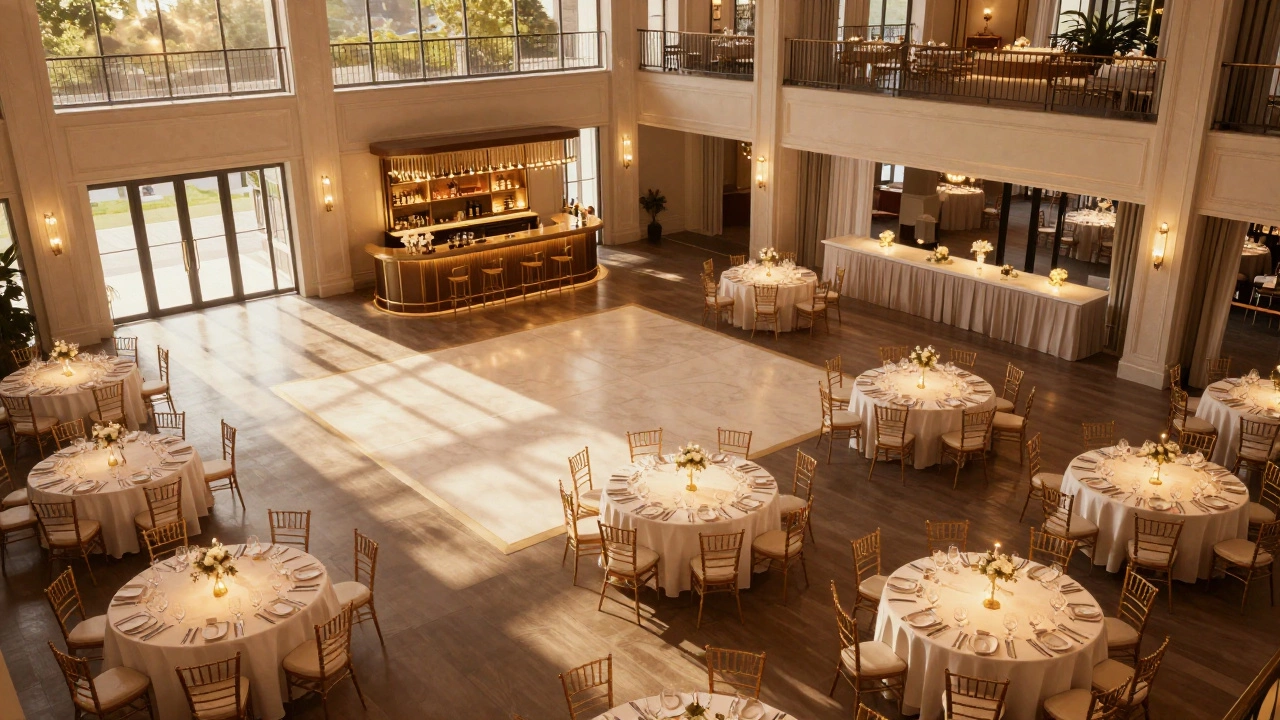
Wedding Reception Space Planner
- Dining Area -- sq ft
- Dance Floor Size -- sq ft
- Circulation & Zones -- sq ft
Imagine walking into your wedding venue. The music is soft, the lights are warm, but as you try to find a seat or grab a drink, you bump into a giant floral arch that blocks the path to the bar. Your guests look confused. You feel stressed. This isn’t just bad luck-it’s bad **wedding layout design**.
A great wedding layout isn’t just about making things look pretty on paper. It’s about engineering the experience of your day. It dictates how your guests move, where they sit, how they eat, and whether they actually have fun dancing with their cousins. If you get the flow wrong, even the most expensive flowers won’t save the vibe. Let’s break down exactly how to build a floor plan that works for everyone.
Start With the Venue Constraints
Before you pick a color palette or order centerpieces, you need to know the hard limits of your space. Every venue has physical boundaries that will dictate your options. Walk through the room-or better yet, walk through it with a tape measure if you can.
Look for these non-negotiables:
- The Kitchen Access: Where does food enter? Where do dirty plates leave? You cannot block these paths with tables or decor.
- The Restroom Location: Guests will be heading there often. Ensure the route is clear and well-lit.
- The Dance Floor Placement: Is it fixed? Can it be moved? In many barns or tents, the dance floor is pre-installed. In ballrooms, you might have flexibility.
- Power Sources: Where can the DJ or band plug in? Long extension cords across the floor are tripping hazards and ugly eyesores.
If you’re using a tent, remember that the structure itself takes up space. Poles in the middle of the room (common in pole tents) create visual barriers. Frame tents offer more open space but cost more. Know your ceiling height too-low ceilings mean you can’t hang heavy chandeliers or tall candelabras without them hitting people’s heads.
Map the Guest Journey
Your wedding layout should guide guests naturally from one stage of the event to the next. Think of it as a story arc. They arrive, they watch the ceremony, they mingle, they eat, they celebrate. Each transition needs to be smooth.
For outdoor ceremonies, consider the distance between the ceremony site and the reception hall. If it’s more than a two-minute walk, you’ll need a shuttle or a very strong signpost system. Nobody wants to wander lost while wearing heels.
In the reception area, the "Golden Triangle" rule is essential. This is the concept that the three busiest areas-the entrance, the bar, and the dance floor-should form a triangle that doesn’t intersect with the dining area. If guests have to walk past every table to get to the bar, your dinner service will be delayed, and your guests will be annoyed. Keep the bar near the entrance or side walls, not tucked behind the head table.
Decide on Seating Styles
How your guests sit changes the energy of the room. There is no single right answer, but each style serves a different purpose.
| Style | Best For | Pros | Cons |
|---|---|---|---|
| Round Tables | Traditional receptions, large groups | Encourages conversation among strangers; fits standard venue layouts easily | Takes up more floor space per person; some guests may feel isolated if paired with an ex |
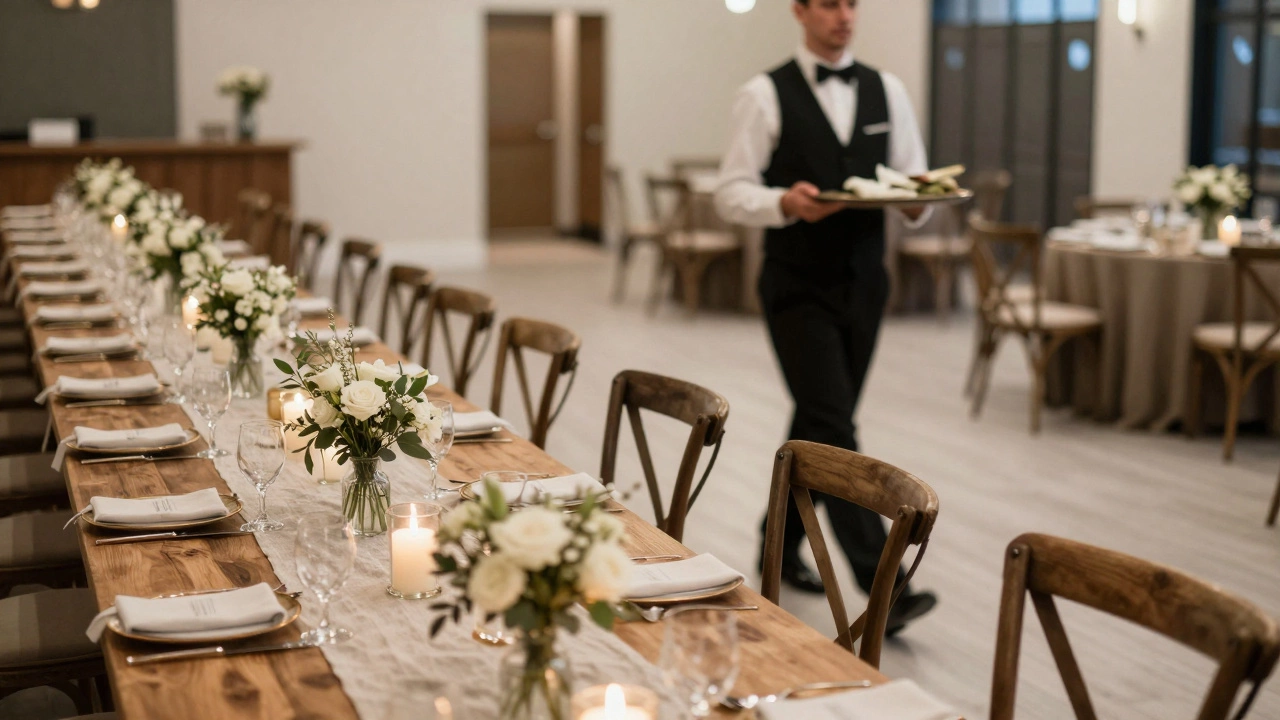
| Long Banquet Tables | Farmhouse vibes, intimate gatherings | Creates a communal feel; saves space; easier to decorate linearly | Conversation only happens with immediate neighbors; can feel rigid |
| Mixed Layout | Modern weddings, varied guest lists | Rounds for family/friends, long tables for bridal party/kids; flexible | Requires more careful planning to balance aesthetics |
| Cocktail Style | Rehearsal dinners, summer parties | Maximum mingling; less furniture cost; encourages movement | No place to rest; food service must be constant; hard for elderly guests |
If you choose round tables, stick to 60-80 inch diameters. These comfortably seat 8-10 people. Anything larger becomes awkward because people on opposite sides can’t hear each other. For square tables, aim for 4 feet wide, seating 4 people max. Never squeeze 6 people onto a small square table-it looks cramped and feels uncomfortable.
Position the Key Zones
Once seating is set, you need to anchor the major functional zones. These are the spots where all eyes will be drawn.
The Head Table vs. Sweetheart Table: If you want a traditional look, a long head table at the front of the room works. But it isolates you from your guests. A sweetheart table (just you and your partner) or a family table (you plus parents/siblings) feels more modern and inclusive. Place this table so it faces the dance floor or the main focal point, not the kitchen door.
The Cake Table: Don’t hide the cake in a dark corner. Place it near the entrance or along a main walkway where guests will see it as they come in. This doubles as a photo op station. However, keep it away from high-traffic choke points so people don’t crowd around it during dinner.
The Photo Booth: This is a secondary dance floor. Place it in a quieter corner, away from the loud speakers of the DJ, but still visible enough that people know it’s there. Provide good lighting here-ring lights or string lights work best. If you put it next to the bar, it gets too noisy. If you put it next to the restrooms, it smells bad.
Flow and Spacing Rules
You might think you can pack tables tightly to fit more guests, but this is a mistake. Crowded rooms feel hot, tense, and unsafe. Follow these spacing guidelines:
- Table-to-Table Distance: Leave at least 36 inches (90 cm) between the edges of adjacent tables. This allows servers to pass with trays without bumping elbows.
- Walkways: Main aisles should be at least 48 inches (120 cm) wide. This accommodates two people walking side-by-side or a server cart passing a guest.
- Dance Floor Size: A common rule of thumb is to allocate 2-3 square feet per dancer. If you expect half your guests to dance at once, calculate accordingly. For 100 guests, aim for a 15x20 foot dance floor. Too small, and it becomes a mosh pit. Too big, and it looks empty.
Also, consider sightlines. Can everyone see the officiant during the ceremony? Can guests at the back of the room see the first dance? If your venue has pillars, avoid placing tables directly behind them. Pillars break up the view and make photos look cluttered.
Lighting and Atmosphere Cues
Lighting defines the layout as much as furniture does. In the evening, natural light disappears, and artificial light takes over. Use lighting to guide movement and highlight zones.
Hanging string lights or chandeliers over the dance floor creates a natural boundary. People instinctively stay under the lights when dancing. Similarly, placing uplights along the perimeter of the room draws the eye inward, making the space feel larger and cozier. Avoid harsh overhead fluorescent lights during dinner-they wash out skin tones and kill the romance. Dimmers are your best friend.
If you’re having an outdoor reception, ensure pathways are lit. Stepping stones with solar lights or lanterns lining the walkway prevent accidents and add charm. Never assume moonlight is enough for safety.
Accessibility and Inclusivity
A thoughtful layout includes everyone. Check if your venue has wheelchair access. If not, can you rent a ramp? Ensure that at least one aisle is wide enough for a wheelchair or walker (minimum 36 inches, ideally 48). Place seats for guests with mobility issues near the restroom and away from stairs.
Consider noise levels. If you have young children or elderly relatives, create a "quiet zone" with comfortable seating away from the speakers. This doesn’t have to be fancy-just a few lounge chairs in a dimly lit corner with soft music. It shows care and consideration.
Test the Plan Before the Day
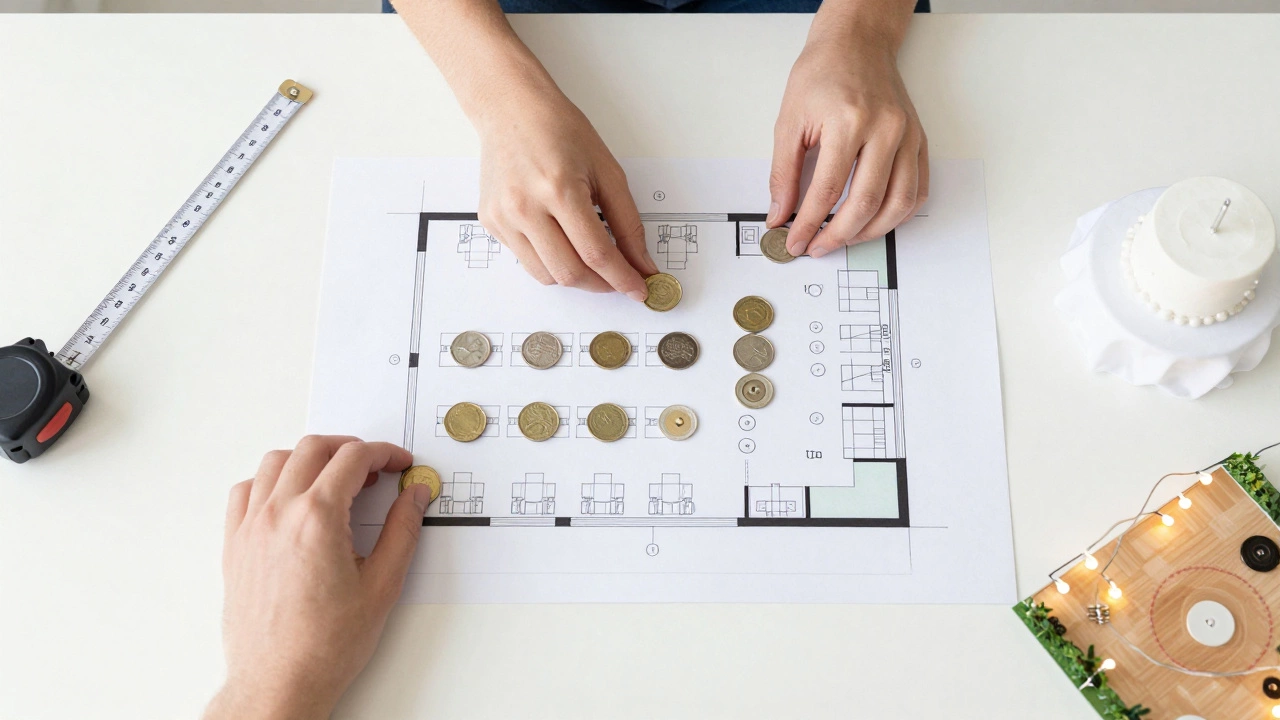
Don’t rely solely on a digital drawing. Print your floor plan at actual scale (1:100 or similar) and use coins or buttons to represent tables. Move them around physically. Walk the path yourself. Does the bar feel too far? Is the head table blocking the view?
If possible, visit the venue at the same time of day as your wedding. Light and temperature change throughout the day. An outdoor ceremony at 4 PM in May in Dublin will feel different from one at 7 PM in July. Adjust your layout for weather contingencies-have a backup indoor spot mapped out if rain threatens.
Finally, share the plan with your vendors. Your caterer needs to know where the buffet line goes. Your photographer needs to know where the best light is for portraits. Your DJ needs to know where to stand to project sound evenly. When everyone aligns on the layout, the day runs smoothly.
How many guests fit at a 60-inch round table?
A 60-inch round table comfortably seats 8 guests. It can technically hold 10, but it will feel tight, especially if people are eating plated meals. For cocktail-style setups, you can squeeze 10-12, but comfort drops significantly.
Where should the dance floor be placed in relation to the tables?
Place the dance floor centrally but offset slightly towards the back or side of the room. It should be visible from most tables but not so central that it blocks views of the head table or cake. Ideally, it forms part of the "Golden Triangle" with the bar and entrance, ensuring easy access without crossing dining areas.
What is the minimum aisle width for a wedding reception?
Main walkways should be at least 48 inches (120 cm) wide to allow two people to pass comfortably or for a server to navigate with a tray. Side aisles between tables can be narrower, but never less than 36 inches (90 cm) to ensure servers can reach every plate without stretching.
Should I use a head table or a sweetheart table?
It depends on your preference. A head table is traditional and keeps the wedding party together, but it can isolate you from guests. A sweetheart table is more intimate and modern, allowing you to enjoy your meal with just your partner. Many couples now opt for a family table, including parents and siblings, which balances intimacy with inclusion.
How do I handle a wedding layout for a small venue?
In small venues, prioritize flow over formality. Use smaller tables (4-6 seats) to save space. Consider a cocktail-style reception with limited seating to encourage mingling. Place the dance floor and bar close together to maximize open floor space. Remove any unnecessary decor that blocks pathways or reduces usable area.