Dollar Store Flower Realism Planner
Transform $1.25 bundles into lush arrangements. Use this tool to estimate costs and ensure you don't miss any critical preparation steps.
Budget Estimator
Shopping List
- Focal Bundles: 0
- Filler Bundles: 0
- Total Estimated Cost: $0.00
Preparation Checklist
0%You just walked out of the dollar store with a bag full of plastic stems and a sinking feeling. They look like what they are: cheap, stiff, and slightly shiny in a way that screams "plastic." But here is the secret nobody tells you at the craft table: dollar store flowers are not meant to be used straight out of the package. They are raw material. With about fifteen minutes of work per bouquet, you can transform these $1.25 bundles into arrangements that pass the close-up inspection test at your reception. I have done this for three weddings in Dublin where the budget was tight but the vision was lush. The difference between "cheap" and "realistic" isn't money; it's technique.
| Problem | Symptom | Quick Fix |
|---|---|---|
| Plastic Sheen | Petals reflect light like vinyl | Matte spray or sandpaper buffing |
| Uniform Shape | All blooms identical size | Cut petals shorter or mix brands |
| Visible Wire | Green wire shows through leaves | Tape stem or wrap with floral tape |
| Stiff Leaves | Leaves don't droop naturally | Bend gently over a hot spoon |
Why Cheap Fakes Fail (And How to Fix Them)
The biggest giveaway isn't the flower head itself-it's the details our brains process subconsciously. Real plants have imperfections. Leaves have veins, slight discolorations, and irregular edges. Dollar store artificial flowers usually lack this nuance. They come off the assembly line perfect, uniform, and coated in a glossy finish that catches the light unnaturally under venue spotlights.
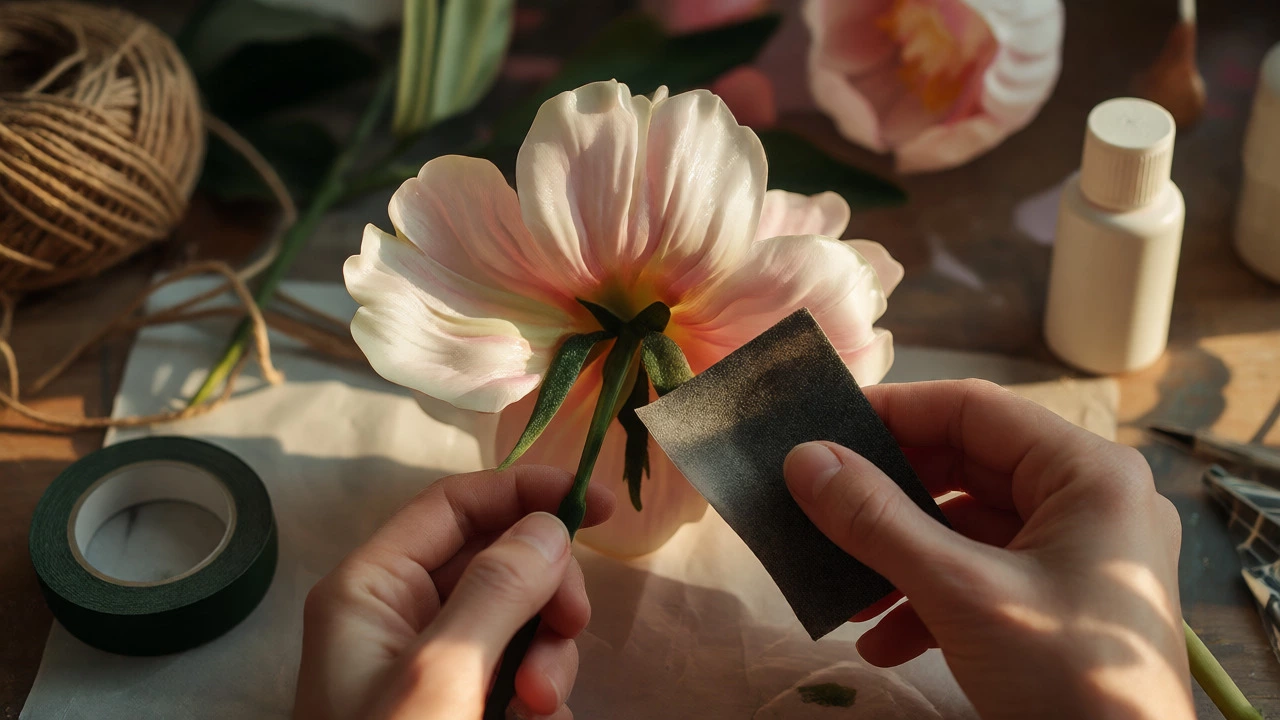
To fix the sheen, you need to kill the shine. Grab some fine-grit sandpaper (400 grit works well) and lightly buff the undersides of the petals and leaves. You aren't trying to destroy them; you're creating micro-abrasions that diffuse light. For larger blooms like peonies or roses, a quick mist of matte clear sealant from an art supply store works wonders. It takes ten seconds and removes that "wet plastic" look instantly. If you don't have sealant, baby powder rubbed gently into the fabric petals also helps absorb excess gloss.
Mastering the Stem Game
Nothing ruins a realistic illusion faster than seeing bright green wire poking through a leafy section. Most budget faux flowers use thin, colored wires that are too visible. Here is the hack: buy a roll of dark green floral tape and a pack of brown jute twine. Wrap the lower third of each stem tightly with the tape. This does two things. First, it hides the wire color. Second, it adds texture. When you arrange them together, the textured stems blend into the foliage rather than standing out as individual sticks.
If the wire core feels too flimsy when you bend the stem, reinforce it. Insert a thicker floral wire down the center of the stem before wrapping. This gives you control. Real flowers wilt; fake ones don't. To mimic life, you need to force movement. Bend stems slightly so they aren't perfectly vertical. Create asymmetry. A straight row of identical stems looks like a fence, not a garden.
Mixing Sources for Natural Variation
Your brain detects patterns quickly. If every rose in your bouquet is exactly 4 inches wide, it looks manufactured. The trick is mixing sources. Don't just buy one bundle of roses. Buy three different types of red flowers from the dollar store-maybe a small carnation, a medium spray rose, and a large single bloom. Then, supplement with one higher-quality item from a discount retailer like TK Maxx or Dunnes Stores if you have a specific focal flower in mind.
Vary the heights. Cut some stems shorter than others. In nature, flowers grow at different rates depending on sunlight and soil. Replicate that chaos. When arranging, place the taller, darker blooms in the back and the lighter, smaller ones in front. This creates depth. A flat arrangement looks like a sticker; a layered one looks like a living thing.
The Power of Greenery
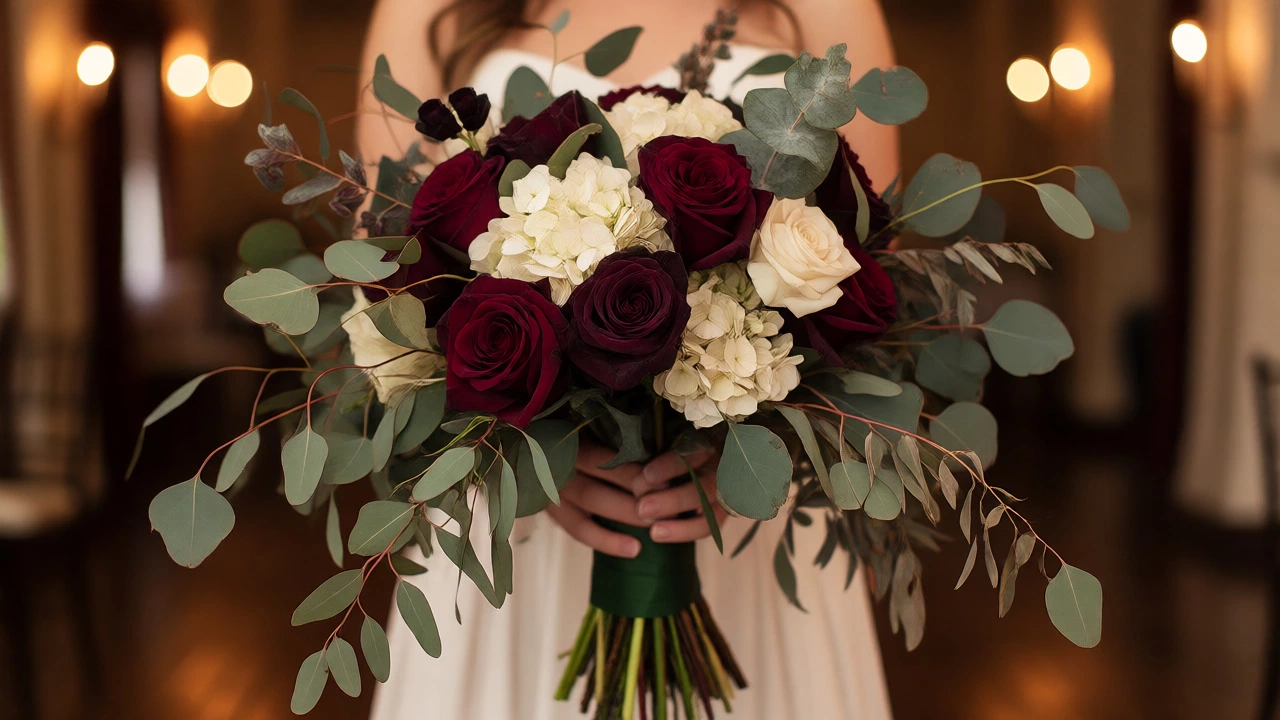
Flowers are only half the battle. Faux greenery is often even cheaper and more obviously fake than the blooms. Dollar store eucalyptus and ferns tend to be rigid and uniformly green. To fix this, mix real dried greenery with the artificial stuff. Buy a bundle of dried eucalyptus from a florist or online supplier-it lasts forever and smells faintly of tea tree oil, which adds sensory realism.
Alternatively, dye your fake greenery. Use a weak solution of green food coloring and water to dip-dye the tips of plastic leaves. This creates an ombré effect that mimics natural growth patterns. Or, tear some leaves slightly. Yes, tear them. A small rip on the edge of a leaf looks like insect damage or wind wear. Perfection is suspicious; imperfection is believable.
Assembly Techniques That Fool the Eye
When you start building your bouquets or centerpieces, avoid the classic spiral technique unless you are skilled. Instead, use the hand-tied method loosely. Group flowers in odd numbers-three, five, seven. Our eyes find symmetry artificial. Tuck filler flowers like baby's breath or waxflower deep into the gaps. These tiny white dots break up the solid blocks of color and add airiness.
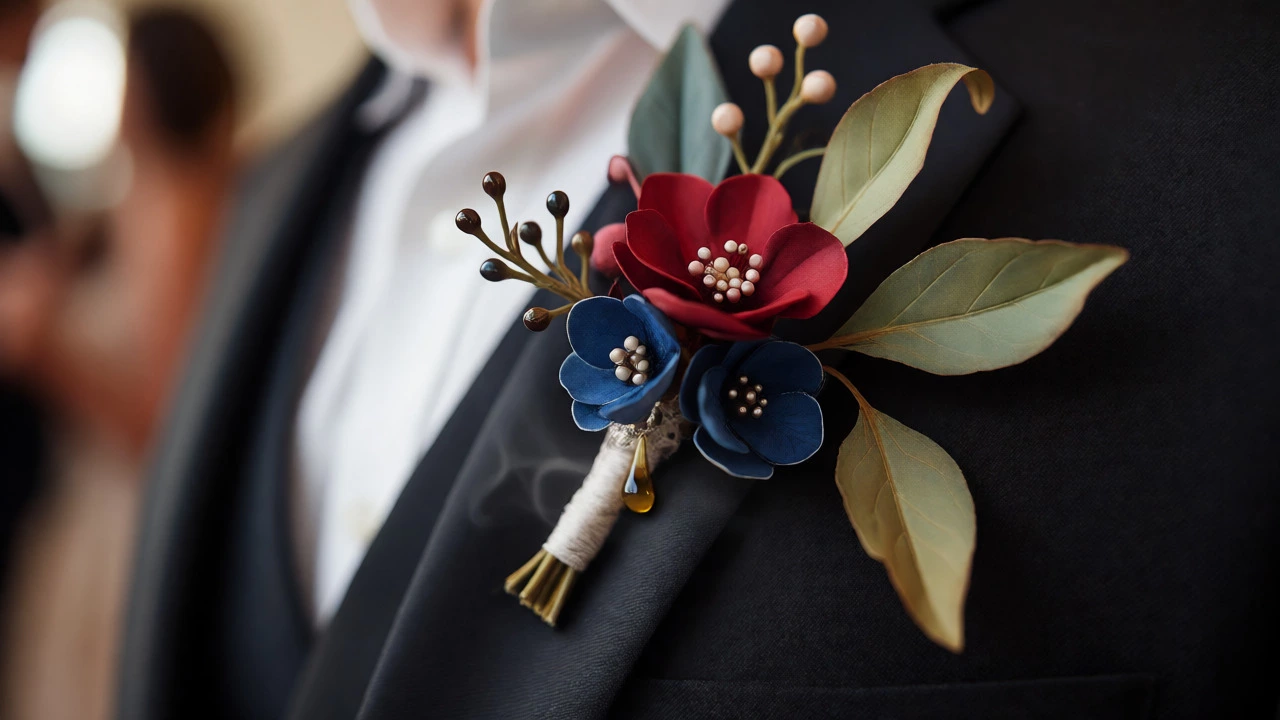
For boutonnieres and corsages, hide the mechanics. Use a pin to secure the stem, then cover the pin head with a small bead or a tiny piece of lace. Never let the viewer see the hardware. If you are making a bridal bouquet, consider adding a few real flowers mixed in. Even just two or three real garden roses among twenty fake ones will elevate the entire look because guests will touch and smell the real ones, assuming the rest are similar.
Lighting Matters More Than You Think
You might think your flowers look great in daylight, but venues rarely have pure daylight. They have warm tungsten bulbs or cool LED strips. Plastic reflects these lights differently than organic matter. Test your arrangements under the actual lighting conditions of your venue. If possible, take photos with flash on. Flash exposes the plastic sheen immediately. If your photos look too shiny, go back and apply more matte treatment or swap out the most reflective blooms.
Darker colors hide flaws better than pastels. White and pale pink show dust and manufacturing seams easily. Deep reds, burgundies, and navy blues mask imperfections effectively. If you want a pastel palette, choose cream or champagne shades rather than stark white. Cream has subtle yellow undertones that mimic aged paper or natural petal variations, whereas pure white looks synthetic.
Final Touches: Scent and Texture
We judge flowers by sight, but scent triggers memory. Dollar store flowers smell like nothing-or worse, like chemicals. Add a drop of essential oil to a cotton ball tucked into the base of the bouquet. Lavender, rose, or jasmine work well. Just a hint. Too much smells like a bathroom air freshener. This olfactory cue tricks the brain into accepting the visual input as real.
Finally, clean your flowers before the big day. Dust accumulates on static-charged plastic. Wipe each petal with a dry microfiber cloth. Any speck of dust looks like dirt, which looks like neglect. Keep them in a sealed box until the morning of the event. Once arranged, keep them away from direct heat sources like candles or heaters, which can warp plastic petals permanently.
Do dollar store flowers fade in sunlight?
Yes, prolonged exposure to direct UV rays can cause dyes in cheap plastics to bleed or fade. If your ceremony is outdoors in bright sun, try to keep the flowers in shade until the moment you walk down the aisle. Using a UV-protective spray can help, but keeping them shaded is the most effective method.
Can I wash dollar store flowers?
Most can be wiped with a damp cloth, but avoid soaking them. Water can seep into the wire joints and cause rust or loosen glue bonds. If they get dirty during setup, use a lint roller to remove debris instead of wet cleaning.
Which dollar store flowers look most realistic?
Peonies, hydrangeas, and ranunculus tend to hide their artificial nature best because their complex, ruffled structures distract from the material. Simple shapes like tulips or calla lilies are harder to fake convincingly because their smooth surfaces highlight plastic textures.
How many flowers do I need for a bouquet?
A standard bridal bouquet usually requires 15-20 focal blooms and 10-15 filler stems. Since dollar store bunches often contain 3-6 stems, plan on buying 4-6 bunches of main flowers and 2-3 bunches of fillers per bouquet. Always buy extra for mistakes.
Is it tacky to use fake flowers at a wedding?
Not anymore. High-quality faux flowers are standard in high-end events because they stay fresh all day. The key is execution. Well-prepared fake flowers look intentional and stylish. Poorly prepared ones look cheap. Focus on the preparation techniques mentioned above to ensure they look curated, not cornered.