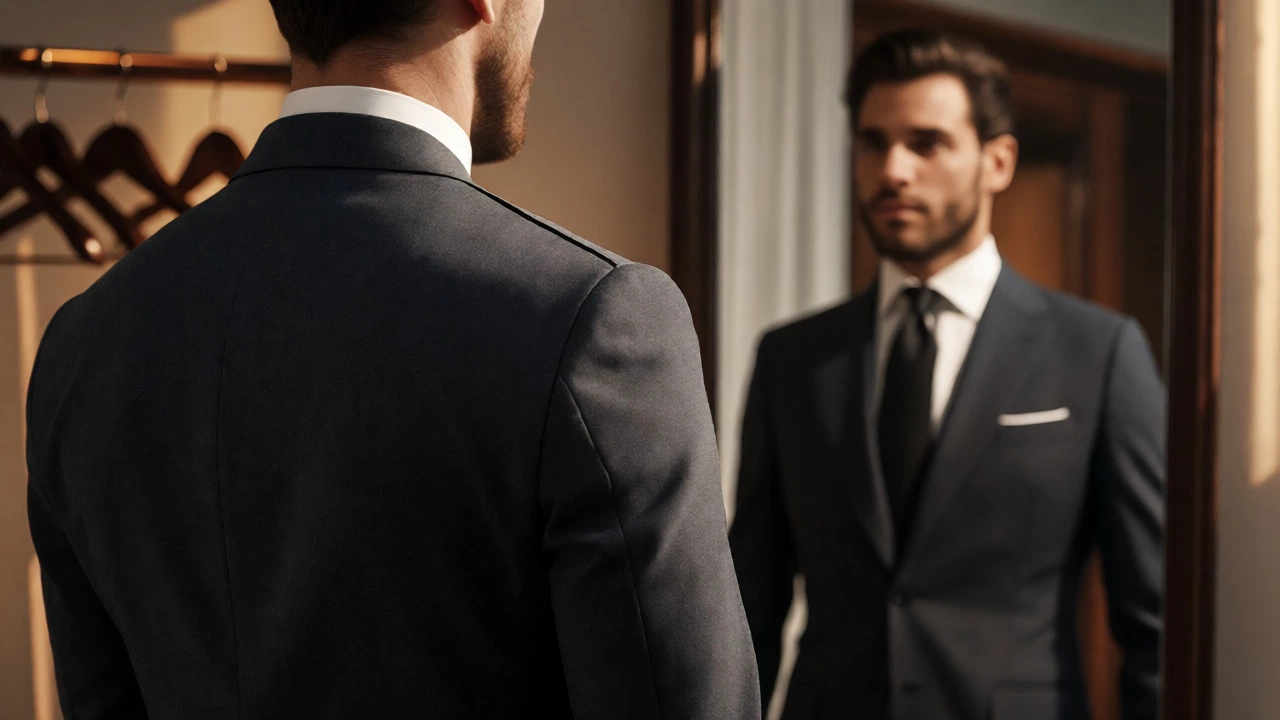
Groom's Suit Fit & Slimming Score Calculator
Check how your current suit setup scores on the key factors that make you look leaner and sharper.
- Select your options to see tailored advice.
Ever stood in front of the mirror after trying on a tuxedo and thought, "Why do I look like a sausage in a casing?" You’re not alone. Most guys think they need to lose ten pounds before their wedding day to look sharp. Here is the truth: you don’t. A suit that fits correctly can make you look ten pounds lighter instantly, while an ill-fitting one can add five. It’s not about your waistline; it’s about geometry and fabric.
When you are planning a wedding, the pressure is high. You want photos where you look confident, not cramped. If you feel bulky or round in your suit, it’s almost always a tailoring issue, not a body issue. Let’s break down exactly how to fix this so you walk down the aisle looking like the best version of yourself.
The Shoulder Line Is Non-Negotiable
If you get only one thing right, make it the shoulders. This is the anchor point of the entire jacket. When the shoulder seam sits past your actual shoulder bone, you look wider than you are. It creates a boxy silhouette that adds visual bulk to your upper body. Conversely, if the seam is too narrow, it pulls across your back and chest, making you look stuffed.
You want the seam to end exactly where your shoulder bone ends. There should be no padding extending beyond your natural frame. If you have broader shoulders, off-the-rack suits often fail here because they assume average proportions. A tailor can adjust this, but buying a jacket that matches your shoulder width first saves time and money. Check this in a mirror from the side. Does the line drop straight down? Or does it flare out? Flaring means it’s too big. Pulling means it’s too small.
Jacket Length Changes Your Height Perception
A common mistake men make is wearing jackets that are too long. A long jacket covers your hips and makes your legs look shorter. Shorter legs equal a stockier appearance. To counteract this, you need a shorter jacket. But how short?
The rule of thumb is simple: the bottom hem of the jacket should cover your buttocks completely but stop just above the mid-thigh. When you stand with your arms at your sides, the hem should hit roughly halfway down your palm. If it covers your entire hand, it’s too long. If it exposes your butt crack when you sit, it’s too short. By raising the hem slightly, you elongate your leg line. This vertical stretch tricks the eye into seeing height rather than width.
| Jacket Length | Visual Effect | Best For |
|---|---|---|
| Too Long (covers whole hand) | Makes legs look short; adds bulk to torso | Tall men (6'3"+) |
| Ideal (mid-palm to knuckles) | Elongates legs; balances torso proportion | Average height men (5'7" - 6'1") |
| Too Short (exposes glutes) | Can look trendy but may appear disproportionate | Fashion-forward styles; very short torsos |
Ventilation Matters More Than You Think
Vents are those slits at the back of your jacket. They seem minor, but they play a huge role in how your suit drapes over your body. There are three main types: center vent, double vents, and no vents.
If you have a fuller stomach or wider hips, avoid center vents. Why? Because when you put your hands in your pockets or move around, a center vent tends to flap open, exposing your shirt and breaking the clean line of your back. It draws attention to the center of your body.
Instead, choose double vents. These two side slits allow the jacket to drape smoothly over your hips without flapping. They keep the back panel flat against your body, creating a cleaner, slimmer silhouette. Double vents are also practical for weddings-you’ll be sitting during dinner and dancing later. They give you room to move without pulling tight across the seat.
Fabric Choice Can Slim You Down
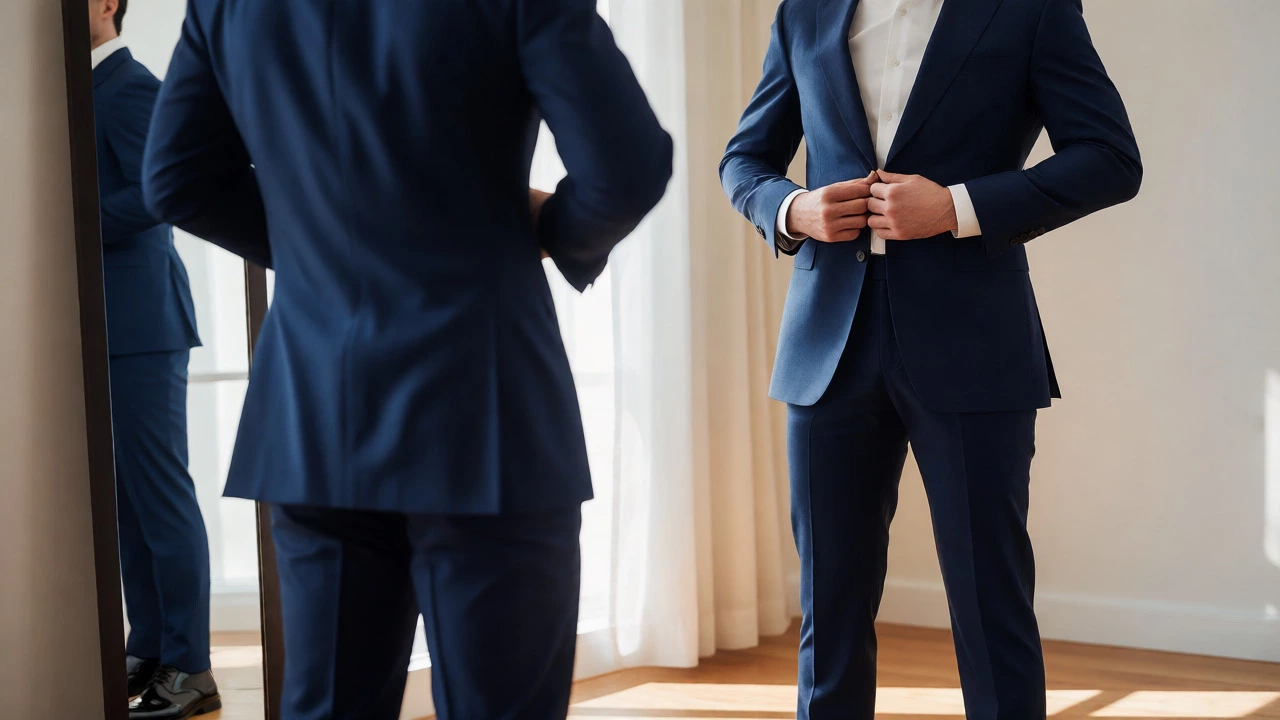
Not all fabrics behave the same way. Shiny fabrics reflect light, which highlights every curve and bulge. Matte fabrics absorb light, hiding imperfections. If you want to look leaner, steer clear of satin lapels or shiny polyester blends unless you are going for a specific retro look.
Stick to matte wool or wool blends. Wool has weight and structure. It hangs straight down rather than clinging to your skin. Heavy cotton or linen can wrinkle easily, adding texture that might distract from your shape. A medium-weight tropical wool is ideal for most wedding seasons. It breathes well but holds its shape. Dark colors like charcoal, navy, or black naturally recede visually, making you appear smaller. Avoid large patterns like bold plaids or wide stripes, which expand your frame. Small, subtle patterns like herringbone or pinstripes work better because they create vertical lines that draw the eye up and down.
Pants Fit: The Rise and Break
Your pants determine how your lower half looks. Two factors matter here: the rise and the break.
The rise is the distance from the crotch seam to the top of the waistband. Low-rise pants sit on your hips. If you carry weight in your midsection, low-rise pants will cut into your stomach, creating a muffin-top effect under your shirt. High-rise pants sit at your natural waist (near your belly button). They hold everything in place and create a smooth line from chest to thigh. Trust me, high-rise is back, and it’s flattering for almost everyone.
The break is how much the pant leg bunches up over your shoe. Too much break (bunching) makes your legs look stumpy. No break (cropped) can look unfinished if not styled perfectly. Aim for a slight break-just enough touch on the top of the shoe. This keeps the line continuous and clean. Tapered legs help too. Wide-leg trousers add volume at the bottom, balancing out broad shoulders, but if you already feel wide, a slight taper helps streamline the look.
The Power of Tailoring
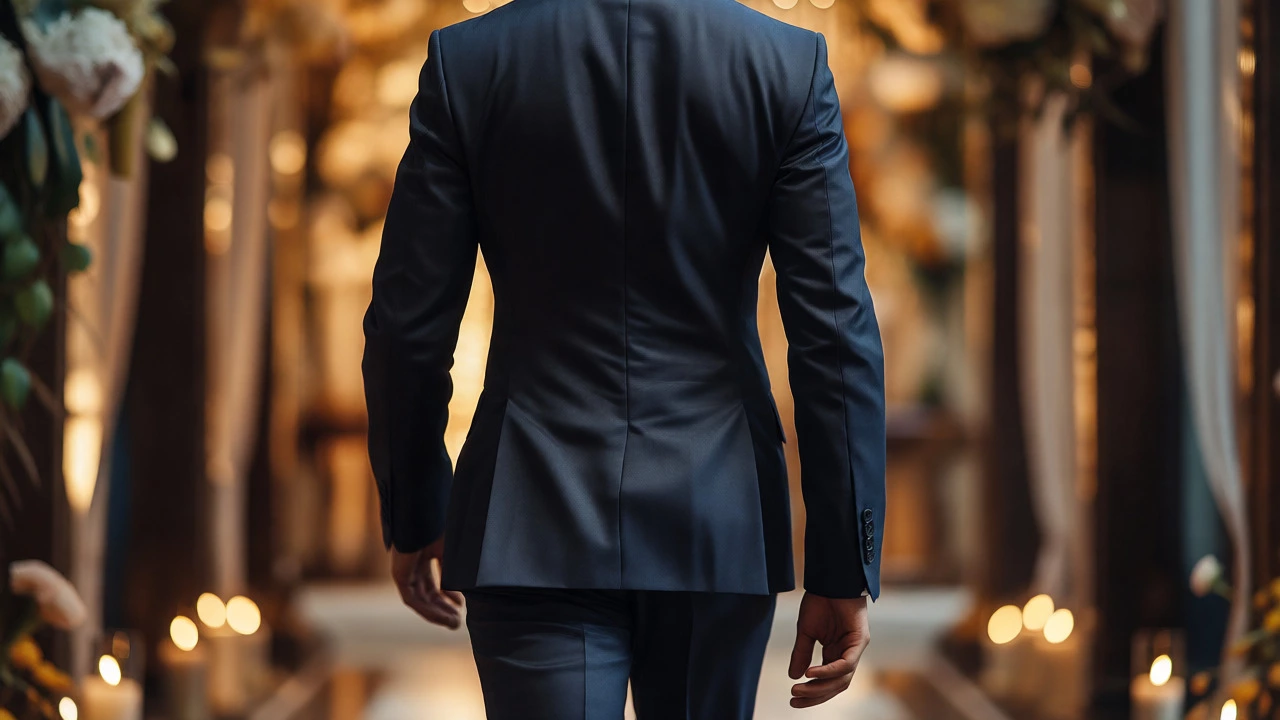
Here is the secret weapon most grooms ignore: tailoring. Buying a suit off the rack is just the start. Even expensive suits rarely fit perfectly out of the box. Budget an extra $100-$200 for alterations. This is non-negotiable if you want to look slim and sharp.
- Take in the waist: If the jacket buttons pull, take it in. If there is excess fabric billowing, take it in. The goal is a close fit without constriction.
- Shorten sleeves: Show about half an inch of your dress shirt cuff. This adds polish and breaks up the arm line.
- Narrow the lapels: Wide lapels make your chest look wider. Proportion matters. If you are shorter or stockier, narrower lapels balance your frame better.
A good tailor will pin the jacket while you wear it. They will mark exactly where to cut. Do not skip fitting sessions. Try the suit on multiple times. Move around. Sit down. Raise your arms. If it feels restrictive, it will look bad in photos. If it moves with you, it will look effortless.
Shirts and Accessories Play Their Part
The suit is the frame, but the shirt is the canvas. A baggy shirt underneath a fitted suit creates wrinkles and bulk. Ensure your dress shirt fits snugly through the chest and arms. Tuck it in properly using suspenders or a belt that matches your shoes. Suspenders are great because they keep the shirt tucked without adding bulk around your waist with a thick belt buckle.
Keep accessories minimal. A bulky tie knot can add visual noise. Stick to a standard four-in-hand or half-Windsor knot. A pocket square adds color but shouldn’t be overly fussy. Remember, simplicity equals elegance. Every extra detail competes for attention. Keep the focus on your face and your confidence.
Confidence Beats Fabric
Finally, remember that posture changes everything. Slouching compresses your torso and makes you look rounder. Stand tall. Shoulders back. Chest out. This opens up your frame and projects authority. When you feel good in what you wear, it shows. Practice walking in your suit before the big day. Get used to the movement. Once you stop worrying about whether the jacket is riding up, you can focus on enjoying the moment.
Do dark suits really make you look thinner?
Yes, darker colors like charcoal, navy, and black absorb light rather than reflecting it. This reduces shadows and highlights, creating a more uniform, streamlined appearance compared to light greys or whites, which can expand the visual field.
Should I buy a bigger suit to hide my belly?
No. A larger suit creates a tent-like effect, making you look boxy and disheveled. It is better to have a suit that fits your shoulders correctly and then have a tailor take in the waist. A fitted suit contours your body, whereas a loose suit obscures your shape entirely.
Are double-breasted suits bad for heavier men?
Traditionally, yes, because the overlapping fabric adds bulk to the midsection. However, modern cuts with higher button stances can work. Single-breasted suits with a two-button closure are generally safer and more slimming for most body types.
How tight should a suit jacket be?
It should feel snug but not restrictive. You should be able to slide a flat hand between your chest and the jacket lining. If you can pinch more than two inches of fabric at the sides, it is too loose. If the buttons strain or create an X-shape, it is too tight.
What is the best fabric for a slimming effect?
Matte wool is the best choice. It has weight, which helps it hang straight rather than clinging to curves. Avoid shiny synthetics or lightweight linens that wrinkle easily, as these textures draw attention to body irregularities.