Engagement Ring Budget Estimator
See what $5,000 (or your custom budget) buys you in the current jewelry market.
Estimated Specifications
Average Range- ✓ Excellent Cut
- ✓ G-H Color
- ✓ VS2-SI1 Clarity
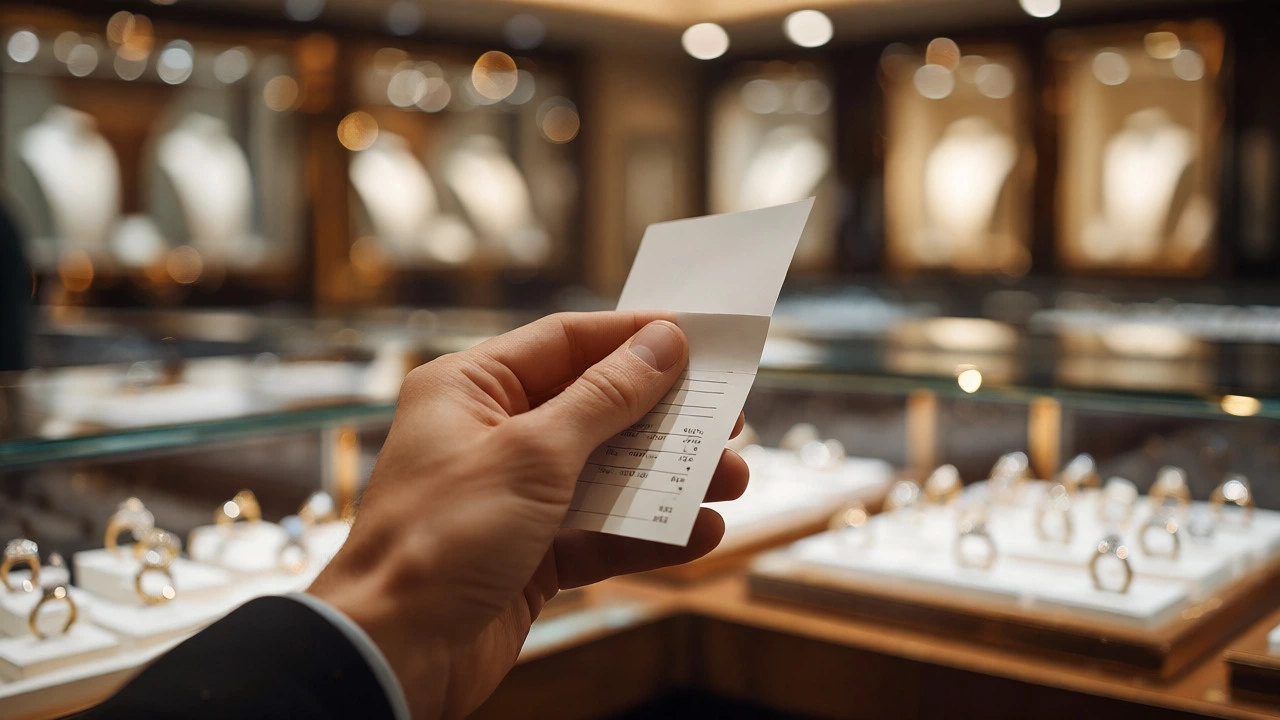
You’re standing in front of the jeweler’s display case, heart pounding, holding a receipt that says $5000. Is this enough? Is it too much? Or is it just... average? If you’re Googling "is $5000 a lot for an engagement ring," you’re likely feeling the pressure of two conflicting narratives: the old-school "two months' salary" rule and the modern reality where rent eats up half your paycheck. Let’s cut through the noise. The short answer? No, $5,000 isn't a fortune, but it's not pocket change either. It’s a solid, respectable middle-ground budget that can get you a beautiful, high-quality ring if you know exactly what to look for.
But here’s the thing about money and love: they don’t always mix well without some practical strategy. Spending five grand on a piece of metal and stone isn't just about showing off; it’s about understanding value. In 2026, the jewelry market has shifted. Lab-grown diamonds are dominating, natural stones are becoming niche luxury items, and vintage styles are having a massive comeback. So, before you swipe your card, let’s break down exactly what $5,000 buys you today, how it compares to national averages, and where you can stretch that budget further without sacrificing style or sentiment.
The Reality Check: Where Does $5,000 Fit?
First, let’s look at the data. According to recent surveys from major jewelry retailers like The Knot and Brides, the average American spends between $5,000 and $6,000 on an engagement ring. In Ireland, where I live, the figures are slightly different due to VAT and local market dynamics, often hovering around €4,000-€5,000 (which translates roughly to your $5k budget depending on exchange rates). This means you aren't overspending. You are right in the sweet spot.
However, "average" doesn't mean "best." What matters is alignment with your financial situation. If $5,000 represents a month’s rent for you, that’s a significant commitment. If it’s equivalent to one week’s disposable income, it’s negligible. The question isn't really "is this a lot for everyone else?" It’s "is this a lot for us?" Financial advisors generally suggest keeping the engagement ring budget under 1-2% of your annual household income. For a couple earning $80,000 combined, $5,000 fits comfortably within that guideline. For a couple earning $40,000, it’s a stretch that might require saving up rather than financing.
| Budget Tier | What You Get (Natural Diamond) | What You Get (Lab-Grown Diamond) | Best For |
|---|---|---|---|
| $3,000 - $4,500 | Smaller carat weight (0.5ct), lower clarity/clarity grades, simple setting. | Larger carat weight (1.0ct+), higher clarity (VS/VVS), premium settings. | Couples prioritizing size or those starting their financial journey. |
| $5,000 - $7,000 | Good balance: 0.75ct - 1.0ct, good color (G/H), eye-clean clarity. | Premium size (1.5ct+), exceptional cut, halo or pavé settings. | Most couples seeking traditional elegance without overextending. |
| $8,000+ | High-end natural stones, rare colors, designer brands, intricate craftsmanship. | Top-tier lab stones with unique cuts, platinum bands, custom designs. | Those who view the ring as a long-term investment or heirloom. |
Breaking Down the $5,000 Purchase
So, what does five thousand dollars actually buy you? It depends entirely on whether you choose a natural diamond or a lab-grown diamond. These two categories have diverged sharply in price over the last few years. A natural diamond retains its value better and carries historical prestige, but you pay a premium for scarcity. A lab-grown diamond is chemically identical-carbon atoms arranged in a crystal structure-but created in weeks rather than billions of years. It costs 30-50% less than its mined counterpart.
If you go the natural route with $5,000, you’ll likely be looking at a stone between 0.70 and 0.90 carats. To maximize value, you need to be smart about the "Four Cs": Cut, Color, Clarity, and Carat. Don’t obsess over flawless clarity. An "eye-clean" VS2 or SI1 clarity looks just as sparkly to the naked eye as a Flawless stone, but costs significantly less. Instead, pour your budget into the Cut. A well-cut diamond reflects light beautifully, making it appear larger and more brilliant. A poorly cut large diamond looks dull and lifeless.
On the other hand, if you opt for a lab-grown diamond, $5,000 is a powerhouse budget. You could easily secure a 1.5-carat round brilliant with excellent cut, F-color, and VVS1 clarity. This allows room for a thicker band, perhaps even adding side stones or a halo setting, which adds perceived size and sparkle. Many couples now prefer this option because it allows them to allocate more funds toward the wedding itself or their future home, rather than tying up capital in a depreciating asset.
Style Trends That Maximize Value
With a fixed budget, design choices matter. Some settings are notorious for eating up your dollar. A full eternity band with diamonds all the way around will push you over budget quickly. Stick to a solitaire or a three-stone design if you want the center stone to shine. However, certain styles offer incredible bang-for-buck.
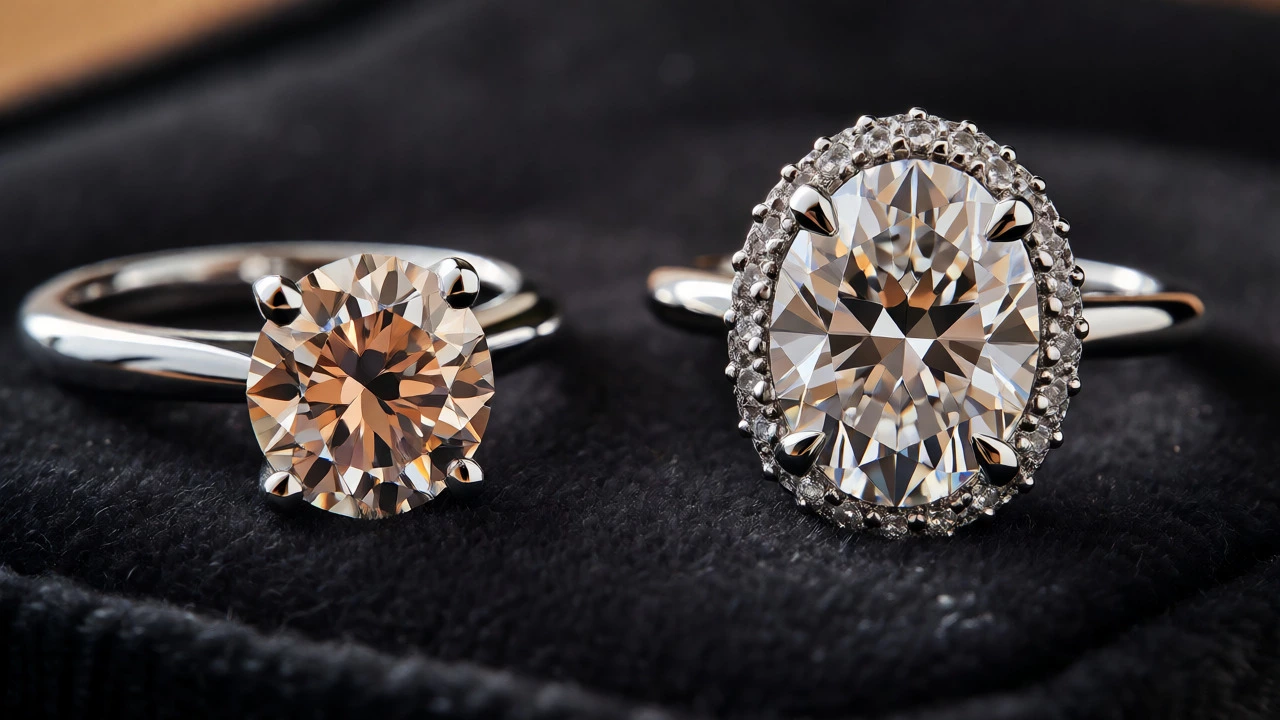
- Halo Settings: Surrounding a smaller center stone with a ring of tiny diamonds makes the center look 20-30% larger. It’s a visual trick that works wonders for budgets under $6,000.
- Oval or Emerald Cuts: These shapes tend to have a larger surface area per carat compared to round brilliants. A 0.80-carat oval often looks bigger than a 0.80-carat round, giving you more presence on the finger for the same price.
- Milgrain Detailing: Adding milgrain (tiny bead-like edges) to a plain band adds vintage charm and texture without requiring extra gemstones. It elevates a simple design into something bespoke-looking.
- Platinum vs. White Gold: Platinum is heavier and more durable but costs 20-30% more. With a $5,000 cap, 14k or 18k white gold is the smarter choice. It looks identical to platinum but leaves more room in the budget for the diamond.
I recently helped a friend in Dublin navigate this exact scenario. He had a strict $5,000 limit. We skipped the big brand names in Grafton Street and went to a reputable independent jeweler. By choosing a 1.1-carat lab-grown oval in a 14k white gold bezel setting, he got a ring that looked like it cost double. His fiancée didn’t care about the origin of the stone; she cared about the sparkle and the story behind the search. That’s the key takeaway: focus on aesthetics and meaning, not just specs.
Hidden Costs You Must Plan For
The sticker price is rarely the final price. When you see "$5,000," remember that taxes, shipping, insurance, and resizing fees add up. In many US states, sales tax on jewelry can range from 0% to over 10%. Always ask if the quoted price includes tax. If not, set aside an extra $300-$500.
Insurance is non-negotiable. An engagement ring is a target for theft and loss. Insuring it typically costs 1-2% of its value annually. For a $5,000 ring, that’s $50-$100 a year. Make sure you get an appraisal certificate from the jeweler before you leave the store. This document proves the value for insurance claims and helps if you ever decide to sell or upgrade the ring later.
Also, consider maintenance. Diamonds attract grease and lotion. Professional cleaning every six months keeps it sparkling. While many jewelers offer free cleaning, some charge $20-$50 per visit. Over ten years, that’s a small but real expense. Factor these ongoing costs into your mental budget so you aren't surprised by recurring bills.

Should You Spend More or Less?
This brings us back to the personal question. Is $5,000 a lot? Only you know. But here are three scenarios to help you decide:
- Spend Less ($3,000-$4,000): If you’re planning a lavish honeymoon, buying a house soon, or paying off student loans, don’t feel guilty spending less. A $3,500 ring is still beautiful. Prioritize financial stability over bling. Your partner likely values security and partnership more than carat weight.
- Stick to $5,000: This is the safe, balanced zone. It respects tradition without breaking the bank. It allows for quality materials and decent size. If you’re unsure, this is the default recommendation for most middle-income couples.
- Spend More ($7,000+): If the ring is intended as an heirloom to pass down, or if your partner has specific expectations based on family traditions, going higher might be worth it. Just ensure you aren't financing it with high-interest debt. Credit card interest at 20%+ will erase any perceived savings from buying a cheaper ring elsewhere.
Remember, the ring is a symbol, not a scorecard. A $2,000 ring given with genuine love and a heartfelt proposal beats a $10,000 ring given out of obligation every time. Communicate openly with your partner. Have they dropped hints? Do they prefer minimalism or maximalism? Their preference should outweigh societal pressure.
Frequently Asked Questions
Is $5,000 enough for a 1-carat diamond?
Yes, absolutely. With $5,000, you can purchase a 1-carat natural diamond if you compromise slightly on color (choose H or I instead of D/E/F) and clarity (choose VS2 or SI1 instead of VVS/FL). Alternatively, you can buy a larger, higher-quality 1-carat lab-grown diamond with plenty of budget left over for a premium setting.
Does a lab-grown diamond hold its value?
Generally, no. Like most consumer electronics, lab-grown diamonds depreciate rapidly as production technology improves and supply increases. Natural diamonds retain value better, though they also fluctuate. If resale value is your primary concern, natural diamonds are safer. If wearability and aesthetics are the goal, lab-grown offers better immediate value.
Should I follow the two-months-salary rule?
No. That rule was invented by De Beers in the 1930s as a marketing slogan, not a financial standard. Most modern couples spend less than two months' salary. Focus on what you can afford comfortably without compromising your financial goals for marriage, such as housing or travel.
What is the best metal for a $5,000 budget?
14k or 18k White Gold or Yellow Gold. Platinum is more expensive (often $300-$500 more for the same band width) and requires more maintenance (scratches develop a patina). White gold provides a similar look to platinum at a lower cost, allowing you to put more money into the diamond.
Can I negotiate the price at a jewelry store?
In independent stores, yes. Major chains often have fixed pricing, but independents may offer 10-15% off, especially during holidays or if you're buying a loose stone and setting separately. Always compare prices online using tools like Blue Nile or James Allen before visiting a physical store to establish a baseline.