Wedding Catering Cost Calculator (2026)
Estimated Total Cost
You’ve booked the venue. You’ve sent the invites. Now comes the part that makes most couples sweat: the food bill. If you are wondering what is the average cost to feed 100 people at a wedding, the short answer is anywhere from €4,500 to €12,000 depending on where you live and what you serve. But that range is too wide to be useful. Let’s break down exactly where that money goes so you can plan with confidence instead of panic.
In 2026, inflation has settled slightly, but labor costs for hospitality staff remain high. A sit-down dinner isn’t just about the ingredients; it’s about the chefs, the servers, the linens, and the cleanup. Understanding these hidden layers helps you decide whether to splurge on a four-course meal or save cash with a buffet style.
The Per-Person Price Breakdown
To get an accurate total, you need to look at the "per head" rate. This number varies wildly by region. In major cities like Dublin, London, or New York, expect higher rates due to venue overheads. In rural areas, prices drop significantly.
| Service Style | Low End (€/$/£) | High End (€/$/£) | Best For |
|---|---|---|---|
| Cocktail Hour Only | €25 - €40 | €50 - €80 | Daytime weddings, casual vibes |
| Buffet Dinner | €40 - €60 | €70 - €90 | Budget-conscious, variety lovers |
| Plated Sit-Down Dinner | €60 - €80 | €100 - €130+ | Formal events, traditional feel |
| Food Stations | €55 - €75 | €85 - €110 | Interactive experience, modern weddings |
For 100 guests, a mid-range plated dinner at €75 per person lands you right at €7,500. That feels manageable until you add the extras. Always ask your caterer if their quote includes service charges, taxes, and gratuity. Many quotes start low but jump 20-30% once those fees are added.
Hidden Costs That Blow Up Your Budget
The base price is only half the story. When you request a quote for feeding 100 people, watch out for these common add-ons:
- Service Charge & Gratuity: Most venues charge 18-22% for staff wages and tips. On a €7,500 food bill, that’s an extra €1,350 to €1,650.
- VAT/Sales Tax: Depending on your location, this adds another 20% in some countries (like Ireland) or 7-10% in others.
- Rental Fees: Do they provide tables, chairs, linens, and china? If not, renting these items for 100 people can cost €1,000 - €2,000 alone.
- Corkage Fee: If you bring your own wine, many venues charge €10-€25 per bottle. For 100 guests drinking two glasses each, that’s 25 bottles, costing you an extra €250-€625.
- Plating & Garnish Fees: Some caterers charge extra for fancy presentation or specific dietary modifications.
A smart move? Negotiate a "capped" service charge. Some venues will agree to limit the tip percentage if you book during a slower season or weekday.
Menu Choices: Where to Splurge and Save
Your menu selection drives the bulk of the cost. Here is how different food choices impact your bottom line for 100 guests:
The Budget Saver: Buffet Style
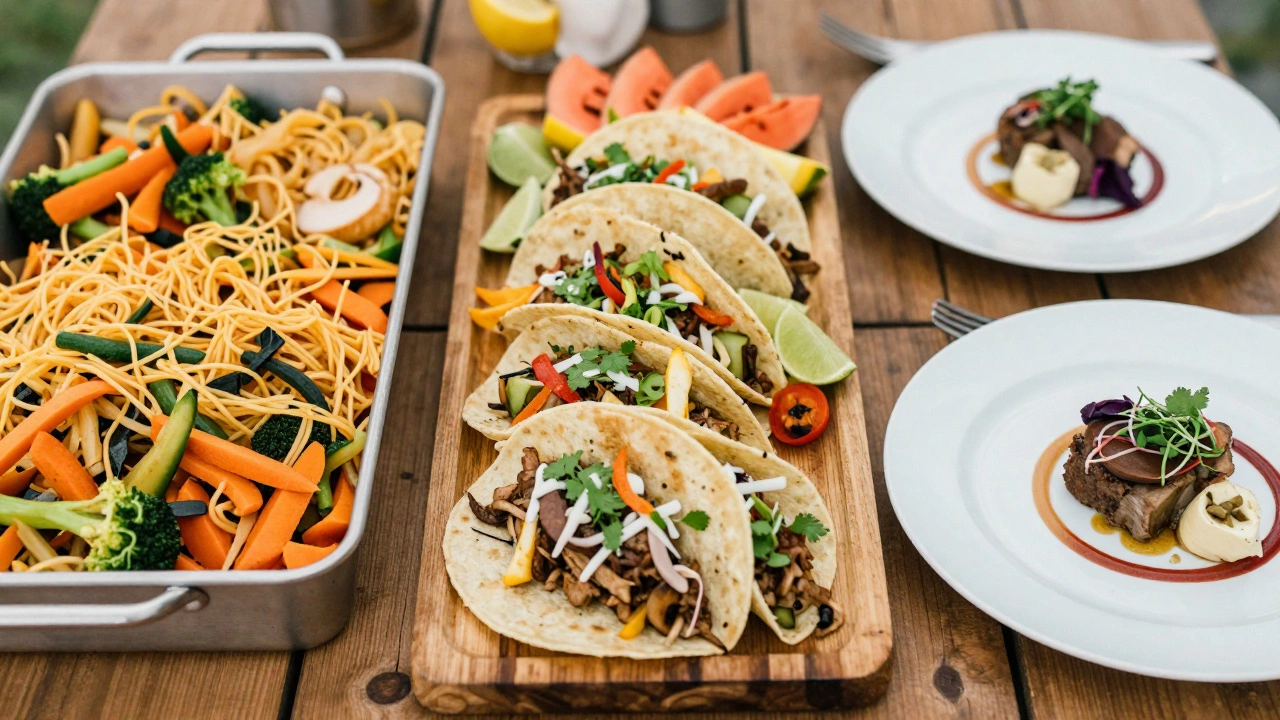
Buffets are generally cheaper because they require fewer staff members. You might have one chef cooking and three servers refilling trays. However, buffets can lead to more food waste. If you order enough for 100 people but only 80 eat heavily, you still pay for all 100 portions. To save money, choose pasta stations, taco bars, or grilled chicken with sides. Avoid seafood-heavy buffets unless you want to stretch your budget thin.
The Classic Choice: Plated Dinner
Plated dinners feel more elegant and controlled. You know exactly what each guest gets. The downside? You need more staff-one server for every 10-15 guests means 7-10 servers minimum. Labor costs here are significant. To keep costs down, offer two entrée choices rather than three. Fewer options mean less complexity in the kitchen and lower prep costs.
The Modern Trend: Food Stations
Think loaded fries, build-your-own burger bars, or sushi trains. These are popular because they’re fun and interactive. They often fall in the middle price-wise. They require more setup space and staff than a buffet but less than a formal plated dinner. Great for keeping guests moving and mingling.
Drinks: The Silent Budget Killer
Don’t ignore alcohol when calculating the cost to feed 100 people. While technically separate from "food," most couples bundle them. An open bar is the most expensive option. Expect to pay €50-€80 per person for a full open bar including beer, wine, and house spirits.
Ways to cut drink costs:
- Beer and Wine Only: Skip the hard liquor. Most guests prefer wine or beer anyway. This can cut drink costs by 40%.
- Limited Bar: Offer a signature cocktail plus beer and wine. One special drink feels personalized without the cost of a full liquor list.
- Cash Bar: After the first hour, switch to a cash bar. This signals to guests that the hosted portion is over. Just communicate this clearly on signage.
Rule of thumb: Plan for two drinks per guest in the first hour, then one drink per hour after that. For a six-hour reception, that’s roughly 4-5 drinks per person. Multiply that by your per-drink cost to get the total.
Regional Differences: Location Matters
Where you hold the wedding drastically changes the price tag. In 2026, urban centers continue to see higher catering costs due to commercial rent and labor shortages.
- Major Cities (Dublin, London, NYC): Expect to pay premium rates. Venues often have exclusive catering contracts with high-end providers.
- Suburbs: Moderate pricing. More competition among caterers can drive prices down.
- Rural Areas: Lowest food costs, but you may pay for transport if the caterer has to travel far. Also, check if the venue allows outside caterers. Some rural barns do, which saves money compared to hotel ballrooms.
If you love a city vibe but hate the price, consider a hybrid approach. Host the ceremony and cocktail hour in the city, then move to a cheaper suburban venue for dinner. Or, book a weekend venue (Saturday) in a rural area to avoid peak Saturday city rates.
Tips to Lower Your Total Bill
You don’t have to sacrifice quality to stay within budget. Here are practical strategies to reduce the cost of feeding 100 guests:
- Trim the Guest List: Every person you remove saves you €75-€150. Is that distant cousin really necessary? Be ruthless. 100 guests is already a manageable size; cutting to 80 saves thousands.
- Choose Seasonal Ingredients: Menus featuring seasonal produce are cheaper and tastier. Strawberries in winter cost more and taste worse. Ask your caterer for a "seasonal special" menu.
- Skip the Fancy Dessert Table: A wedding cake is expensive. Consider a sheet cake for cutting and serving cupcakes or cookies from a local bakery. Or skip cake entirely and do a dessert bar with ice cream or chocolate fountains.
- Off-Peak Discounts: Weddings on Fridays or Sundays often come with 10-20% discounts. Winter months (November-February) also see lower rates in many regions.
- Negotiate the Contract: Ask what is included. Can you waive the corkage fee if you buy wine through their preferred vendor? Can you reduce the staff count if you handle some logistics yourself?
Sample Budget for 100 Guests
Let’s put it all together. Here is a realistic breakdown for a mid-tier wedding in a metropolitan area:
- Food (Plated Dinner @ €75/head): €7,500
- Non-Alcoholic Drinks: €500
- Alcohol (Beer/Wine @ €40/head): €4,000
- Service Charge (20%): €2,200
- VAT/Tax (20%): €2,200
- Dessert/Cake: €800
- Total Estimated Cost: €17,200
This example shows why the "average" can feel misleading. The base food cost was €7,500, but the final bill nearly doubled due to taxes, service, and alcohol. Always budget for the total package, not just the plate.
Frequently Asked Questions
What is the cheapest way to feed 100 people at a wedding?
The cheapest option is usually a buffet with hearty, inexpensive proteins like chicken or pasta, paired with seasonal vegetables. Skipping alcohol or offering a beer-and-wine-only bar also significantly reduces costs. Daytime weddings with brunch menus (eggs, pastries, fruit) are often 30-40% cheaper than evening dinners.
Does the catering price include drinks?
Rarely. Most catering quotes separate food and beverage. Non-alcoholic drinks (water, soda, juice) are sometimes included, but alcohol is almost always priced separately. Always ask for a detailed breakdown to avoid surprises.
How much should I tip my wedding caterer?
Check your contract first. Many venues include a mandatory service charge (18-22%) that goes to the staff. If a service charge is included, an additional tip is optional but appreciated for exceptional service (usually 5-10%). If no service charge is listed, tipping 15-20% is standard.
Can I bring my own food to a venue?
It depends on the venue. Hotels and large banquet halls usually have exclusive catering contracts and will not allow outside food. Barns, parks, and private homes often allow you to hire your own caterer or cook yourself, which can save money but adds logistical stress.
Is a plated dinner worth the extra cost over a buffet?
A plated dinner offers a more formal, relaxed experience for guests since they don't have to stand in line. It also reduces food waste since portions are controlled. However, it costs more due to higher labor requirements. If elegance and comfort are priorities, it's worth it. If budget and variety are key, a buffet is better.
How many meals should I plan for per guest?
Plan for one full dinner meal per adult guest. For children under 12, many caterers offer reduced-price kids' menus. Always confirm your final guest count with the caterer 2-4 weeks before the wedding, as last-minute additions can incur high fees.