Wedding & Engagement Ring Budget Estimator
Enter your details below to estimate a realistic budget for your rings. Remember, tradition suggests 1-3 months' salary for the engagement ring, but spend what you can afford without debt.
Your Details
Enter your salary and preferences
to see your estimated budget.
You’re standing in a jewelry store, staring at two sparkling bands that look almost identical. One costs $500, the other costs $5,000. The salesperson says one is for the proposal and the other is for the ceremony. But which is which? And do you really need both?
This confusion is incredibly common. While pop culture has blurred the lines with flashy Instagram proposals and minimalist ceremonies, there are distinct historical, functional, and aesthetic differences between an engagement ring and a wedding ring. Understanding these distinctions saves you money, prevents awkward mix-ups during the ceremony, and helps you build a jewelry collection that actually suits your lifestyle.
The Core Purpose: Promise vs. Union
The biggest difference isn’t the diamond size or the metal type-it’s the intent behind the purchase. An engagement ring symbolizes a promise to marry. It is given when one partner proposes to the other. Historically, this dates back to ancient Rome, where a ring was a sign of ownership or contract, but today it represents mutual agreement to enter into marriage.
A wedding ring, on the other hand, symbolizes the actual union. It is exchanged during the wedding ceremony itself. This ring marks the transition from "engaged" to "married." In many traditions, including those prevalent in Ireland and the UK, the wedding band is worn first on the finger (closest to the heart), followed by the engagement ring. Why? Because the wedding band seals the vow, so it takes the prime spot nearest the heart.
| Feature | Engagement Ring | Wedding Ring |
|---|---|---|
| Purpose | To propose and signify intent to marry | To seal the marriage vows |
| Timing | Given before the wedding (during proposal) | Exchanged during the ceremony |
| Design | Often features a prominent center stone (diamond/gem) | Usually a plain or simple band; may have small pavé stones |
| Cost | Typically more expensive due to gemstones | Generally less expensive unless custom-made |
| Wearer | Traditionally the person being proposed to (often women, but increasingly men too) | Both partners |
Design and Aesthetics: Sparkle vs. Simplicity
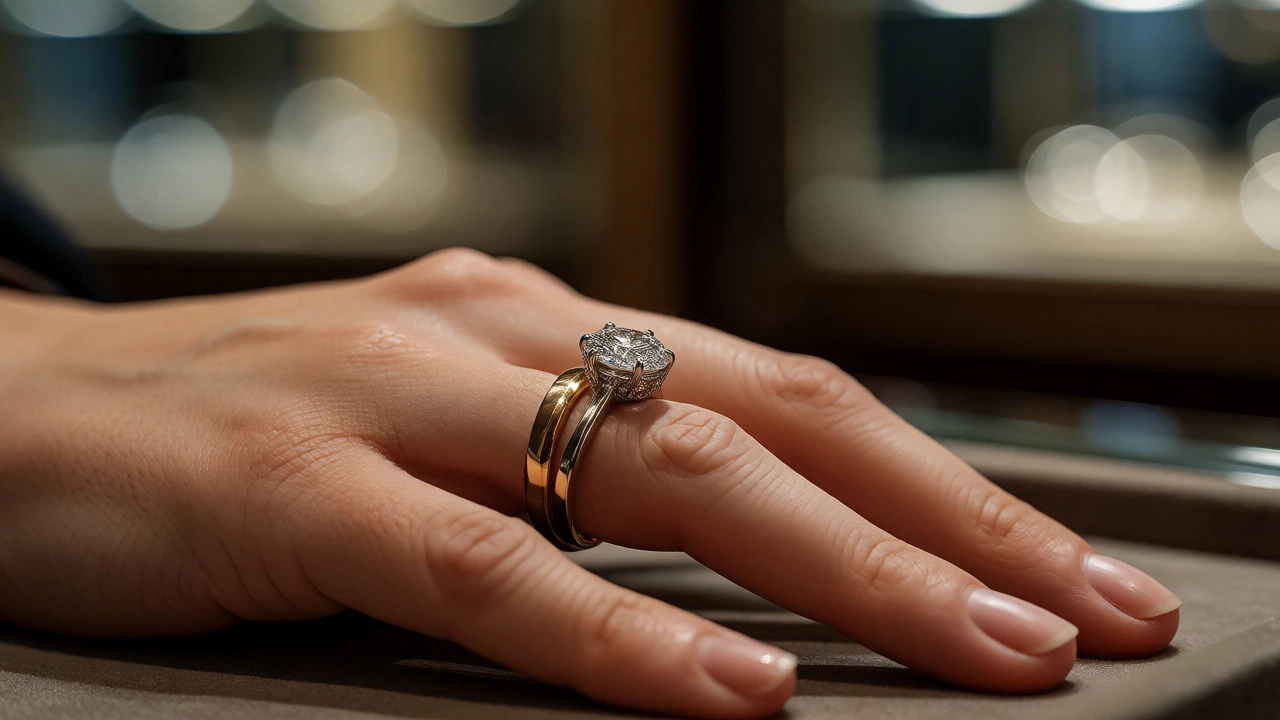
If you look closely, you’ll notice a pattern in design. Engagement rings are designed to catch the eye. They often feature a solitaire diamond, a halo setting, or colored gemstones like sapphires or emeralds. The goal is to make a statement. When someone asks, "How much did it cost?" they are usually looking at the engagement ring.
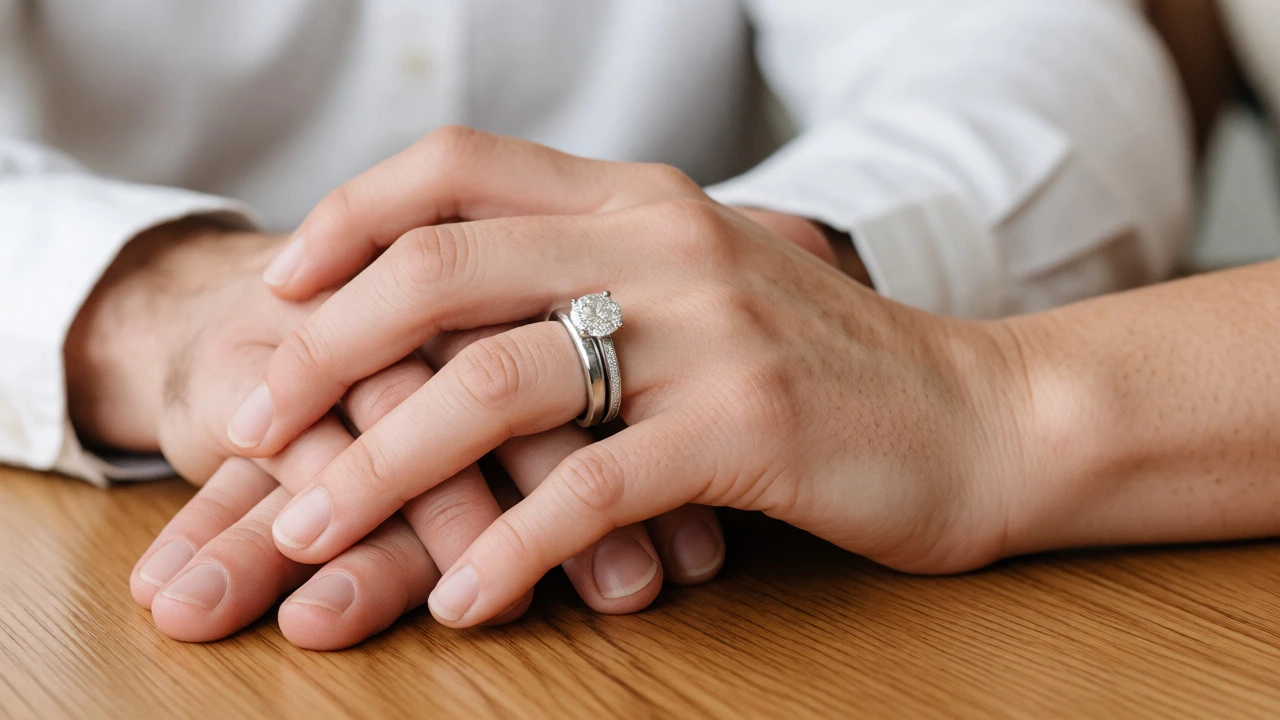
Wedding bands are built for durability and comfort. Since you wear them every single day-while washing dishes, typing at work, or sleeping-they tend to be simpler. A classic wedding band is a smooth, polished circle of gold, platinum, or titanium. Some couples choose matching sets where the wedding band curves around the engagement ring’s stone, creating a seamless look.
Here’s a practical tip: If you plan to stack your rings, buy them together. Buying separately often leads to gaps or uneven heights because different jewelers use slightly different measurements. A set ensures the rings sit flush against each other.
Who Buys What? Modern Etiquette Rules
Old-school etiquette said the man buys the engagement ring alone, and his parents might help pay for the wedding bands. Today, things are different. Many couples shop for rings together. Some split the cost. Others use family heirlooms.
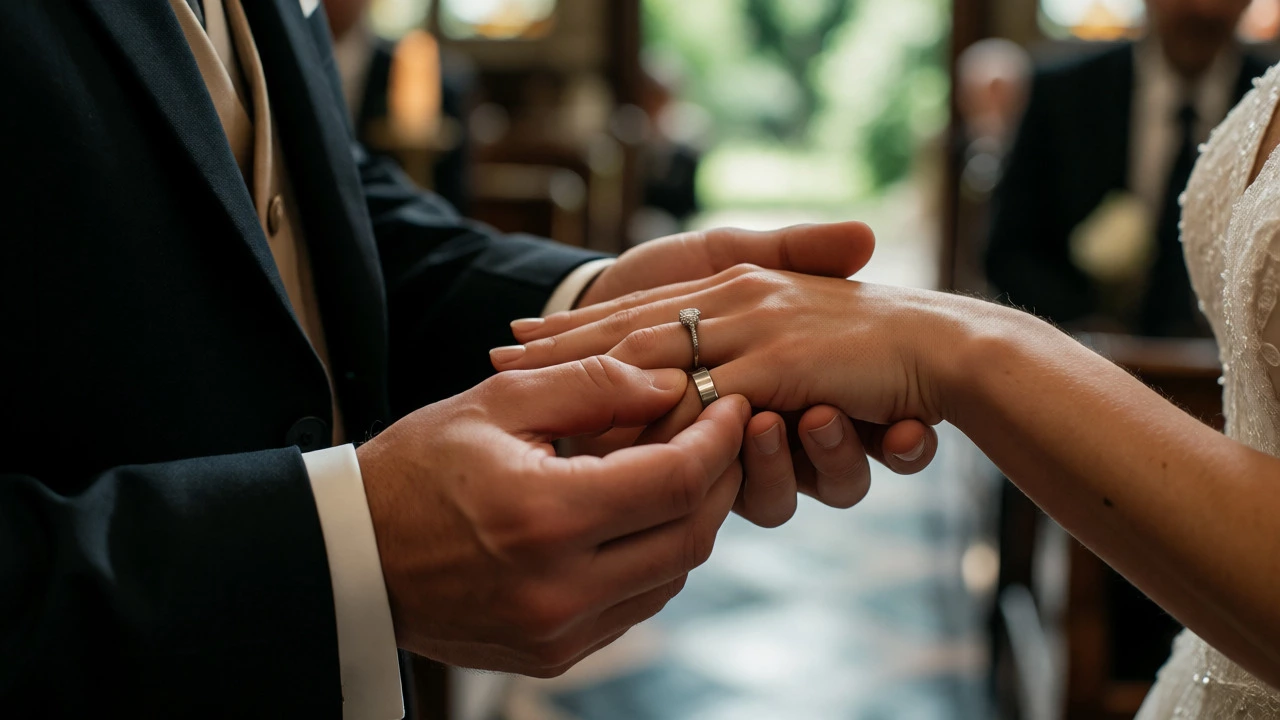
In Dublin, as in much of Europe, it’s becoming common for both partners to wear an engagement ring if they want to signal their status equally. However, the traditional rule still holds strong: The person who receives the proposal wears the engagement ring until the wedding day. On the wedding day, they switch it to the right hand temporarily, allowing the officiant to place the wedding band on the left ring finger. After the ceremony, they move the engagement ring back onto the left hand, stacking it on top of the wedding band.
What about men? Traditionally, men didn’t wear engagement rings. But times change. Male engagement rings are now available in tungsten, wood, and even diamonds. If your partner wants one, buy it. There’s no hard rule against it anymore.
Budgeting: Where Does the Money Go?
Let’s talk numbers. Most people spend significantly more on the engagement ring than the wedding band. Why? Gemstones drive up the price. A high-quality diamond can cost thousands, whereas a plain gold band might cost $300-$800 depending on the width and purity.
- Engagement Ring Budget: Aim for 1-3 months’ salary if you follow tradition, but realistically, spend what you can afford without going into debt. Lab-grown diamonds are a great way to get a larger stone for less money.
- Wedding Band Budget: Set aside $500-$1,500 per person for quality metals. Platinum lasts longer than white gold but costs more upfront.
Don’t forget hidden costs. Sizing adjustments, engraving, and insurance add up. Insure your engagement ring immediately after the proposal. You don’t want to lose a $4,000 stone while hiking in Wicklow Mountains.
Care and Maintenance: Keeping Them Safe
Because engagement rings have prongs holding stones, they require more care. Prongs can snag on sweaters or hair. Check them twice a year at a jeweler to ensure the stone isn’t loose. Wedding bands, being solid metal, rarely break but can scratch. Gold scratches easily; platinum develops a patina (a soft sheen) over time, which some people love.
Should you take them off? Yes, remove both rings when swimming in chlorinated pools, lifting heavy weights, or gardening. Chlorine weakens gold alloys. Heavy impact can crack diamonds. If you work with your hands-like a nurse, mechanic, or chef-consider silicone bands for daily wear. They protect your fingers and your original rings.
Can You Wear Just One Ring?
Absolutely. Plenty of people skip the engagement ring entirely and just wear a wedding band. Others wear only the engagement ring after marriage, treating it as their primary symbol. There’s no police force checking your left hand. Choose what feels comfortable and meaningful to you.
Some couples opt for a "solitaire" approach: one beautiful ring that serves both purposes. This is sleek, modern, and saves money. Just make sure the ring is sturdy enough for daily wear if it’s your only piece.
Which finger does the engagement ring go on?
In most Western countries, including Ireland, the US, and the UK, the engagement ring is worn on the fourth finger of the left hand, known as the "ring finger." This tradition stems from the ancient belief that a vein ran directly from this finger to the heart. During the wedding ceremony, it is often moved to the right hand to allow the wedding band to be placed on the left hand first.
Do I have to wear my engagement ring after marriage?
No, you don't have to. Many people continue wearing it stacked with their wedding band, but others choose to wear only the wedding band for simplicity or safety. Some wear the engagement ring on the right hand instead. It is entirely a personal choice based on comfort and style.
What is the correct order to wear wedding and engagement rings?
The traditional order is to wear the wedding band first (closest to the heart) and the engagement ring second (on top). This keeps the wedding band closest to the palm. However, some people prefer to solder the two rings together so they act as one piece, preventing spinning and scratching.
Can men wear engagement rings?
Yes, absolutely. While traditionally uncommon, male engagement rings have become increasingly popular. Men often choose durable materials like tungsten carbide, titanium, or black ceramic. If you want one, ask for it! It signals your commitment just as clearly as a woman's ring does.
Is an engagement ring more expensive than a wedding ring?
Generally, yes. Engagement rings typically feature a central gemstone (like a diamond), which significantly increases the cost compared to a plain metal wedding band. However, a custom-designed wedding band with intricate details or multiple diamonds can sometimes rival or exceed the cost of a simple engagement ring.