Purple Wedding Flower Finder
Find Your Perfect Purple Wedding Flowers
Choose your wedding style and preferences to get personalized flower recommendations
Step 1: What's Your Wedding Mood?
Select your desired wedding atmosphere
Step 2: What's Your Budget?
Select your budget level to see affordable options
Step 3: When Is Your Wedding?
Choose your wedding season for optimal flower availability
Step 4: What Purple Shade Are You Drawn To?
Select the shade that best matches your vision
When you see purple flowers at a wedding, it’s not just about beauty-it’s about meaning. Purple has long been tied to royalty, mystery, and deep emotion, and when it shows up in wedding bouquets, centerpieces, or aisle arrangements, it’s speaking louder than you might think. If you’re considering purple blooms for your big day, you’re not just picking a color-you’re choosing a statement.
Why Purple? The History Behind the Color
Purple wasn’t always a color you could just buy at the florist. In ancient times, making purple dye was a nightmare. The most famous kind, Tyrian purple, came from thousands of crushed sea snails found along the Mediterranean coast. It took over 10,000 snails to make just one gram of dye. That kind of effort meant only kings, emperors, and high priests could afford it. By the time weddings became big cultural events in Europe, purple was already locked in as the color of nobility and power.
Fast forward to today, and purple still carries that weight-but it’s softened. Modern brides aren’t trying to look like queens of England (unless they want to). Instead, they’re drawn to purple because it feels rich without being flashy, romantic without being cliche. It’s the color of twilight, of lavender fields at dusk, of quiet confidence.
What Purple Flowers Say About Your Wedding
Not all purple is the same. The shade you pick changes the message. Deep plum? That’s drama, elegance, maybe even a little rebellion. Soft lavender? That’s calm, grace, and spiritual connection. Lilac? That’s youthful joy and first love.
Here’s what different shades commonly mean in wedding contexts:
- Deep purple (eggplant, aubergine): Power, luxury, ambition. Great for winter or evening weddings. Pairs well with gold or black.
- Lavender: Serenity, devotion, and healing. A favorite for spring and outdoor weddings. Works with whites, creams, and soft pinks.
- Lilac: First love, innocence, and new beginnings. Perfect for romantic, whimsical themes.
- Blue-purple (violet): Spirituality, intuition, and deep emotional bonds. Often chosen by couples who value mindfulness or have a spiritual connection.
These meanings aren’t rules-they’re guides. But if you’re choosing purple because you want your wedding to feel intentional, not just pretty, these associations matter.
Best Purple Wedding Flowers to Use
Not every purple flower works for every wedding. Some are too stiff, some fade too fast, some cost a fortune. Here are the top five that brides actually use-and why they stick around.
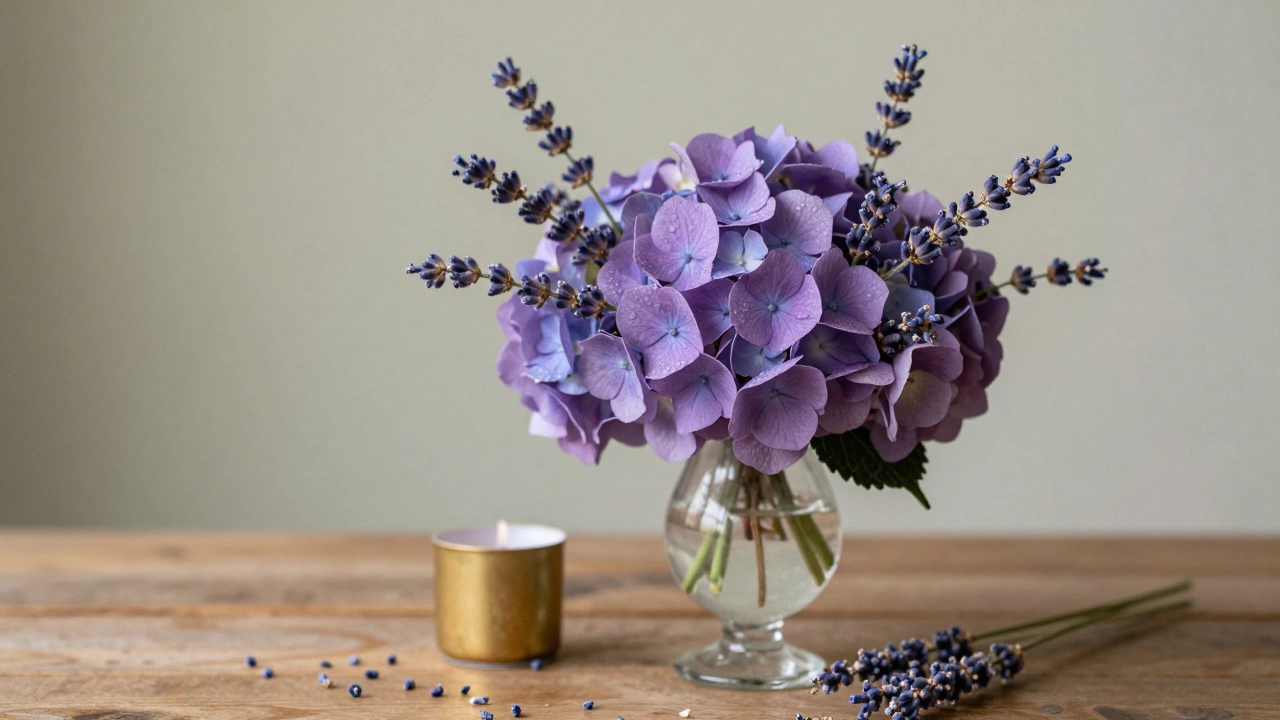
- Lavender - Not just a scent, but a statement. It’s affordable, long-lasting, and smells amazing. Perfect for rustic, boho, or garden weddings. Often used in bouquets, wreaths, or even tied into chair sashes.
- Orchids (especially dendrobium or cattleya) - Sleek, exotic, and timeless. Orchids in deep plum or magenta add instant sophistication. They’re expensive, yes, but one stem goes a long way. Great for modern or luxury weddings.
- Hydrangeas - Big, fluffy, and dramatic. When dyed purple or naturally purple (like the ‘Bluebird’ variety), they fill out arrangements beautifully. They’re the go-to for full, lush bouquets.
- Irises - Sharp, sculptural, and elegant. Their shape is unique, and they come in rich violet tones. Often used in minimalist designs or as single-stem accents. They last well out of water, which makes them great for ceremony setups.
- Stock - Often overlooked, but a secret weapon. Stock flowers have dense spikes of tiny blooms with a sweet, spicy scent. They’re perfect for filling gaps in arrangements and add texture without stealing focus.
Pro tip: If you’re on a budget, skip the orchids and go for lavender and stock. They’re both easy to source, last longer, and still look expensive.
How to Pair Purple With Other Colors
Purple doesn’t play well with everything. It can look muddy next to the wrong shade. Here’s what works-and what doesn’t.
| Color Pair | Effect | Best For |
|---|---|---|
| Purple + White | Classic, clean, timeless | Traditional, elegant, winter weddings |
| Purple + Gold | Luxurious, regal, warm | Evening, glam, vintage weddings |
| Purple + Sage Green | Earthy, calming, natural | Boho, outdoor, spring weddings |
| Purple + Pink | Soft, romantic, feminine | Whimsical, garden, bridal showers |
| Purple + Red | Clashing, chaotic, overwhelming | Avoid unless you’re going for bold contrast |
| Purple + Bright Orange | Too jarring, dated | Not recommended for weddings |
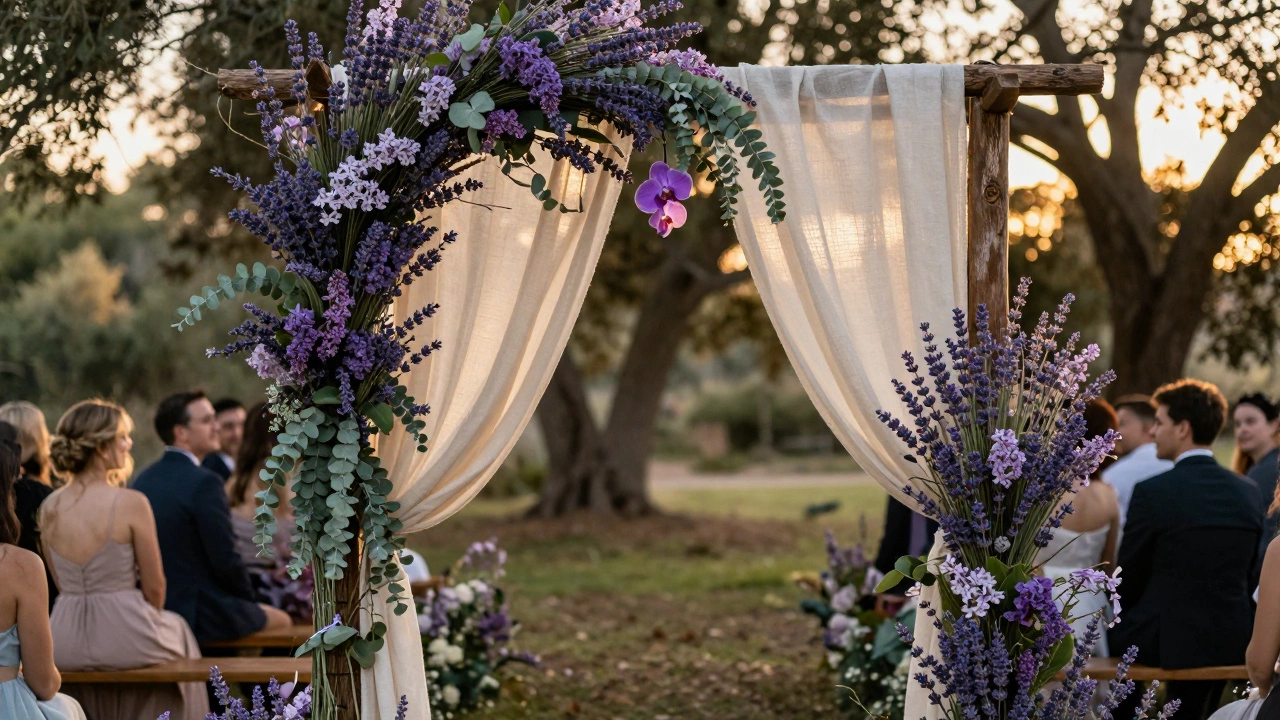
One of the most popular combinations right now is lavender with dusty rose and eucalyptus. It’s soft, romantic, and feels grown-up without being stiff. If you’re unsure, start there.
Real Wedding Examples
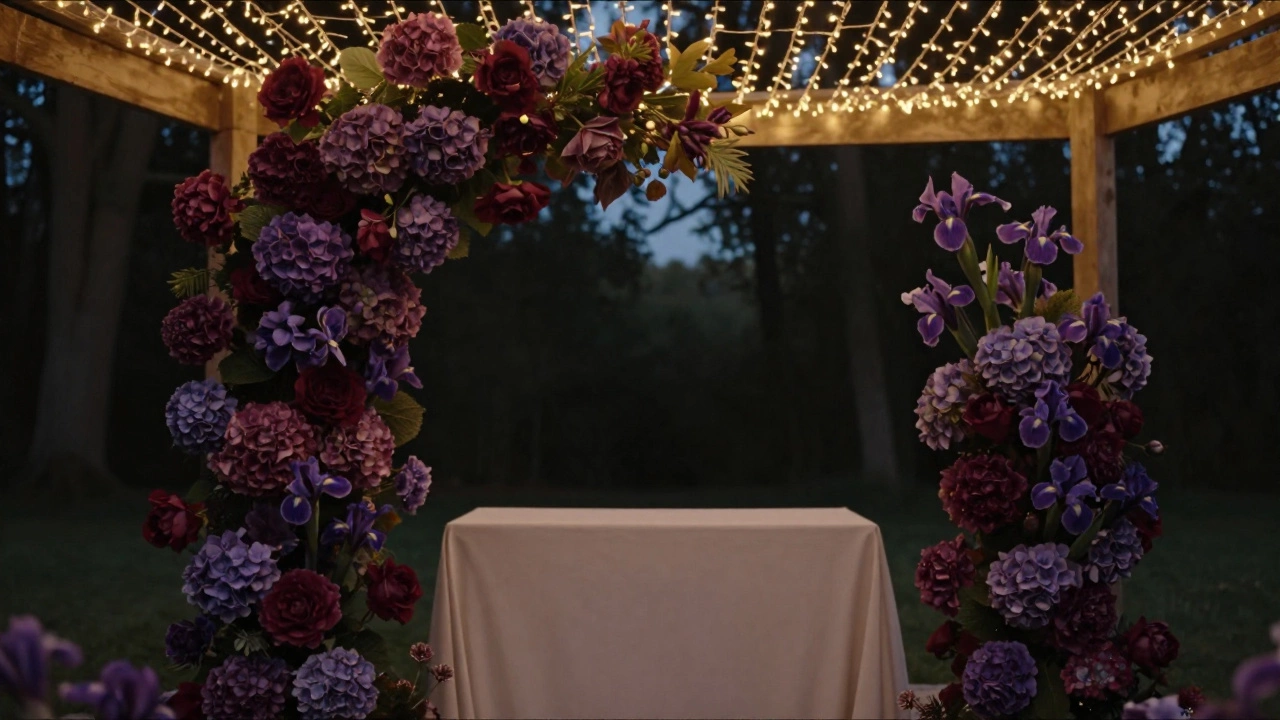
In 2024, a wedding in County Wicklow used deep plum hydrangeas and purple irises in a ceremony held under a canopy of hanging fairy lights. The bride wore a simple ivory gown, and the groom’s boutonniere was a single purple orchid. No one mentioned the color choice-until the photos came out. Then, guests kept saying, "It just felt... right."
Another couple in Galway chose lavender sprigs woven into their wooden arch and placed small jars of dried lavender as favors. They didn’t want flowers that would wilt by the reception. The scent lingered all night. One guest wrote in the guestbook: "I didn’t know purple could feel so peaceful."
These aren’t staged Pinterest moments. They’re real choices made by people who cared about how their wedding felt, not just how it looked.
When Not to Use Purple
Purple isn’t for every bride. If you’re going for a beach wedding with bright coral and turquoise, purple might feel out of place. Same if your theme is pure minimalism-white and green alone can say everything.
Also, avoid purple if you’re working with a tight budget and your florist doesn’t carry seasonal blooms. Forced purple roses in January? They’ll cost triple and look artificial. Always ask: "Is this purple flower in season?" If not, skip it or substitute with something similar.
And if your family has strong cultural views about color? Talk to them. In some cultures, purple is tied to mourning. In others, it’s sacred. Don’t assume. Ask.
Final Thought: It’s Not Just Color. It’s Feeling.
Choosing purple flowers isn’t about following trends. It’s about choosing a mood. It’s about wanting your wedding to feel like a quiet moment under a starlit sky-not a loud party. It’s about honoring depth, mystery, and quiet strength.
If you’ve been drawn to purple since you were a kid, if you’ve always loved lavender fields, if you’ve worn purple on your most meaningful days-then this isn’t just a flower choice. It’s a personal one.
And that’s what makes a wedding unforgettable-not the price tag, not the Instagram likes-but the quiet truths you let bloom.
What do purple flowers symbolize in weddings?
Purple flowers in weddings traditionally symbolize royalty, luxury, and deep emotion. Depending on the shade, they can also represent spirituality, devotion, and elegance. Lavender suggests calm and healing, while deep plum conveys power and sophistication. They’re chosen by couples who want their wedding to feel meaningful, not just beautiful.
Are purple wedding flowers expensive?
It depends on the type. Orchids and certain hybrid roses can be pricey, especially out of season. But lavender, stock, and hydrangeas are affordable and widely available. Many couples save money by using purple flowers as accents instead of the main bloom. Seasonal and local options cut costs significantly.
What colors go well with purple wedding flowers?
White, gold, sage green, and dusty rose are the most popular and harmonious pairings. White keeps it clean and classic, gold adds luxury, sage brings in nature, and dusty rose softens the drama. Avoid bright red or orange-they clash and feel outdated.
Can I use purple flowers in a spring wedding?
Absolutely. Lavender, lilac, and light purple irises are naturally in bloom in spring and pair beautifully with pastels. They add depth without overpowering the season’s softness. Many spring weddings now use purple as an unexpected accent to white and blush tones.
Do purple flowers mean anything in different cultures?
Yes. In Western cultures, purple is linked to nobility and romance. In some Asian cultures, it represents wisdom and spiritual growth. But in parts of Latin America and Europe, purple can be associated with mourning or funerals. Always check cultural context if you or your family have strong traditions around color.
What’s the best way to keep purple flowers fresh on my wedding day?
Keep them in cool water until the last minute, trim stems at an angle, and avoid direct sunlight. Flowers like lavender and hydrangeas hold up well, but orchids need extra humidity. Ask your florist for a misting spray to use during the ceremony. Never leave them in a hot car.