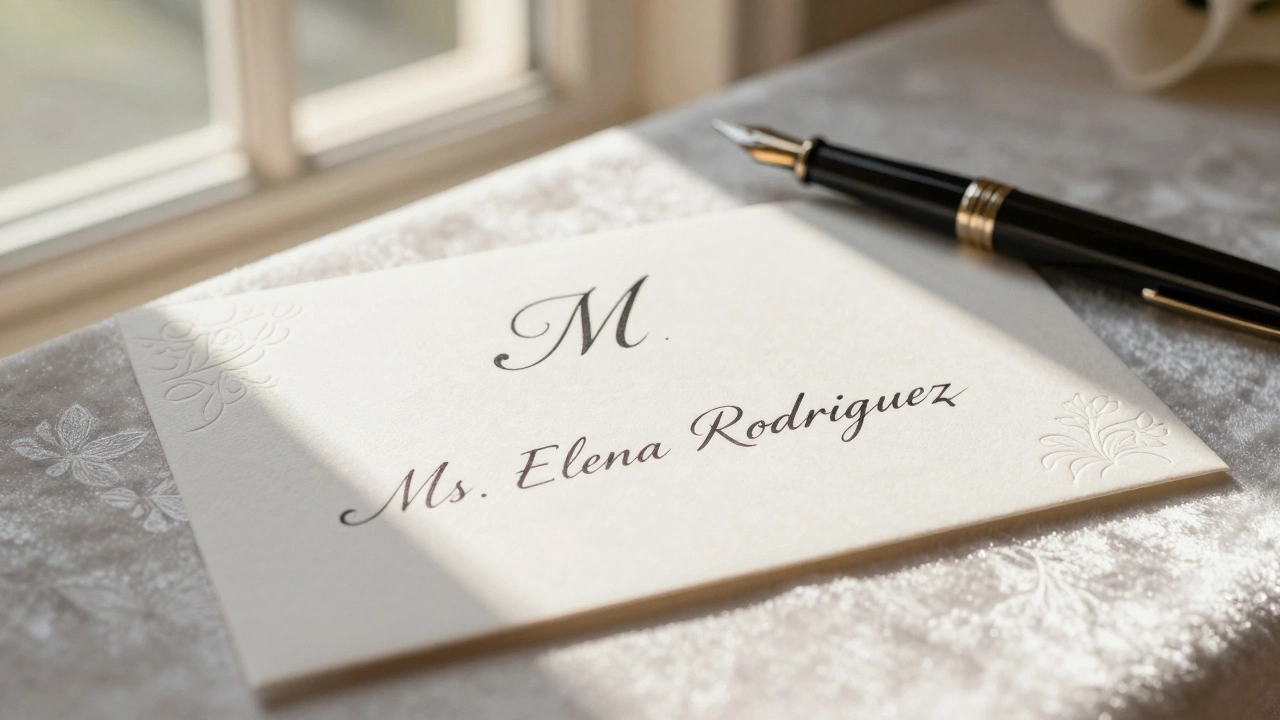
RSVP Title Selector
How to Fill Out Your RSVP
The "M" on RSVP cards is a placeholder for your formal title. Select your preferred title below to see how it appears on the card.
Common Mistakes to Avoid
- Avoid writing just "M" for male/female - it should be "Mr.", "Mrs.", etc.
- Never skip the title if you want to help the couple with seating charts
- Gender-neutral titles like "Mx." are acceptable and respected
Ever opened a wedding invitation and stared at the RSVP card like it was a secret code? You’re not alone. The little letter "M" at the top of the response card has confused plenty of guests - and not just first-timers. If you’ve ever wondered what "M" means on an RSVP, you’re looking at one of the most common, yet rarely explained, pieces of wedding etiquette.
What the "M" Actually Stands For
The "M" on an RSVP card stands for "Mr.", "Mrs.", "Ms.", or "Miss" - it’s not a mystery, it’s a prompt. It’s there to remind you to write your formal title before your name. Think of it like the first blank in a form: "M. [Your Name]". It’s not asking you to pick one title over another. It’s just making sure you start your response with the correct honorific so the couple can organize their guest list properly.
Some people think "M" means "Male" or "Married". That’s a myth. It’s not about gender or relationship status. It’s about formality. The wedding stationer includes it because, in traditional invitation design, names are listed with titles. If the couple is sending out printed cards with space for handwriting, they need to leave room for that first word.
How to Fill Out the RSVP Correctly
Here’s how to handle it without overthinking:
- Look at the "M" at the top of the response card.
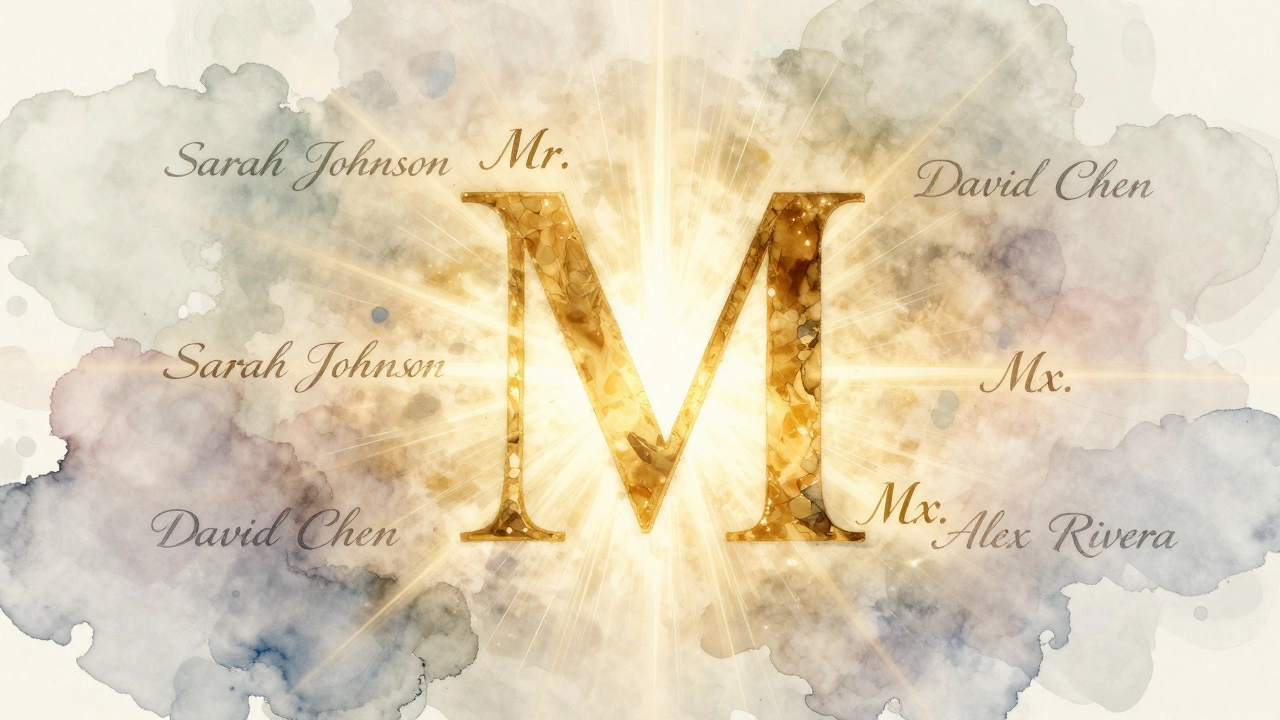
- Write your preferred title right after it: Mrs. Sarah Johnson, Ms. Elena Rodriguez, Mr. David Chen, or even Miss Lily Tran.
- Then write your full name on the same line, or on the next line if space allows.
- Check "Yes" or "No" for attendance.
- Fill in any extra details - meal choices, plus-one names, dietary needs.
You don’t need to use the exact title the couple assumes. If you’re divorced and prefer "Ms." instead of "Mrs.", use "Ms.". If you’re a man who goes by "Mx.", go ahead and write that - most couples will appreciate the clarity. The goal isn’t to follow rigid rules. It’s to make sure they know who’s coming and how to address you on seating charts or dinner menus.
Why Do Couples Even Use "M"?
It’s not about being old-fashioned. It’s about efficiency.
Wedding planners and couples often sort guest lists by last name, but they also need to know who’s attending - and whether it’s one person or a couple. If someone writes "John Smith" without a title, it’s harder to know if "John" is the only guest or if "Mrs. Smith" is also coming. When you write "Mr. John Smith", it’s instantly clear: one person, male, full name included.
Modern RSVPs sometimes skip the "M" and just say "Name:". But many still use the traditional format, especially for formal or printed invites. If you’re the one sending out invites, using "M" helps reduce confusion. If you’re the guest, just fill it in as you normally would.
What If You Don’t Use a Title?
It’s not the end of the world. If you write just "Sarah Johnson" under the "M", the couple will still know you’re coming. But they might have to guess your title for their seating chart. That’s not a big deal - most couples aren’t keeping track of titles down to the last detail. Still, taking the extra second to write "Ms." or "Mr." makes their job easier and shows you paid attention.
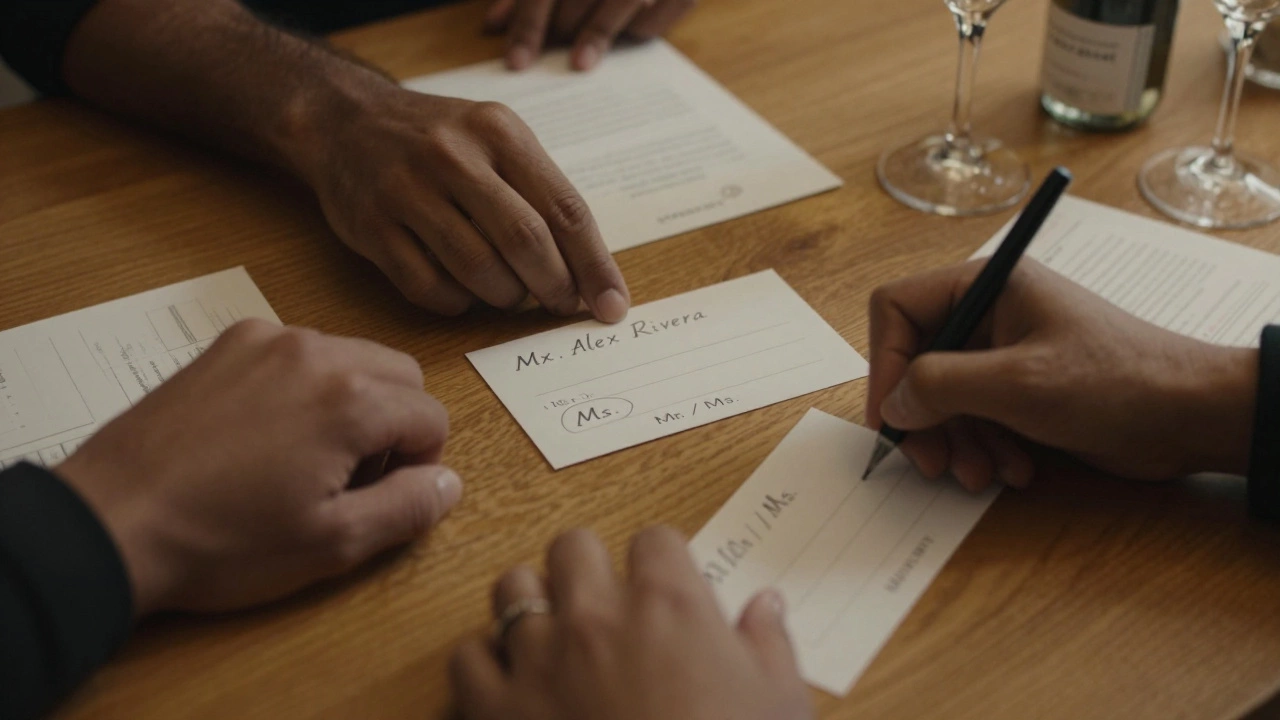
Some guests skip the title entirely because they’re uncomfortable with gendered titles. That’s totally valid. If you prefer "Mx." or no title at all, write what feels right. Many couples today are happy to see "Mx. Alex Rivera" or even just "Alex Rivera". The key is consistency - if you’re writing your full name clearly, they’ll figure it out.
What About "M" on Digital RSVPs?
If you’re responding online through a website like Zola, The Knot, or Paperless Post, you won’t see an "M". These platforms usually have dropdown menus for titles - or they let you type your name freely. In that case, you’re free to choose your title or leave it blank. Digital RSVPs are designed to be flexible. The "M" only appears on paper cards because of how they’re printed and laid out.
So if you’re filling out a digital form and don’t see an "M", don’t worry - it’s not missing. It’s just not needed.
Common Mistakes People Make
Here are the top errors people make when they see an "M" on an RSVP:
- Writing "M" as in "M for Male" - and then leaving it blank if they’re female.
- Writing "M. Smith" and then not writing the first name - leaving the card as "M. Smith" without a first name.
- Thinking "M" means "Married" and only using it if they’re married.
- Ignoring it completely and just writing their name - which is fine, but less helpful for the couple.
The fix? Treat "M" like a placeholder. It’s not a question. It’s not a requirement. It’s a guide.
What If the RSVP Has "Ms./Mrs." or "Mr./Ms."?
Some cards now say "Ms./Mrs." or "Mr./Ms." to be more inclusive. That’s a good sign - the couple is aware of evolving norms. In that case, just circle or check the one that fits you best. If none fit, write in your preferred title. Most couples will appreciate the thoughtfulness.
One couple in Dublin I know added a note on their RSVP: "Use whatever title feels right to you. We care more about you being there than what we call you." That’s the modern standard.
Bottom Line: Don’t Stress Over the "M"
The "M" on an RSVP isn’t a test. It’s a tiny tool to help the couple keep things organized. You don’t need to be perfect. You don’t need to know the history of wedding etiquette. Just write your name clearly, pick the title you use in daily life, and check "Yes" or "No".
If you’re unsure, just write your full name as you’d sign a card - "Ms. Amanda Lee" or "Amanda Lee" - and send it in. The couple will be thrilled you responded at all. That’s the real point of the RSVP.
Weddings are about people showing up - not about perfect punctuation.
Does the "M" on an RSVP mean "Male"?
No, the "M" does not stand for "Male." It’s a placeholder for any formal title: Mr., Mrs., Ms., or Miss. It’s there to help you start your name with the correct honorific, not to label your gender.
What if I don’t use any title? Will the couple be offended?
Not at all. Many couples today prefer simple, modern responses. Writing just your full name - like "James Wilson" - is perfectly acceptable. The goal is to let them know who’s coming. Clarity matters more than formality.
Can I write "Mx." on an RSVP if I’m non-binary?
Absolutely. "Mx." is a widely accepted gender-neutral title. If the card says "M", just write "Mx." before your name. Most couples will appreciate the thoughtfulness and respect for your identity.
Why do some RSVPs have "M" and others don’t?
Traditional printed invitations often include "M" as part of a formal layout. Digital RSVPs and modern designs usually skip it because online forms have built-in fields for names and titles. It’s a design choice, not a rule.
What if I’m bringing a plus-one? Do I write "M" for them too?
Yes. If the RSVP card has space for additional guests, write the full name with title for each person. For example: "Mr. James Wilson and Ms. Lisa Chen". If there’s no space, write "+1" and include the name on a separate line or note.
Should I use "Mrs." if I’m married but kept my maiden name?
Use the title you feel most comfortable with. If you prefer "Ms." even though you’re married, go with that. The couple is asking for your name, not your marital status. Your comfort matters more than tradition.