Wedding RSVP Etiquette Checker
How did you handle your recent RSVP?
Quick Tips
You’ve seen it on every invitation since you were old enough to hold a piece of paper. RSVP is a French acronym standing for 'Répondez s'il vous plaît,' which translates directly to 'Please respond'. It sits at the bottom of your wedding invites, usually in elegant script, demanding an answer from you. But here is the thing that trips people up: the 'V' doesn't stand for a word in English. It’s part of a French phrase that has become the global standard for event planning.
If you are staring at an envelope right now wondering if you need to write back immediately, or if you’re curious about why we use a foreign language for something as simple as "yes or no," you are not alone. This little three-letter code carries more weight than just a request for information. It dictates the budget, the seating chart, and the stress levels of the couple getting married.
The Origin of the Phrase
To understand what the V means, you have to look past the English alphabet. Répondez s'il vous plaît is the original French phrase used in formal correspondence. Let’s break it down letter by letter so there is no confusion:
- R stands for Répondez, which means "Respond" or "Reply."
- S stands for s'il, a contraction of si il, meaning "if he" (used here as a polite conditional).
- V stands for vous, which means "you" (formal/plural).
- P stands for plaît, meaning "pleases" or "please."
So, when you see RSVP, you are literally reading "Respond if it pleases you." In modern usage, the politeness markers have faded into a simple command: "Tell us if you are coming." The 'V' is simply the subject of that sentence-the person being asked to reply. It isn’t a standalone word like "Very" or "Visit," which are common myths. It is strictly grammatical glue holding the French request together.
This phrase gained traction in the English-speaking world during the 19th century. Formal etiquette was heavily influenced by French aristocracy, and borrowing their phrases added a layer of sophistication to social invitations. Today, it remains the universal signal that your presence matters enough to require confirmation.
Why the Response Matters More Than You Think
You might think hitting "reply" on a digital invite is just a courtesy. It is actually the backbone of the wedding logistics. For the couple, every single RSVP represents a direct cost. Caterers charge per head. Venues limit capacity based on confirmed guests. Florists arrange centerpieces based on table counts derived from those responses.
When you ignore an RSVP, you aren’t just being rude; you are creating a logistical nightmare. Planners often have to guess whether non-responders will show up. If they assume you will come and you don’t, the couple pays for food you didn’t eat. If they assume you won’t come and you do, there is no chair for you. The 'V' in RSVP puts the power in your hands to help them manage this chaos.
Digital vs. Paper: How to Reply Correctly
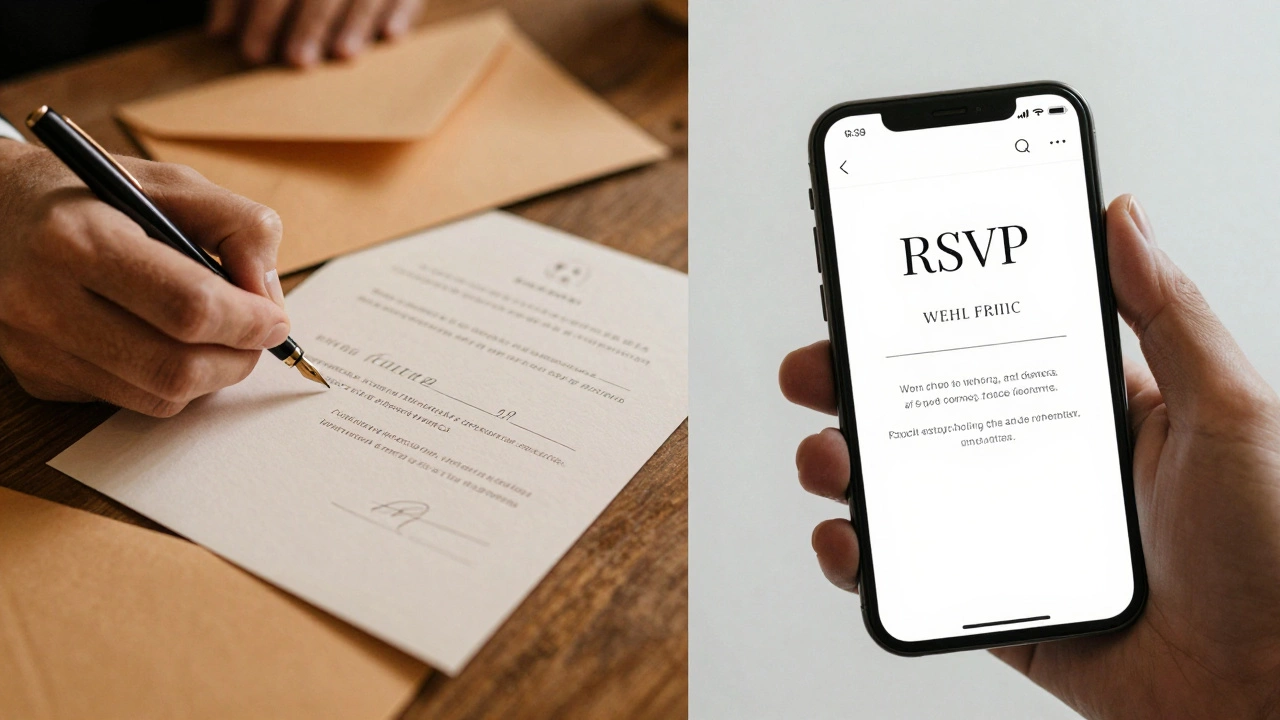
The method of replying has changed dramatically over the last decade. While traditional paper cards with pre-stamped envelopes are still popular for formal weddings, many couples now use wedding websites or apps.
| Method | Best For | Pros | Cons |
|---|---|---|---|
| Paper Card | Traditional/Formal Weddings | Tactile experience, keepsake value | Slower response time, risk of loss |
| Wedding Website | Modern/Mixed Age Groups | Instant tracking, dietary notes easy | Requires internet access, less personal |
| Text/Email | Casual/Elopements | Fastest communication | Hard to track, unprofessional tone |
If you receive a paper card, fill it out clearly. Print your name so the couple knows exactly who is attending. If you are declining, be brief but polite. A simple "Regretfully, I cannot attend" is sufficient. Do not feel obligated to explain why unless you are close family. If you are using a website, take advantage of the fields provided. This is where you can specify meal choices or note allergies, which saves the couple from having to follow up later.

The "Reply By" Date: A Hard Deadline
Every RSVP includes a deadline. This is not a suggestion. It is a hard stop for the couple’s planning timeline. Typically, invitations go out six to eight weeks before the wedding, with the RSVP due two to three weeks prior.
Why such a short window? Because vendors need final numbers. The caterer needs to know how much steak versus chicken to order. The venue needs to finalize the layout. If you wait until the day before the deadline, you force the couple to make last-minute calls that often incur extra fees. Respecting the 'V'-your responsibility to respond-means honoring that date.
If you realize you cannot make it after the deadline, call or text immediately. Do not email. Do not wait for them to ask. Proactive communication shows respect for their effort and budget.
Common Mistakes Guests Make
Even well-meaning guests trip up on etiquette basics. Here are the most frequent errors that cause friction between hosts and attendees:
- Adding Plus Ones Uninvited: If the invitation only lists your name, you do not have a plus one. Assuming otherwise disrupts the headcount and budget.
- Changing Your Mind: Accepting an invite and then canceling last minute is worse than never responding. It leaves the couple stuck with costs they cannot recover.
- Ignoring Dietary Restrictions: If you don’t specify that you are vegan or gluten-free, the couple assumes you can eat the standard menu. Silence equals consent.
- Asking for Clarification Too Late: If you are unsure about the dress code or schedule, ask early. Waiting until the RSVP deadline passes creates unnecessary panic.
Remember, the goal of the RSVP is clarity. Ambiguity hurts the host. Clear, timely, and honest responses help everyone enjoy the celebration without hidden stresses.
What If You Missed the Deadline?
Life happens. You lose the card. You forget the password to the wedding site. You get sick. If you find yourself past the RSVP date, do not panic, but act fast.
Contact the couple or their designated point person directly. Apologize for the delay, provide your answer, and offer to cover any additional costs incurred if you are adding guests late. Most couples would rather have a late yes than a silent no, but they appreciate honesty and urgency. Do not expect them to accommodate last-minute changes gracefully; be prepared to accept if they say no due to space constraints.
The Psychology of the Invitation
Beyond the logistics, the RSVP is a social contract. When someone takes the time to design, print, and mail an invitation, they are extending a gesture of inclusion. Responding promptly acknowledges that gesture. It says, "I value your relationship with me enough to prioritize this task."
In an era of instant messaging, the formality of the RSVP serves as a reminder that weddings are significant life events, not casual hangouts. The French origin adds a touch of ceremony, elevating the act of replying from a chore to a ritual. Embracing this tradition helps maintain the dignity and joy of the occasion.
So, the next time you see that elegant script, remember: the 'V' is you. It is your voice in the planning process. Use it wisely, respond early, and help the couple create the day they dreamed of.
Does RSVP mean "Really Sorry Very Polite"?
No, that is a common myth. RSVP stands for the French phrase "Répondez s'il vous plaît," which translates to "Please respond." There is no English acronym behind it.
How long do I have to RSVP to a wedding?
Typically, you should respond by the date listed on the invitation, which is usually two to three weeks before the wedding. Always aim to reply earlier if possible to help the couple plan accurately.
Can I bring a plus one if my name isn't on the invite?
Generally, no. Wedding invitations are specific about who is invited to manage costs and space. If your name is the only one listed, assume you are attending alone unless you contact the couple to clarify politely.
What should I write if I'm declining the invitation?
Keep it simple and polite. Write "Regretfully, I cannot attend" or check the "Decline" box on the card. You do not need to provide a detailed excuse unless you are very close to the couple.
Is it okay to RSVP via text message?
It depends on the couple's instructions. If they provided a phone number or requested texts, it is fine. However, for formal weddings, using the provided card or website is preferred to ensure accurate record-keeping.