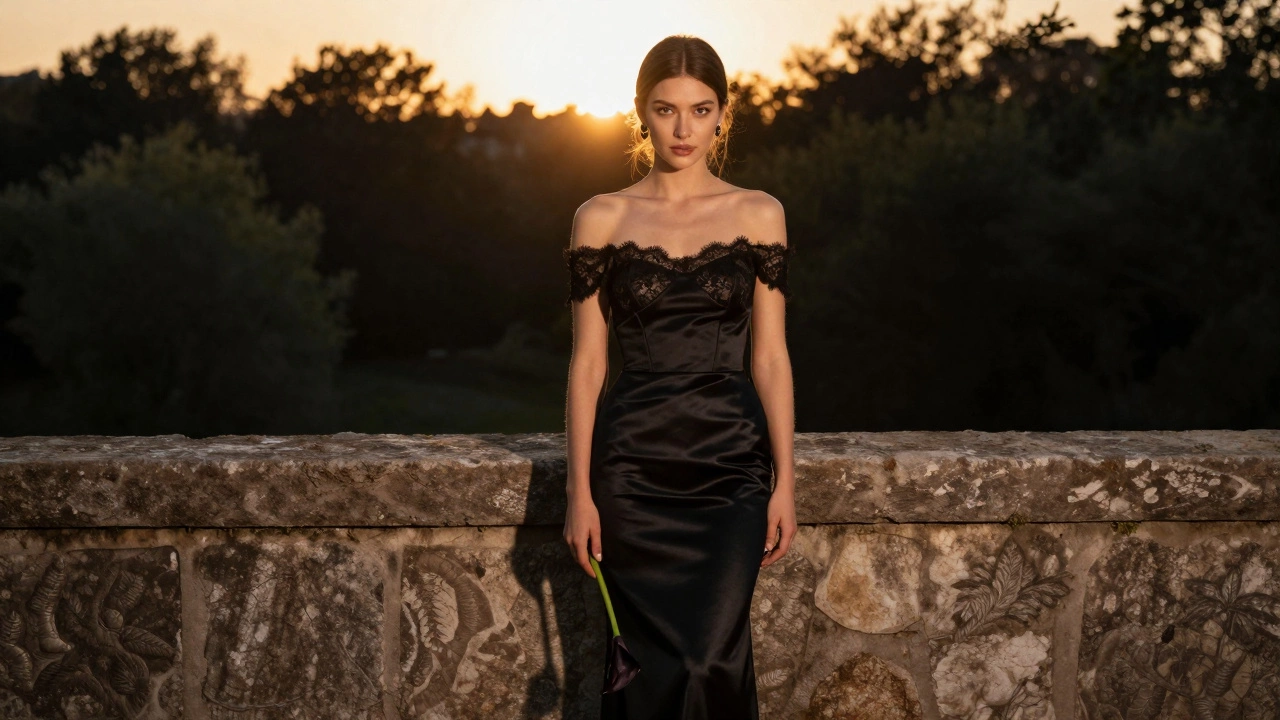
For centuries, white has been the default color for wedding dresses. But more brides today are choosing something different - something bold. A black wedding dress isn’t just a trend; it’s a statement. And it’s not as rare as you might think. From royal weddings to indie ceremonies, black gowns are showing up more often than ever. So what does a black wedding dress really mean? And who wears it?
Why Black? Breaking the Rules
White became the standard after Queen Victoria wore a white lace gown in 1840. Before that, brides wore whatever color they owned - blue for purity, red for luck, green for fertility. Black? It was mostly reserved for mourning. But times change. Today, black isn’t about sadness. It’s about power, elegance, and individuality.
Modern brides choose black because it’s timeless. It doesn’t yellow in photos. It hides stains. It looks sharp under any lighting. And it makes a strong visual impact. A black wedding dress says, ‘This is my day, and I’m not following the script.’
The History of Black in Weddings
Black wedding dresses aren’t new. In 1931, Wallis Simpson wore a black lace gown to marry Prince Edward, the Duke of Windsor, after his abdication. It was controversial - but unforgettable. In Spain, black was the traditional wedding color for widows remarrying, symbolizing loyalty to a lost spouse. In some parts of Asia, black was worn by brides to ward off evil spirits.
By the 1990s, goth and alternative subcultures brought black gowns into mainstream bridal fashion. Designers like Alexander McQueen and Vivienne Westwood turned black into high fashion. Today, it’s not about rebellion - it’s about expression.
Who Wears a Black Wedding Dress?
There’s no single type of bride who chooses black. But common profiles include:
- Non-traditional brides - those who don’t want to look like everyone else
- Second-time brides - often preferring understated elegance over white
- Modern minimalists - drawn to clean lines and monochrome style
- Evening or winter brides - black looks richer under low light and complements darker seasons
- Queer and non-binary couples - using fashion to reject gendered norms
It’s also popular among brides who marry later in life. A 45-year-old bride might choose a sleek black sheath over a puffy white ballgown because it fits her life, not a fairy tale.
Types of Black Wedding Dresses
Not all black dresses are the same. The style matters as much as the color.
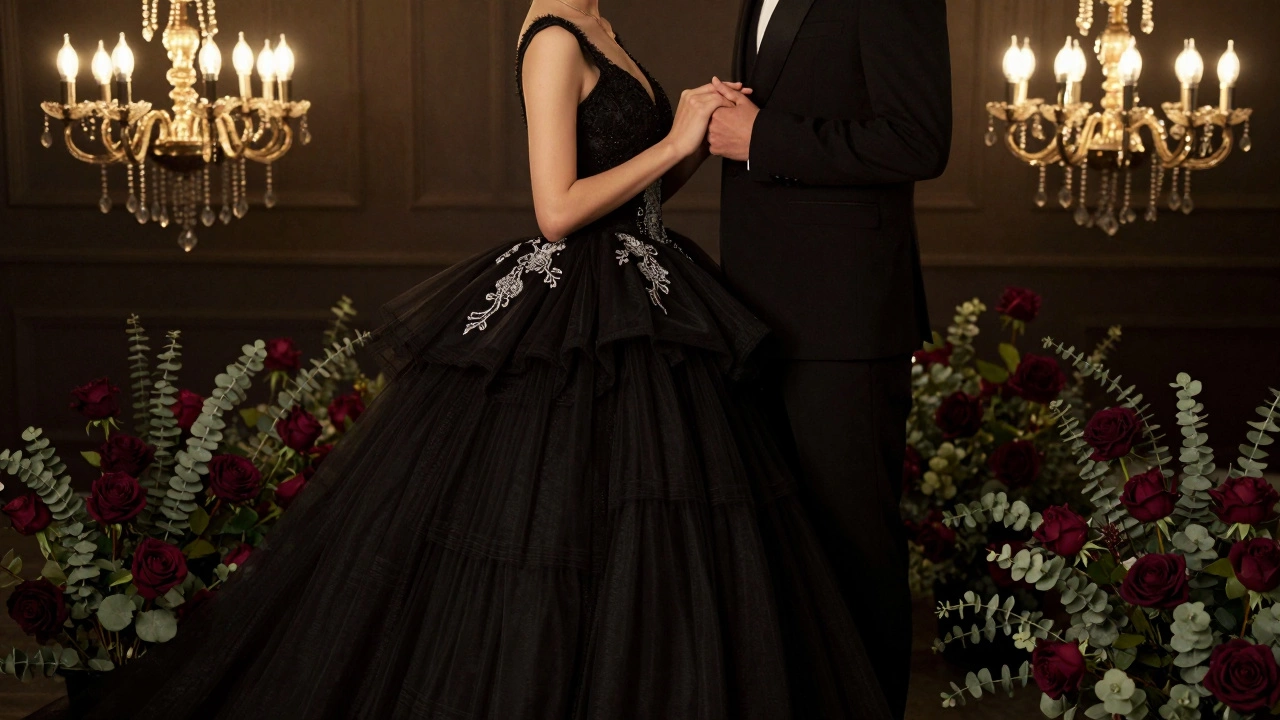
- Classic ballgown - dramatic, with layers of tulle or silk. Think Audrey Hepburn meets gothic romance.
- Sheath or slip dress - simple, body-hugging, often in satin or crepe. Perfect for city halls or intimate ceremonies.
- Off-the-shoulder or lace - adds softness. Black lace feels luxurious, not somber.
- Two-piece sets - crop top and skirt, or jacket and pants. Popular with younger brides looking for modern flair.
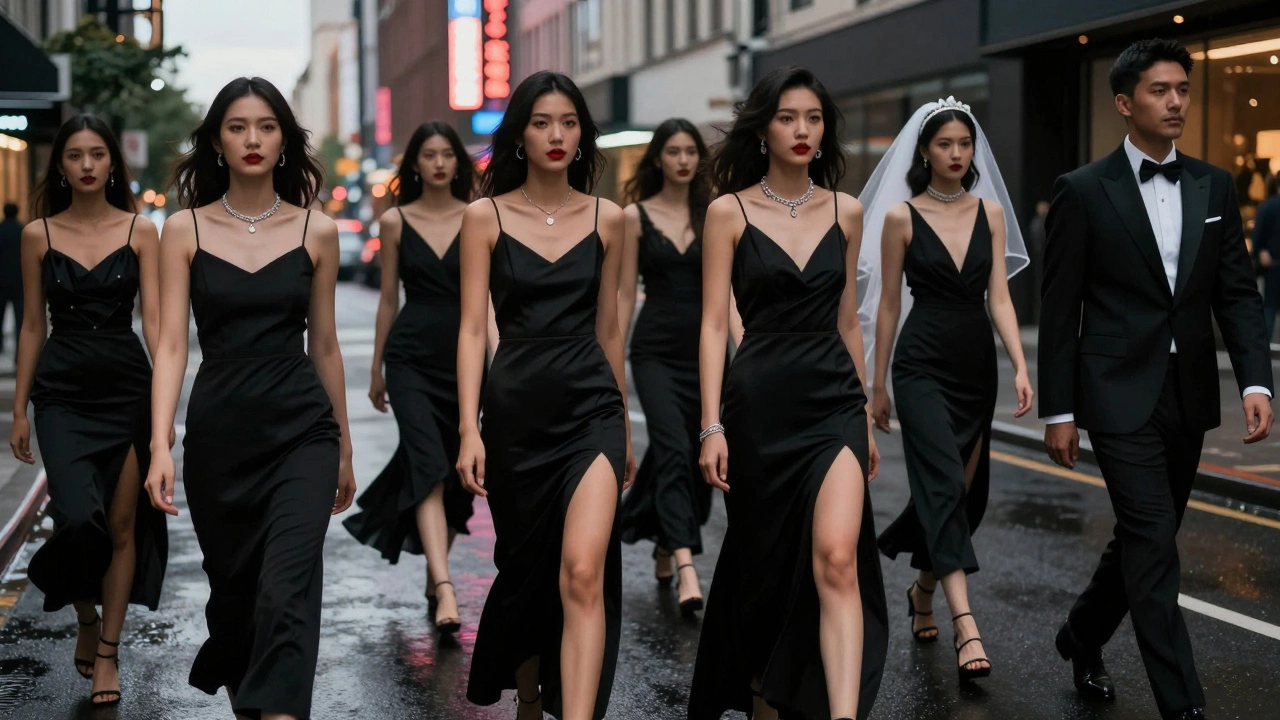
- High-slit or asymmetrical - bold, sexy, and confident. Often paired with bold accessories.
Some designers add subtle details: silver embroidery, pearl accents, or even hidden pockets. These touches make black dresses feel intentional, not just edgy.
How to Style a Black Wedding Dress
Styling a black dress is different from styling a white one. You don’t want to look like you’re going to a funeral - or a rock concert.
- Jewelry - go for silver, platinum, or white gold. Diamonds sparkle beautifully against black. Avoid gold unless you’re going for a vintage contrast.
- Shoes - black heels match seamlessly. Nude or metallic shoes can add contrast if you want to break the monochrome.
- Veil - optional. If you wear one, go for lace or tulle in black or ivory. A long veil adds drama without clashing.
- Makeup - keep it clean. Bold lips (deep red, plum, or even berry) work well. Avoid heavy contouring; black dresses already make a statement.
- Flowers - dark roses, black calla lilies, or deep burgundy blooms complement the dress. Greenery like eucalyptus or ferns adds balance.
One rule: don’t over-accessorize. A black dress is already the star. Let it breathe.
Is It Acceptable? What Family and Guests Think
Some families still see black as inappropriate for weddings. But attitudes are shifting fast. In 2023, a survey by WeddingWire found that 18% of brides in the U.S. considered a non-white dress. Of those, 41% chose black.
Most guests don’t care - as long as you’re happy. If someone says, ‘But it’s for mourning,’ you can simply say, ‘It’s for me.’
For cultural sensitivity: if you’re marrying into a family with strong traditions, consider wearing black only for the ceremony and changing into white for the reception. Or wear a black dress with a white sash or veil to honor both worlds.
Where to Buy a Black Wedding Dress
You don’t have to go to a big bridal salon to find one. Many independent designers specialize in dark bridal wear.
- Reformation - offers minimalist black slip dresses with delicate straps
- Self-Portrait - known for intricate lace and modern silhouettes
- Monique Lhuillier - has luxury black gowns with embroidery and beading
- ASOS Bridal - affordable options with trendy cuts
- Etsy - thousands of handmade black gowns from small designers
Custom tailoring is also an option. Many seamstresses in Dublin, London, and New York now specialize in non-traditional bridal wear. Bring inspiration photos - a black dress should feel made for you, not off-the-rack.
Black Wedding Dresses in Photos
Photographers love black dresses. They create contrast, depth, and drama. But lighting matters.
Outdoor daylight? A black dress can look flat. Add a reflector or shoot in golden hour for warmth. Indoors? Soft lighting brings out texture - lace, silk, and beadwork glow. Avoid harsh flash; it washes out details.
One tip: wear a dark lip or bold eyeliner. Black fabric can make skin look pale in photos. A touch of color on your lips helps you stand out.
Is a Black Wedding Dress Right for You?
Ask yourself:
- Do I feel powerful and beautiful in black?
- Does this dress reflect who I am, not what society expects?
- Will I still love this photo in 20 years?
If the answer is yes - then yes. There’s no rule that says you have to wear white. Your wedding is about your love, your style, your story. If black feels like you, then wear it with pride.
Some brides say their black dress made them feel like the main character in their own movie. That’s worth more than tradition.
Is it bad luck to wear a black wedding dress?
No, there’s no universal rule that black is bad luck. That idea comes from old superstitions tied to mourning. In many cultures, black is worn for protection, elegance, or power. Today, it’s purely a personal choice - and millions of brides have worn it without any negative consequences.
Can I wear a black wedding dress to a traditional wedding?
If you’re the bride, yes - your wedding, your rules. If you’re a guest, it’s generally best to avoid black unless the couple specifically invites it. For guests, black can be mistaken for mourning attire. When in doubt, ask the couple or choose a dark jewel tone like navy or burgundy.
Do black wedding dresses cost more than white ones?
Not necessarily. The price depends on the fabric, designer, and details - not the color. A simple black satin slip dress can cost less than a heavily beaded white gown. Some designers charge more for black because it requires precise tailoring to hide seams, but many affordable options exist.
Can I wear a black wedding dress if I’m not going for a goth look?
Absolutely. Black doesn’t mean goth. Think sleek silk, minimalist lace, or a tailored tuxedo-style gown. Many modern brides choose black for its sophistication, not its edge. It’s a neutral tone - like navy or charcoal - that works with any aesthetic: rustic, modern, classic, or boho.
What’s the best time of year to wear a black wedding dress?
Black looks stunning in fall and winter - it matches the mood, the lighting, and the colors of the season. But it also works in spring and summer if the dress is lightweight and paired with bright accessories. A black lace gown in May can be romantic, not dark. The key is fabric and styling, not the season.