Engagement Ring Budget Calculator
The "two-months' salary" rule was invented by a diamond company in the 1930s. It's not a real golden rule for engagement rings.
This calculator shows you what the outdated rule would suggest versus what couples are actually spending in Ireland today.
There’s a myth that’s been passed down for generations: you should spend two months’ salary on an engagement ring. It sounds romantic, right? Like a grand gesture written in stone. But here’s the truth-the golden rule for engagement rings has nothing to do with salary, nothing to do with carats, and everything to do with what your partner actually wants.
Where the Two-Months’-Salary Rule Came From (And Why It’s Outdated)
The idea that you should spend two months’ salary on an engagement ring didn’t come from ancient tradition. It came from a 1930s De Beers advertising campaign. The diamond giant wanted to boost sales after the Great Depression. They crafted a story: the bigger the diamond, the bigger your love. They pushed this idea hard-through movies, magazines, even wedding magazines. By the 1980s, it was gospel.
But here’s what they didn’t tell you: in 1938, the average American earned $1,200 a year. Two months’ salary was $200. Today, that same $200 would buy a tiny cubic zirconia. The rule was never about value. It was about creating artificial scarcity and desire.
Fast forward to 2025, and most couples under 35 are choosing to skip the diamond entirely. A 2024 survey from the Irish Wedding Council found that 42% of couples in Ireland now prioritize personal meaning over brand-name stones. Some pick vintage rings. Others choose moissanite. A few even picked hand-forged silver bands from local artisans. The point? The rule changed. And you should too.
The Real Golden Rule: Know What They Want
Forget the salary math. The real golden rule is simple: observe, listen, and ask the right questions.
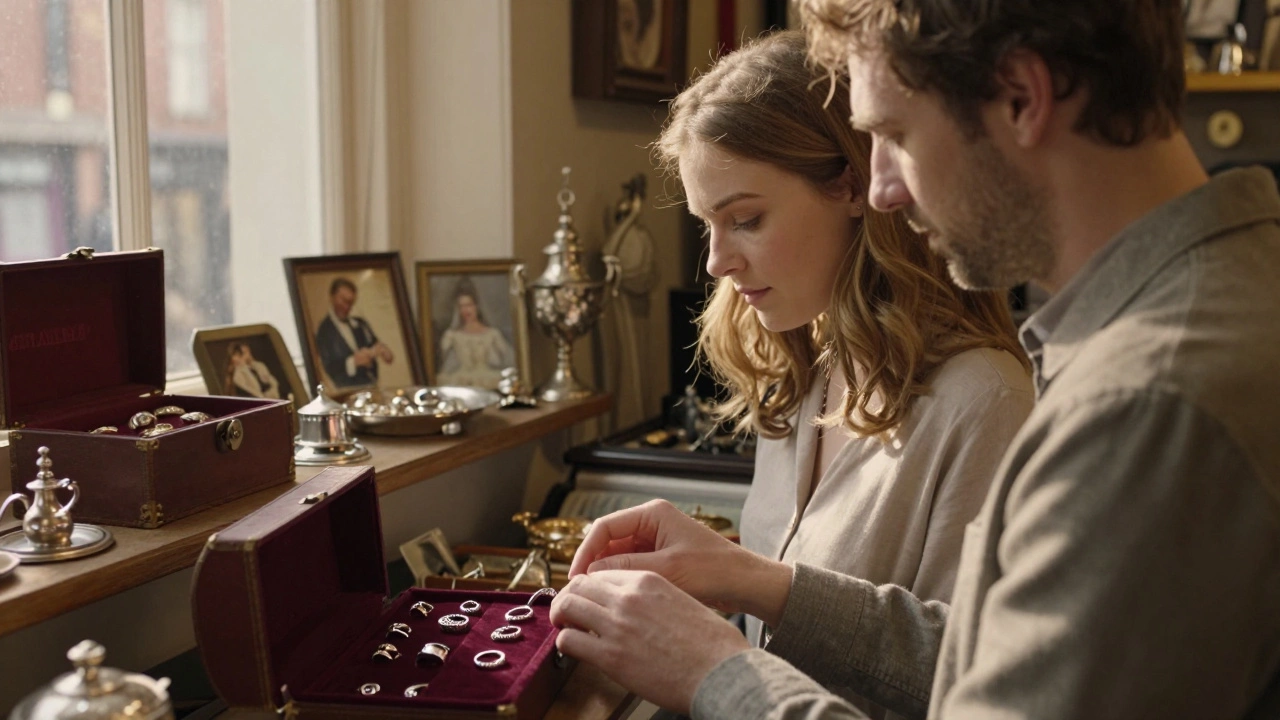
Think about this: if your partner hates flashy jewelry, why would you buy them a three-carat solitaire? If they’ve been eyeing that vintage platinum band from the Dublin antique shop for months, why wait for a proposal to surprise them with something they didn’t ask for?
Here’s how to do it right:
- Pay attention to what they comment on. Did they stop in front of a ring display last week? Did they say, ‘I wish I had something like that’? Write it down.
- Check their Pinterest or Instagram saves. Many people curate ‘dream ring’ boards without ever telling anyone.
- Ask their friends. Not directly-‘What ring should I get?’-but casually. ‘Have you noticed what kind of jewelry Sarah wears?’
- If you’re still unsure, get a ring sizer and buy a simple band in their size. You can always upgrade later.
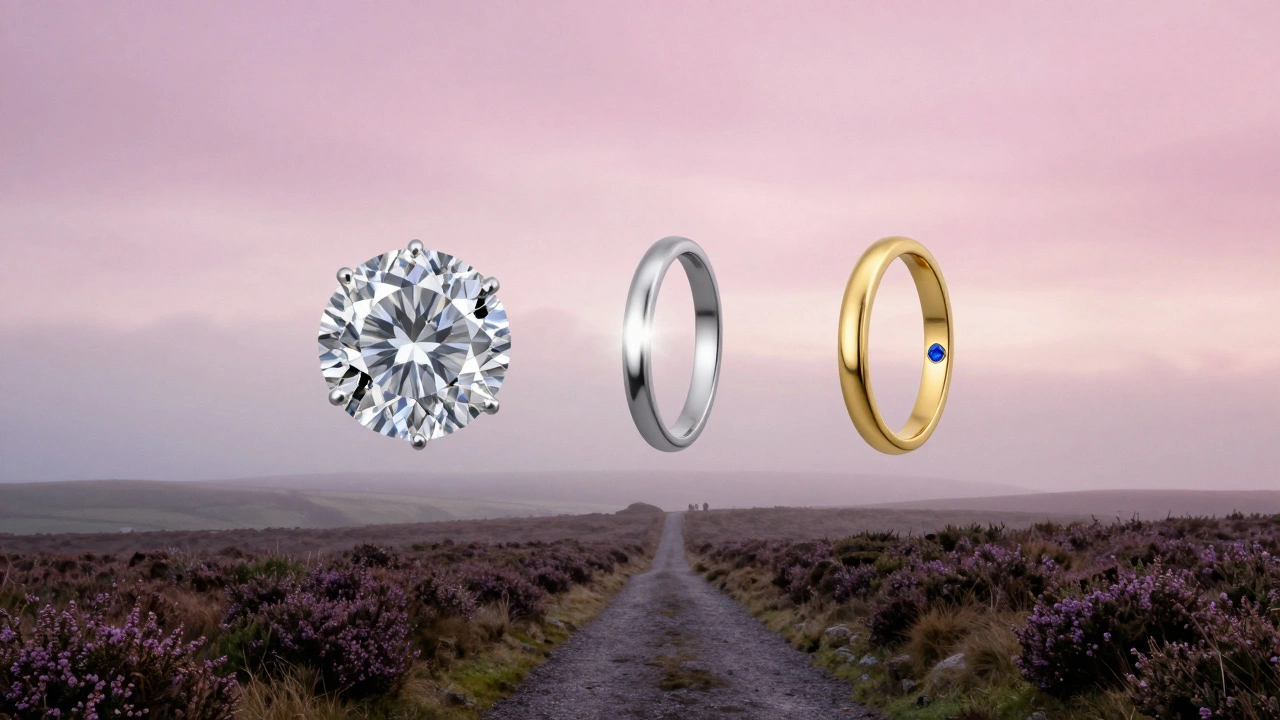
One couple I know in Galway did this: the woman loved minimalist design. The man bought her a thin 18k gold band with a tiny sapphire on the inside-the same stone she wore in her grandmother’s ring. She cried. Not because it was expensive. Because it was exactly hers.
What You Should Actually Spend
There’s no magic number. But there are smart numbers.
According to data from the Irish Central Statistics Office, the average engagement ring cost in Ireland in 2024 was €2,100. That’s down from €3,400 in 2019. Why? More couples are choosing ethical diamonds, lab-grown stones, or heirloom pieces. Others are saving for a house, a trip, or a shared business.
Here’s a better guideline: spend what you can comfortably afford without going into debt. If you’re saving for a home, don’t drain your deposit fund. If you’re paying off student loans, don’t add credit card debt. A ring should start your marriage, not bury you in payments.
Lab-grown diamonds cost 60-80% less than mined ones, with the same sparkle and durability. Moissanite looks nearly identical to diamond to the untrained eye and costs under €500 for a 1-carat equivalent. A simple 14k gold band with no stone? You can find one for €300-€600 from Irish makers like Claddagh Rings a traditional Irish design with deep cultural roots, often worn as engagement or wedding bands.
What to Avoid
There are three big mistakes people make-and they’re all emotional, not financial.
- Buying based on pressure: Family saying, ‘You have to spend more.’ Friends posting diamond hauls on Instagram. Ignore it. This is your relationship, not a competition.
- Choosing a ring that’s hard to wear: A huge stone might look stunning in photos, but if your partner works with their hands, it’ll get in the way. A low-profile setting or a comfort-fit band matters more than you think.
- Not thinking about the future: Will they want to wear this every day? Will it match a wedding band later? Can it be resized? These aren’t afterthoughts-they’re necessities.
I once helped a client in Dublin who bought a 2-carat ring because his dad said it was ‘expected.’ Six months later, his fiancée had it resized into a delicate band and sold the diamond. She said, ‘I loved him, but I hated the ring.’ He was devastated. She wasn’t rejecting him-she was rejecting the pressure.
It’s Not About the Stone. It’s About the Story.
The most meaningful engagement rings aren’t the most expensive. They’re the ones with a story.
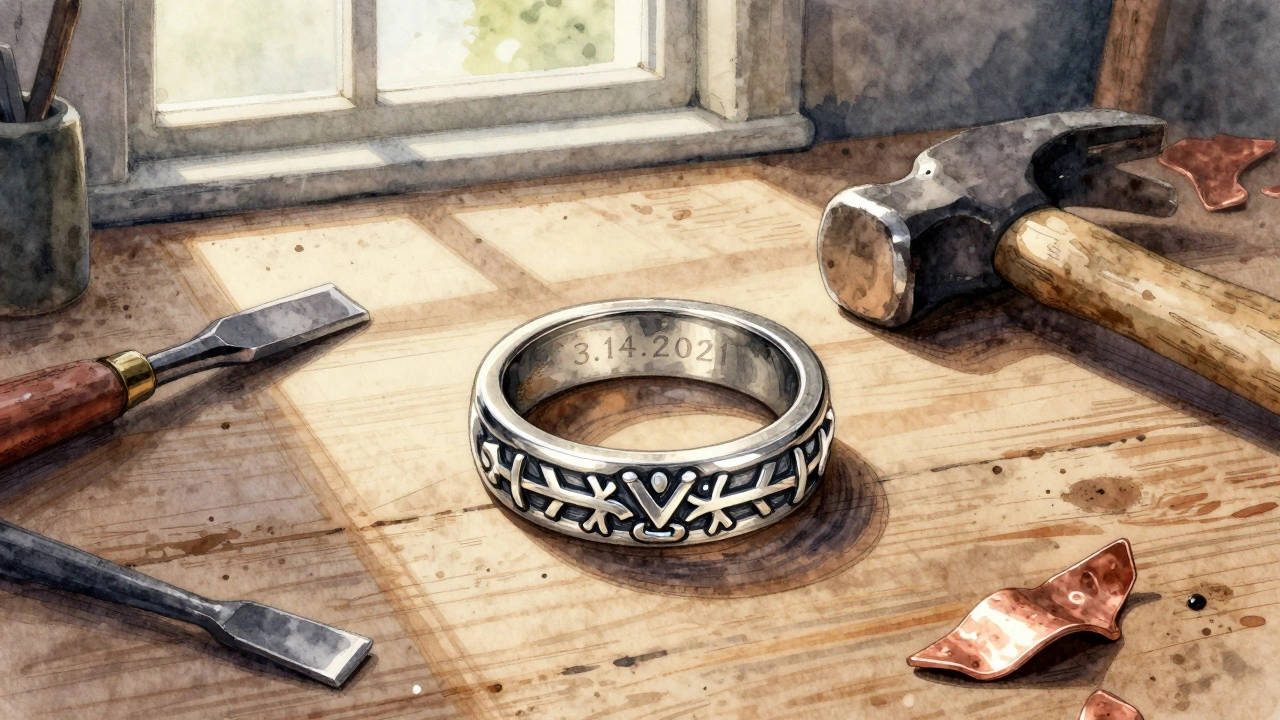
A woman in Cork proposed with a ring made from her late mother’s wedding band, melted down and reshaped. Another couple chose a ring with a tiny engraving inside: ‘First date, 3.14.2021’-the date they met at a pub in Temple Bar. One man gave his partner a ring made from recycled copper and silver, hand-forged by a local blacksmith in Kilkenny.
These rings cost anywhere from €200 to €1,500. But they’re priceless because they’re personal. They reflect who the couple is-not what a 90-year-old ad campaign told them to be.
When you pick a ring, you’re not buying jewelry. You’re choosing a symbol. And symbols only work if they mean something to the person wearing them.
What Comes After the Proposal?
Some people think the ring is the end goal. It’s not. It’s the beginning.
After the proposal, take time to talk about what comes next. Do you want to wear matching bands? Do you want to add stones later? Do you need to insure it? Do you want to keep it in a safe or wear it every day?
And if your partner didn’t love the ring? Don’t panic. You can always exchange it. Most reputable jewelers in Ireland offer a 30-90 day return window. Some even let you trade up later. The ring isn’t a life sentence. It’s a starting point.
Is the two-months’-salary rule still valid?
No. It was created by a diamond company in the 1930s to sell more stones. Today, most couples in Ireland spend between €1,500 and €3,000 on engagement rings, based on personal budget and preference-not income. What matters is that the ring reflects your partner’s taste and your financial comfort.
Are lab-grown diamonds real?
Yes. Lab-grown diamonds have the same chemical, physical, and optical properties as mined diamonds. They’re just created in a controlled environment instead of dug from the earth. They’re also more affordable and ethically sourced. Most jewelers in Ireland now offer them as standard options.
Can I propose without a ring?
Absolutely. There’s no rule that says you need a ring to propose. Some couples choose to buy the ring together after the proposal. Others use a family heirloom, a handmade band, or even a simple token like a carved wooden ring. The proposal is about commitment-not the object.
What’s the best metal for an engagement ring in Ireland’s climate?
Platinum and 18k gold are the most durable for Ireland’s damp weather. They resist tarnish and hold up well over time. Sterling silver can tarnish with moisture, and lower-karat gold may wear faster. If your partner has sensitive skin, go for hypoallergenic metals like platinum or palladium.
Should I get the ring engraved?
Only if it means something to both of you. Engraving can make a ring feel deeply personal-dates, initials, a short phrase. But if it feels forced or like a trend, skip it. The best engravings are quiet, meaningful, and private.
Final Thought: Love Doesn’t Come in Carats
The golden rule isn’t written in a marketing brochure. It’s written in the quiet moments-the way your partner smiles when they see a ring they love, the way they hold your hand when they’re nervous, the way they remember your favorite coffee order.
A ring is just metal and stone. What makes it sacred is the life you build around it.