Wedding Cost Savings Calculator
How Much Could You Save?
Calculate your potential savings based on wedding month selection. July is consistently the most expensive month for weddings across North America, the UK, Ireland and Australia.
Estimated Savings: $0
Cost Breakdown
Key Insights
Based on your selection, July is 30-50% more expensive for flowers than off-season months like November. This means you could save significantly by choosing a less popular wedding month.
Tip: If you're set on summer, book your florist by October of the prior year to lock in lower rates. Consider substituting peonies with sunflowers or using more greenery to reduce costs without sacrificing beauty.
If you’re planning a wedding, you’ve probably heard that June is the most popular month-but that doesn’t mean it’s the cheapest. In fact, the most expensive month to have a wedding isn’t just about tradition. It’s about supply, demand, and the skyrocketing cost of flowers. And if you’re wondering why your florist quoted you $2,500 for centerpieces in July, you’re not alone.
July is the most expensive month for weddings
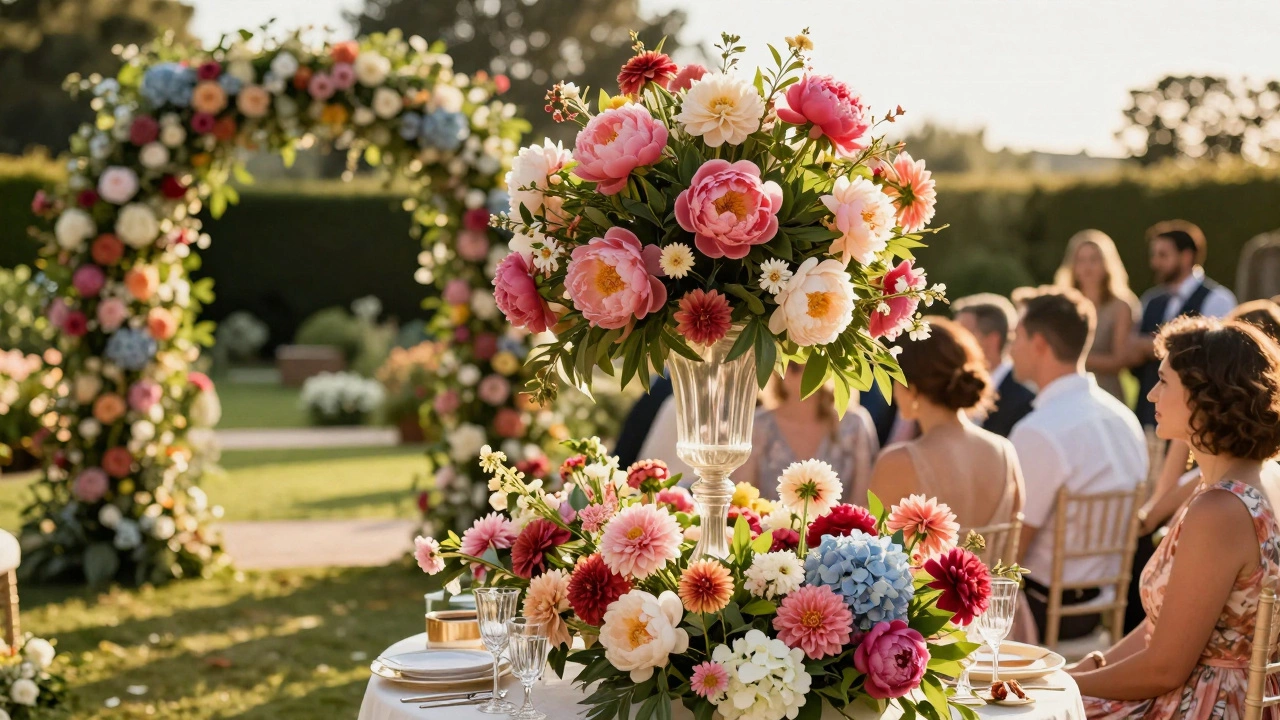
Across the U.S., Canada, the U.K., and Ireland, July consistently tops the list as the most expensive month to get married. Why? Because it’s peak season. Weather is reliable, schools are out, and families can travel. But the real driver? Wedding flowers. In July, demand for seasonal blooms like peonies, dahlias, and hydrangeas crashes into limited supply. Florists are booked months in advance, and prices jump 30-50% compared to spring or fall.
Here’s what that looks like in real numbers: a mid-range wedding bouquet in May might cost $180. In July, the same design-same flowers, same size-costs $275. Add in 15 centerpieces, ceremony arches, and boutonnieres, and you’re looking at an extra $1,200-$1,800 just for flowers. That’s not a small bump. That’s a full month’s rent.
Why July costs more than June
June gets all the attention. It’s the classic wedding month. But July? It’s the money-maker. Why? Because more couples are choosing July to avoid the rain risk of late spring and the cooler temps of early fall. In Ireland, where rain is a constant, July offers the highest chance of dry weather-and that drives demand.
Florists in Dublin, Belfast, and Cork report July bookings fill up by November of the prior year. That means they can raise prices without losing clients. They know you’ll pay. And you will, because you don’t want your peonies to arrive wilted or your bridesmaids holding sad-looking roses.
Meanwhile, June has more competition among vendors. More weddings mean more florists, more venues, more photographers-all trying to grab a piece of the pie. July? Fewer vendors are available, so the ones who are can charge premium rates. It’s basic economics: scarcity + desire = high price.
Flowers aren’t the only thing that spikes
Yes, flowers are the biggest cost jump, but they’re not alone. Venue prices in July can be 20-40% higher than in November or January. Caterers add seasonal surcharges for fresh produce. Even photographers charge more because they’re booked solid and can’t afford to take on off-season rates.
One couple in Galway booked their July wedding in January 2024. They thought they were getting a good deal on the venue-until they saw the floral quote. Their initial budget was $3,500 for flowers. The final bill? $5,100. They cut back on the number of arrangements, switched from peonies to sunflowers, and used greenery heavily. It saved them $1,300-but it still cost more than a November wedding with the same setup.
When is the cheapest time to get married?
If you’re trying to save money, skip July. Skip June, too. Instead, look at January, February, and November. These months are quiet. Vendors are desperate for bookings. And flowers? They’re cheaper because they’re not in peak demand.
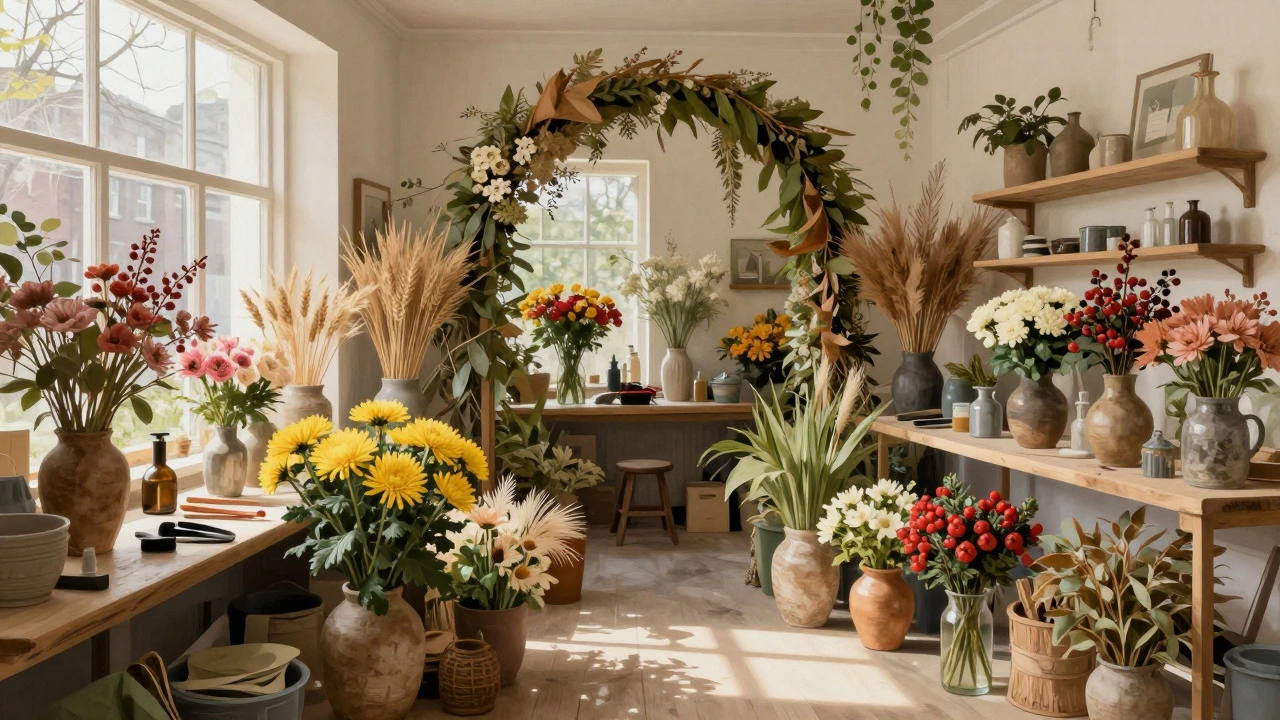
In January, you can get fresh roses, eucalyptus, and amaryllis for half the July price. February brings early tulips and ranunculus. November is all about chrysanthemums, dried wheat, and berries-beautiful, affordable, and seasonal.
One bride in Cork married in early November 2024. Her floral budget was $1,800. She got a full arch, 12 centerpieces, bouquets for six people, and boutonnieres-all with seasonal, locally grown blooms. Her florist said it was one of the easiest jobs they’d had all year. And she saved $3,200 compared to a July wedding with the same design.
How to save money on wedding flowers without sacrificing style
You don’t have to give up beauty to save money. Here’s how real couples cut costs:
- Swap seasonal blooms. Peonies in July? $8 each. Dahlias in October? $2.50. Switching to in-season flowers can cut your floral bill by 40%.
- Use more greenery. Eucalyptus, ferns, and ivy are cheap, lush, and look luxurious. One couple in Dublin used 70% greenery and only 30% flowers. Their arch looked like a forest garden-and cost $900.
- Repurpose arrangements. Move ceremony flowers to the reception. Use the bridal bouquet as the centerpieces after the ceremony. That’s two uses for one set of blooms.
- Go local. Avoid imported flowers. A single rose from Colombia costs $3. A locally grown rose in Ireland? $1.20. That’s a $1.80 saving per stem. Multiply that by 100 stems.
- Book early, but not in July. If you’re set on a summer wedding, book your florist by October. July prices lock in fast. If you wait until March, you’re paying the premium.
What florists won’t tell you
Florists don’t advertise their price hikes. They don’t say, “July is expensive.” Instead, they say, “This is the cost of premium seasonal flowers.” But here’s the truth: the same flowers in April cost less. The same arrangement in December costs less. It’s not about quality. It’s about timing.
Many florists will quietly offer discounts if you’re flexible. Ask: “Can we use substitute blooms?” or “Would you match a quote from a competitor?” Most will. They’d rather have your business at a lower price than no business at all.
Real cost comparison: July vs. November
Here’s what a $5,000 floral budget looks like in two months:
| Item | July Price | November Price | Savings |
|---|---|---|---|
| Bridal Bouquet | $275 | $140 | $135 |
| Bridesmaid Bouquets (4) | $400 | $200 | $200 |
| Centerpieces (12) | $1,200 | $600 | $600 |
| Ceremony Arch | $600 | $350 | $250 |
| Boutonnieres (10) | $200 | $100 | $100 |
| Floral Aisle Decor | $350 | $150 | $200 |
| Additional Arrangements | $675 | $360 | $315 |
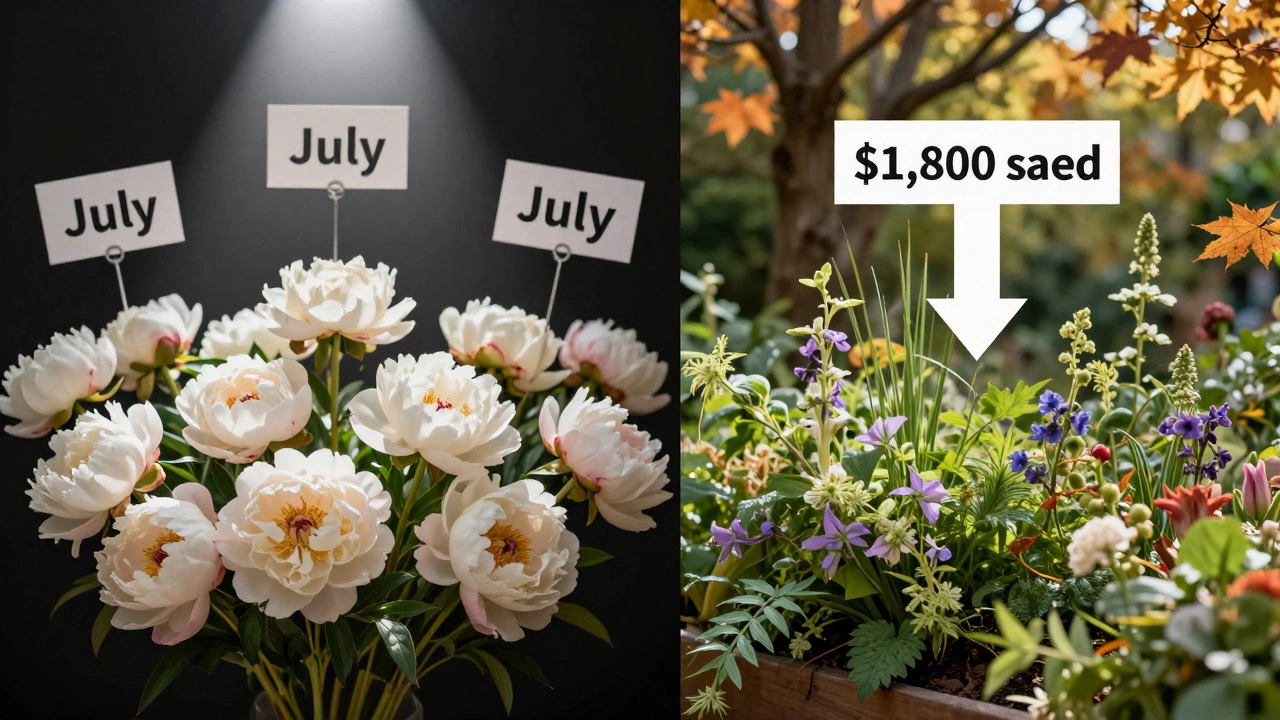
| Total | $3,700 | $1,900 | $1,800 |
That’s $1,800 saved. Enough to cover your honeymoon suite, your DJ, or even a second cake.
Final tip: Don’t let tradition dictate your budget
Just because July looks beautiful doesn’t mean it’s worth the cost. You can have a stunning wedding in October, December, or even March. The flowers will be different-but they’ll be just as meaningful. Real love doesn’t need peonies in July. It just needs you, your partner, and the courage to say no to the hype.
Choose your month based on what you can afford-not what’s trending. And if you’re wondering whether to postpone your dream July wedding? The answer might be simpler than you think: wait six months, and your flowers will thank you.
Is July really the most expensive month for weddings everywhere?
Yes, across North America, the U.K., Ireland, and Australia, July is consistently the most expensive month for weddings. This is due to high demand, limited vendor availability, and peak season pricing for flowers, venues, and catering. While June is more popular, July often costs more because fewer couples are flexible with dates, giving vendors less reason to lower prices.
Why are wedding flowers so expensive in July?
July is the peak season for popular wedding flowers like peonies, dahlias, and hydrangeas. Demand spikes as most couples plan summer weddings, but supply doesn’t increase fast enough. Florists raise prices because they know they can. Imported flowers also cost more due to shipping and handling in peak season. Local blooms are cheaper, but even they see a 30-50% price jump.
Can I save money by choosing different flowers in July?
Absolutely. Swapping peonies for sunflowers, or hydrangeas for chrysanthemums, can cut your floral bill by 40% or more. Using more greenery like eucalyptus or ferns also reduces costs while keeping the look lush. Many florists will offer substitutions if you ask-don’t assume you’re stuck with the most expensive options.
What’s the cheapest month for wedding flowers?
January and February are typically the cheapest months for wedding flowers. These months use hardy, in-season blooms like amaryllis, hellebores, and winter berries. November is also a great option, with chrysanthemums, dried grasses, and pomegranates available locally. Prices during these months can be 50% lower than in July.
Should I avoid July entirely if I’m on a budget?
Not necessarily-but you need to be smart. If you love July, book your florist and venue by October of the prior year. Lock in prices early. Consider a weekday wedding (Thursday or Friday) to avoid weekend premiums. And be open to flower substitutions. You can still have a beautiful July wedding without paying peak prices if you plan ahead and stay flexible.