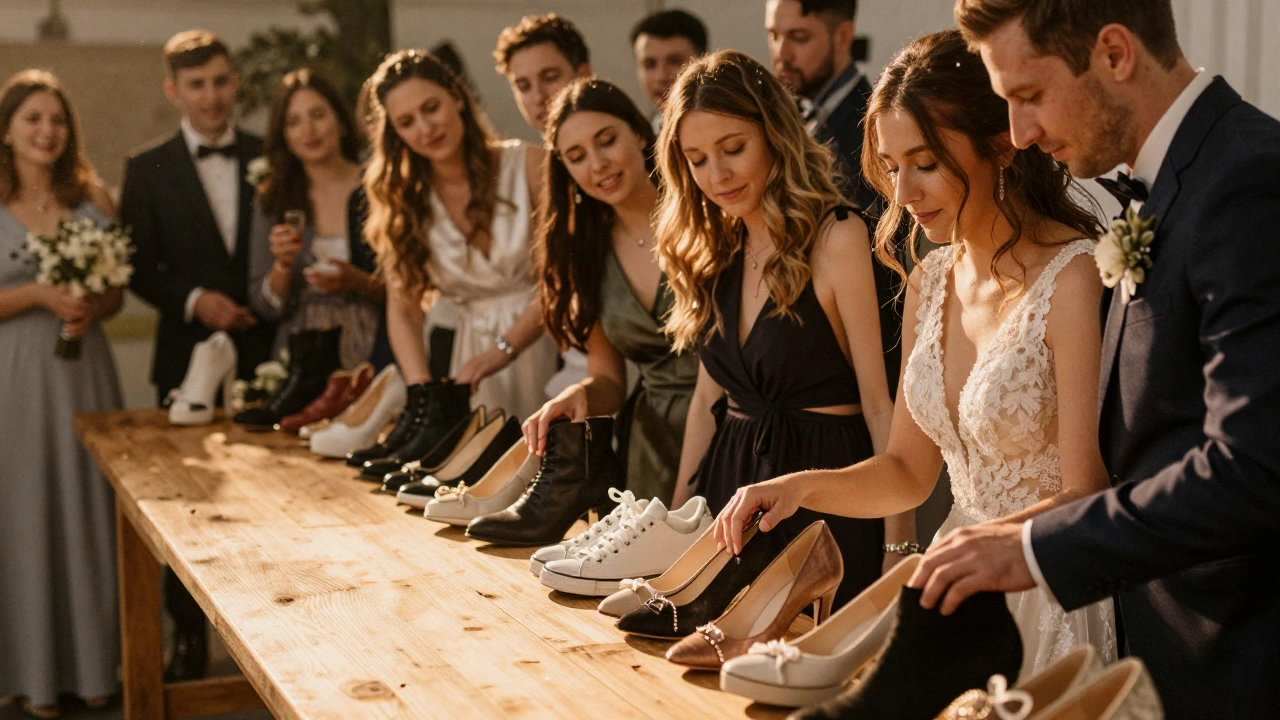
Ever been to a wedding where the bride and groom had to guess each other’s shoes-and everyone laughed like it was the funniest thing ever? That’s the wedding shoe game. It’s not some ancient ritual passed down for centuries. It’s a modern, lighthearted twist on getting guests involved in the celebration. And honestly, it’s one of those little moments that sticks with people long after the cake is gone.
How the Wedding Shoe Game Works
The setup is simple. Before the reception starts, the bride takes off one of her shoes. The groom does the same. Those two shoes are then mixed with several other pairs-usually from guests or wedding party members. The shoes are lined up in a row, and the couple has to pick which shoe belongs to their partner.
Here’s the catch: they can’t look at the shoes. They have to feel them. Sometimes they’re blindfolded. Sometimes they just close their eyes. The rest of the guests cheer, clap, and shout wrong guesses just to mess with them. It’s not about being right-it’s about being silly together.
Why shoes? Because they’re personal. You know your partner’s shoe size, the way they walk, how they scuff the heel. You know if they wear socks or go barefoot at home. That’s the magic of it. It’s not a test of memory. It’s a test of connection.
Where Did It Come From?
The shoe game didn’t show up in Victorian wedding manuals. It’s a 2000s-era party trick that got picked up by wedding planners and TikTok influencers. It likely evolved from older traditions like the ‘guess the bride’s shoe’ game, where guests tried to guess which shoe belonged to the bride before the ceremony. But the modern version turned it into a duet-two people, one pair of feet, a room full of laughter.
It became popular in the U.S. around 2018, then spread to the UK, Australia, and Ireland. You’ll see it now at most casual weddings, especially those with younger crowds. It’s not for every wedding, but if your reception has a playlist full of pop songs and a dance floor that never empties, this game fits right in.
Why People Love It
Weddings are full of formalities. The speeches, the toasts, the first dance-they’re beautiful, but they can feel scripted. The shoe game breaks that. It’s raw. It’s real. You see the groom squinting like he’s solving a mystery, the bride giggling as she touches a sneaker and says, “Nope, that’s not yours.”
It also lets guests feel included. When you’re asked to contribute a shoe, you’re not just a spectator-you’re part of the joke. And when the couple gets it wrong? That’s when the real fun starts. Someone shouts, “That’s my Doc Martens!” and suddenly, the whole room is laughing at a pair of chunky boots that clearly don’t belong.
It’s also a great icebreaker. If you’ve got a room full of people who don’t know each other-work friends, college buddies, distant cousins-the shoe game gives them something to bond over. No awkward small talk. Just shoe-touching and chaos.
How to Do It Right
If you’re planning to include the shoe game, here’s how to make it work without turning it into a mess:
- Collect 8-12 pairs of shoes. Too few and it’s too easy. Too many and it turns into a guessing marathon. Aim for 6-8 guest shoes plus the bride and groom’s.
- Ask guests ahead of time. Don’t surprise people. Send a quick note in the invitation or ask the wedding party to remind people. Nobody wants to show up in sandals and realize they’re the only one without shoes to donate.
- Use a variety of styles. Mix flats, heels, sneakers, boots. Avoid all the same brand or color. The more different they look and feel, the better the game.
- Have a clear spot. Set up a table or area near the dance floor. Don’t make people walk across the room to grab shoes. Keep it simple.
- Appoint a host. Someone needs to explain the rules quickly and keep things moving. A best man, maid of honor, or even the DJ can handle it.
- Don’t force it. If the couple looks nervous or the crowd’s quiet, skip it. Not every wedding needs a game.
What If They Get It Wrong?
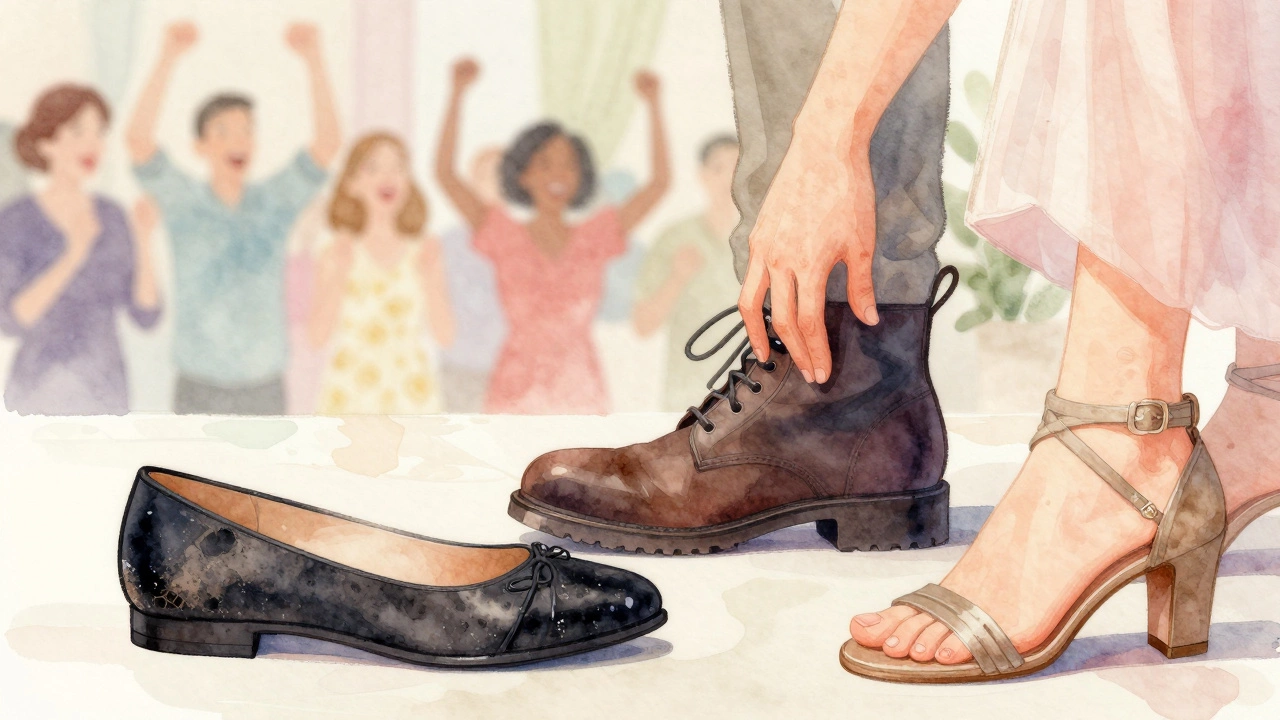
Here’s the truth: most couples get it wrong the first time. And that’s okay. In fact, it’s better. The funniest moments come from the mix-up.
One couple in Dublin picked each other’s shoes-and then realized they’d both worn identical black flats. The groom’s shoe had a tiny scuff on the toe. The bride’s had a broken strap. They both missed it. The crowd lost it. That’s the kind of memory you don’t plan. You just let it happen.
Some couples turn it into a joke. “If we get it wrong, we have to kiss for 10 seconds.” Or, “If we pick the wrong shoe, we owe the guest who donated it a drink.” It’s not about winning. It’s about sharing a laugh.
Alternatives to the Shoe Game
If you love the idea of interactive games but want something different, here are a few other popular options:
- Wedding Q&A: Guests write down questions about the couple ahead of time. The couple answers them live. Great for quirky, personal moments.
- Guess the Baby Photo: Photos of the bride and groom as kids are shown. Guests guess who’s who. Always a hit.
- Wedding Bingo: Custom bingo cards with things like “someone cries,” “the DJ plays ‘I Gotta Feeling,’” or “the groom dances badly.”
- Love Story Timeline: Guests line up photos from the couple’s relationship in order. The couple tries to guess the sequence.
These all serve the same purpose: make the reception feel personal, not like a checklist. The shoe game just does it with feet.
When Not to Use It
Not every wedding is the right fit. Skip the shoe game if:
- Your ceremony is formal or religious. Some families see it as too casual.
- Guests are mostly older or conservative. They might not get the joke.
- You’re short on time. The game can take 10-15 minutes if things drag.
- The couple is shy. Don’t put pressure on them to perform.
There’s no rule that says every wedding needs a game. The best moments often happen when no one’s trying to make them happen.
Final Thought: It’s Not About the Shoes
The shoe game isn’t really about shoes. It’s about trust. It’s about knowing someone so well that you can tell them apart by the way their foot rests in a sole. It’s about letting people see that love isn’t always grand gestures. Sometimes, it’s just knowing which heel has the worn-down edge.
So if you’re thinking about adding it to your reception-go for it. But don’t stress about getting it right. The right answer isn’t in the shoe. It’s in the laughter that follows.
Is the wedding shoe game only for brides and grooms?
No, it’s not limited to the couple. Some weddings now do a version where guests pair up and guess each other’s shoes too. It’s a fun way to get everyone involved. You can even make it a contest-first pair to guess correctly wins a small prize, like a bottle of champagne or a candy bar.
Do you need to blindfold the couple?
Not at all. Blindfolding adds drama, but it’s optional. Many couples just close their eyes. Others prefer to feel the shoes while looking at them. The goal is to make it challenging, not impossible. If you’re worried about the couple getting frustrated, skip the blindfold.
Can you use sandals or flip-flops in the game?
Yes, but be careful. Sandals and flip-flops are harder to distinguish by touch alone, especially if they’re similar styles. If you include them, make sure they’re noticeably different-like one with a strap, one without. Or skip them entirely if you want the game to be fair.
How many shoes should you collect?
Aim for 8 to 12 pairs total. That includes the bride’s and groom’s shoes. Too few makes it too easy. Too many turns it into a long, confusing game. Around 6-8 guest shoes works best for a group of 50-100 people.
Is the wedding shoe game appropriate for a religious wedding?
It depends on the family’s beliefs. Some religious ceremonies prefer to keep the reception solemn or traditional. If your wedding includes rituals like prayers, blessings, or formal vows, you might want to skip the game-or save it for after the main events. Always check with the officiant or elders if you’re unsure.