Wedding Cake Coating Selector
Answer these 3 quick questions to find the perfect coating for your big day.
Result
Pros:
Cons:
Walk into any bakery or scroll through Pinterest, and you’ll see a stunning tiered masterpiece. But have you ever stopped to ask what that smooth, flawless coating actually is? It’s not just "icing." The term changes depending on the texture, the ingredients, and the look the baker is going for. If you’re planning a wedding, knowing the difference between royal icing, buttercream, and fondant isn’t just trivia-it determines how your cake tastes, how long it lasts in the heat, and whether it looks like a polished sculpture or a rustic dessert.
Most people use "icing" as a catch-all term. In the professional world of wedding cake makers, precision matters. A mistake here means a cracked surface or a dry crumb. Let’s break down exactly what these coatings are called, what they’re made of, and which one fits your big day.
The Classic Choice: Buttercream
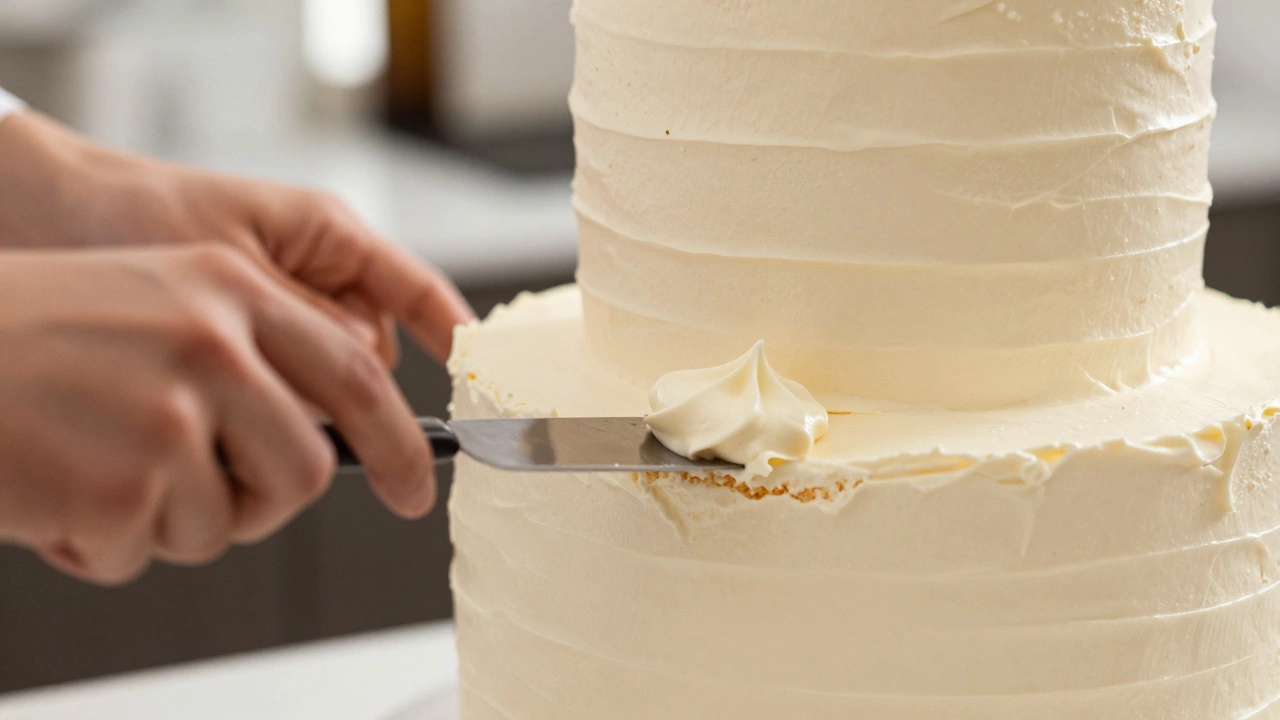
If you grew up eating birthday cakes at home, you probably know this one. Buttercream is a sweet spread made by creaming butter with sugar, often flavored with vanilla, chocolate, or fruit extracts. It’s the most common choice for modern weddings because it strikes a balance between aesthetics and flavor.
There are two main types you need to know:
- American Buttercream: This is the fluffy, sugary stuff made from butter, powdered sugar, and a splash of milk or cream. It’s easy to make, incredibly sweet, and holds its shape well for piping roses or borders. However, it can be too sweet for some palates and doesn’t stay perfectly smooth in hot weather.
- Swiss or Italian Meringue Buttercream: This is the pro’s choice. Instead of just mixing powdered sugar, bakers cook egg whites and sugar together before whipping them with butter. The result? A silky, less-sweet frosting that tastes more like a light mousse. It’s smoother, easier to polish, and handles heat better than American buttercream.
Why do couples love it? Because it tastes like dessert. Unlike other coatings, you don’t peel it off; you eat it all. It also forgives small imperfections in the cake layers underneath, making it a practical choice for stress-free baking.
The Sculptor’s Dream: Fondant
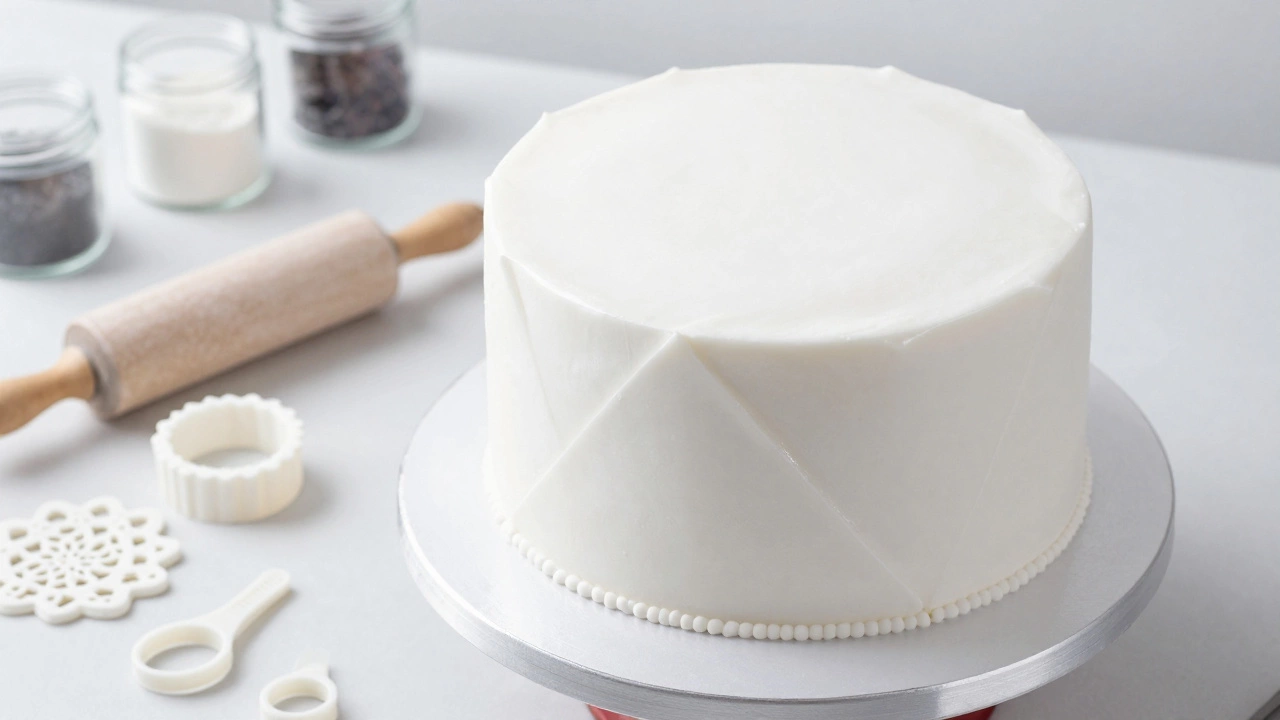
If you’ve seen a wedding cake that looks like a porcelain doll house, complete with intricate lace patterns and sharp edges, that’s likely covered in Fondant is a pliable dough-like icing made primarily of sugar, water, and gelatin or glycerin. It’s not technically an "icing" in the traditional sense because it’s rolled out like pastry rather than spread with a spatula.
Fondant creates that mirror-smooth finish that photographers love. It allows cake decorators to create complex shapes, flowers, and figures that would melt if made from buttercream. You can color it any shade imaginable without streaks.
Here’s the catch: many guests hate the taste. Plain fondant tastes like pure sugar. To fix this, skilled bakers put a thin layer of buttercream under the fondant (called a "crumb coat") so every bite has flavor. They also cut away the fondant after slicing, serving only the cake and buttercream inside. If you choose fondant, ask your baker how they handle the taste factor. Some brands, like Satin Ice, are softer and less chewy than others.
The Traditional Favorite: Royal Icing
You might associate Royal Icing is a hard-setting icing made from egg whites (or meringue powder) and powdered sugar. with Christmas cookies or gingerbread houses. That’s because it dries rock-hard. So why use it on a wedding cake?
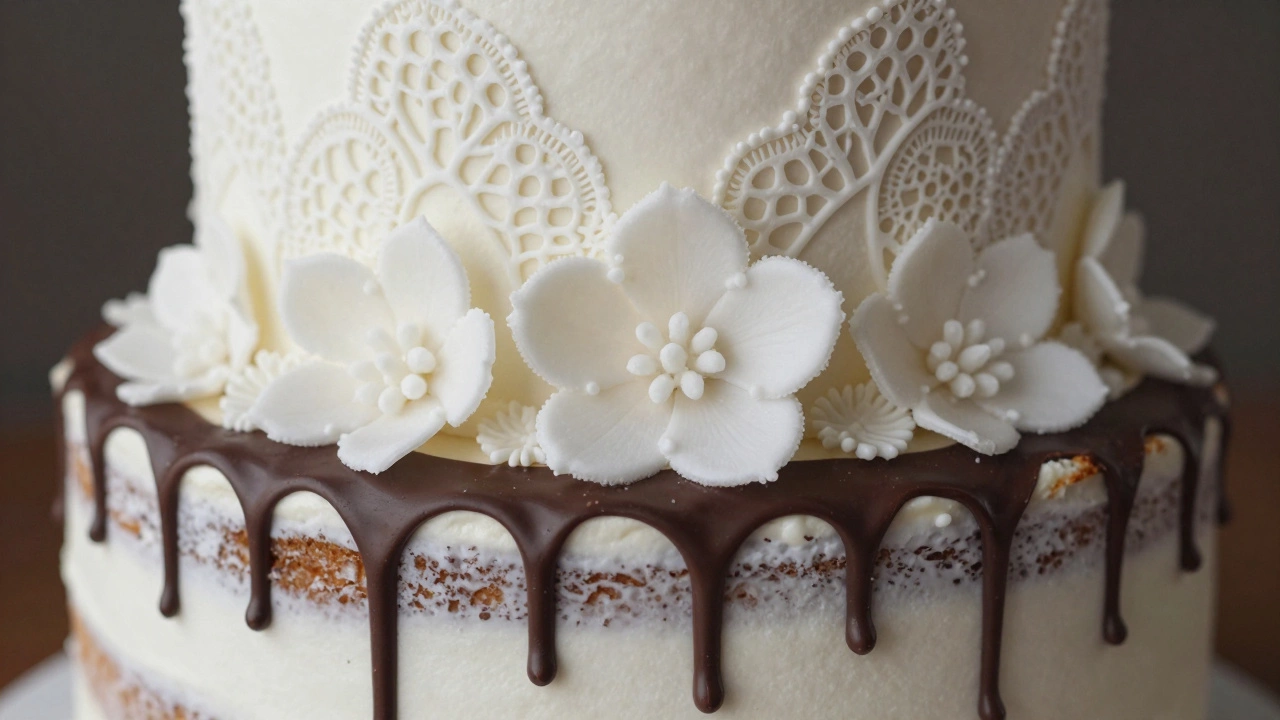
Royal icing is essential for detailed piping work. If your cake design features delicate lace overlays, fine lettering, or intricate floral details that need to stand up straight, royal icing is the only option that won’t droop. It’s rarely used to cover the entire cake because, once dried, it’s crunchy and can crack if bumped.
In traditional British weddings, you might see a combination: a buttercream base for the body of the cake, with royal icing used exclusively for the decorative trimmings. It’s durable, shelf-stable, and perfect for accents, but never for the main coating unless you enjoy chewing on sugar glass.
The Rustic Trend: Ganache
If you prefer chocolate over vanilla, Ganache is a rich mixture of heavy cream and melted chocolate. It’s poured over the cake while warm, creating a glossy, self-leveling coat. As it cools, it sets into a firm but creamy shell.
Ganache is popular for "naked" or semi-naked cakes where the sides are slightly exposed, showing off the layers. It’s also great for drip cakes, where colorful chocolate drips down the sides. It’s less sweet than buttercream and feels luxurious in the mouth. However, it requires temperature control. In a hot summer wedding, ganache can soften and slide, so indoor venues with air conditioning are a must.
Comparison: Which Coating Fits Your Wedding?
| Coating Type | Taste Profile | Durability | Best For | Heat Resistance |
|---|---|---|---|---|
| Buttercream | Creamy, Sweet | Medium | Classic designs, piping | Low to Medium |
| Fondant | Sugary, Chewy | High | Smooth finishes, sculptures | High |
| Royal Icing | Hard, Crunchy | Very High | Detailed piping, accents | Very High |
| Ganache | Rich, Chocolatey | Medium | Modern, rustic, drip cakes | Low |
Common Questions About Cake Icing
When talking to your baker, you’ll hear terms like "crumb coat," "filling," and "dusting." Here’s what they mean:
- Crumb Coat: A thin layer of buttercream applied to seal in crumbs before the final coat. It’s not visible in the finished cake but prevents loose crumbs from ruining your smooth surface.
- Filling: The jam, custard, or buttercream sandwiched between cake layers. This is where the real flavor lives.
- Dusting: Powdered sugar sprinkled lightly over the top to mimic snow or frost. It’s purely decorative and adds minimal sweetness.
Don’t be afraid to ask for a hybrid approach. Many couples want the look of fondant but the taste of buttercream. A good baker will suggest covering the cake in buttercream and using fondant only for specific elements, like sashes or flowers. This gives you the best of both worlds without the sugar overload.
Remember, the name of the icing matters less than how it makes you feel when you take a bite. Choose based on your venue’s climate, your aesthetic vision, and your personal taste. After all, it’s your celebration-not just a display piece.
Is fondant the same as icing?
No, fondant is not technically icing. Icing is usually spread or piped, while fondant is a rolled-out dough made of sugar, water, and gelatin. It’s used to cover cakes for a smooth finish, whereas icing is typically eaten as a topping.
What is the most popular icing for wedding cakes?
Buttercream is currently the most popular choice due to its delicious taste and versatility. Swiss meringue buttercream is especially favored by professionals for its smooth texture and stability.
Does royal icing harden completely?
Yes, royal icing dries to a hard, brittle finish. This makes it ideal for detailed piping and decorations that need to hold their shape, but it is not suitable for covering an entire cake meant to be sliced easily.
Can I use ganache for a summer wedding?
It depends on the venue. Ganache is sensitive to heat and can melt or slide if the room is warm. If your wedding is outdoors or in a non-air-conditioned space, consider buttercream or fondant instead.
How do I make fondant taste better?
Ask your baker to use a high-quality brand like Satin Ice, which is softer and less sweet. Also, ensure there is a thick layer of buttercream underneath the fondant so that each slice includes flavorful frosting.