
Wedding Scale & Cost Estimator
Enter your expected details below to see how your wedding is classified and what the potential financial impact might be.
Wedding Category
- Venue Type -
- Logistics Level -
Estimated Budget
Key Considerations for This Size
You send out your first round of wedding invitations is formal paper or digital requests sent to guests to attend the marriage ceremony and reception. The RSVPs start trickling in. One week later, you have forty people coming. Two weeks later, that number jumps to one hundred and fifty. Suddenly, the cozy backyard gathering you imagined feels like a small festival. You start wondering: exactly when does a wedding stop being "medium" and start being "big"?
There is no single legal definition for a big wedding, but the industry has settled on some clear benchmarks. Generally, if you are inviting more than two hundred guests, you are hosting a large-scale event. If you cross three hundred, you are firmly in "big wedding" territory. But the size isn't just about headcount. It’s about the logistics, the budget, and the sheer scale of coordination required.
The Numbers Game: Defining Wedding Sizes
To understand what makes a wedding "big," we first need to look at where it sits on the spectrum. Most couples fall into one of four distinct categories based on their final guest list.
| Category | Guest Count Range | Venue Type | Logistics Level |
|---|---|---|---|
| Intimate / Micro | Under 50 | Home, Small Bistro, Chapel | Low (DIY friendly) |
| Medium / Standard | 50 - 150 | Banquet Hall, Hotel Ballroom, Garden | Moderate (Some vendors needed) |
| Large | 150 - 250 | Large Hotel, Estate, Conference Center | High (Professional planner recommended) |
| Big / Grand | 250+ | Convention Center, Historic Mansion, Resort | Very High (Full-service team required) |
If your guest list hovers around two hundred, you are managing a complex operation. You need multiple catering stations, perhaps a second dance floor, and definitely a robust sound system. When you push past three hundred, the dynamics change again. You aren't just hosting a party; you are managing an event. This distinction matters because it dictates how you approach every other decision, from seating charts to security.
Why Invitation Strategy Changes with Size
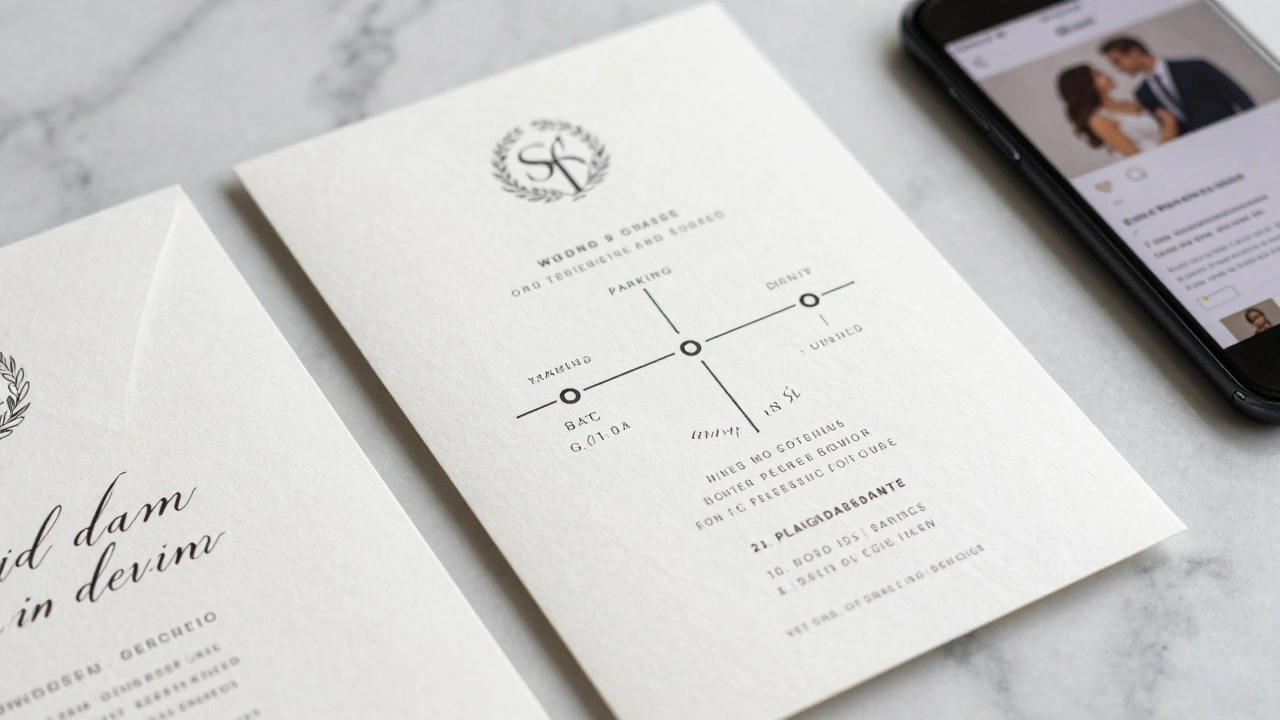
Your wedding invitations is the primary communication tool for setting expectations regarding attire, schedule, and location. For a small wedding, a handwritten note might suffice. For a big wedding, your invitation suite becomes a critical logistical document. With hundreds of guests, clarity is king. Ambiguity leads to confusion, and confusion leads to chaos on the day of the wedding.
In large weddings, you often need additional inserts that don't appear in smaller events. These include:
- Detailed timelines: Guests need to know exactly when to arrive, especially if there are multiple ceremonies or a cocktail hour in a different building.
- Parking and transport instructions: A venue holding three hundred people likely doesn't have three hundred parking spots. You may need to include info on shuttles or nearby garages.
- Accommodation blocks: If half your guests are traveling, your invitation needs to link to hotel reservations clearly.
- Plus-one policies: In big weddings, defining who gets a plus-one is stricter to control costs. Your invite must state this politely but firmly to avoid awkwardness later.
Digital invitations become increasingly popular for large weddings not just for cost savings, but for real-time updates. If a room changes last minute, updating an email or website is instant. Updating three hundred paper cards is impossible.
The Financial Reality of Big Weddings
Let’s talk money, because size directly impacts cost. The average cost per guest in Ireland and the UK can range from €150 to €300 depending on the venue and food quality. Do the math. A two-hundred-guest wedding could easily cost between €30,000 and €60,000 just for the venue and catering. Add photography, flowers, music, and attire, and the total bill climbs rapidly.
However, big weddings also offer economies of scale. Per-head costs for cake, favors, and sometimes even entertainment can drop as numbers rise. A DJ charging €800 for fifty people is expensive per person. That same DJ for three hundred people is a bargain. The key is balancing fixed costs (like the venue rental) against variable costs (like food and drink).
You also face higher risks. With more people comes a higher likelihood of incidents-spilled drinks, lost children, medical issues. This often means you need to invest in professional security staff and comprehensive insurance, expenses that rarely factor into intimate weddings.
Logistical Nightmares vs. Crowd Energy
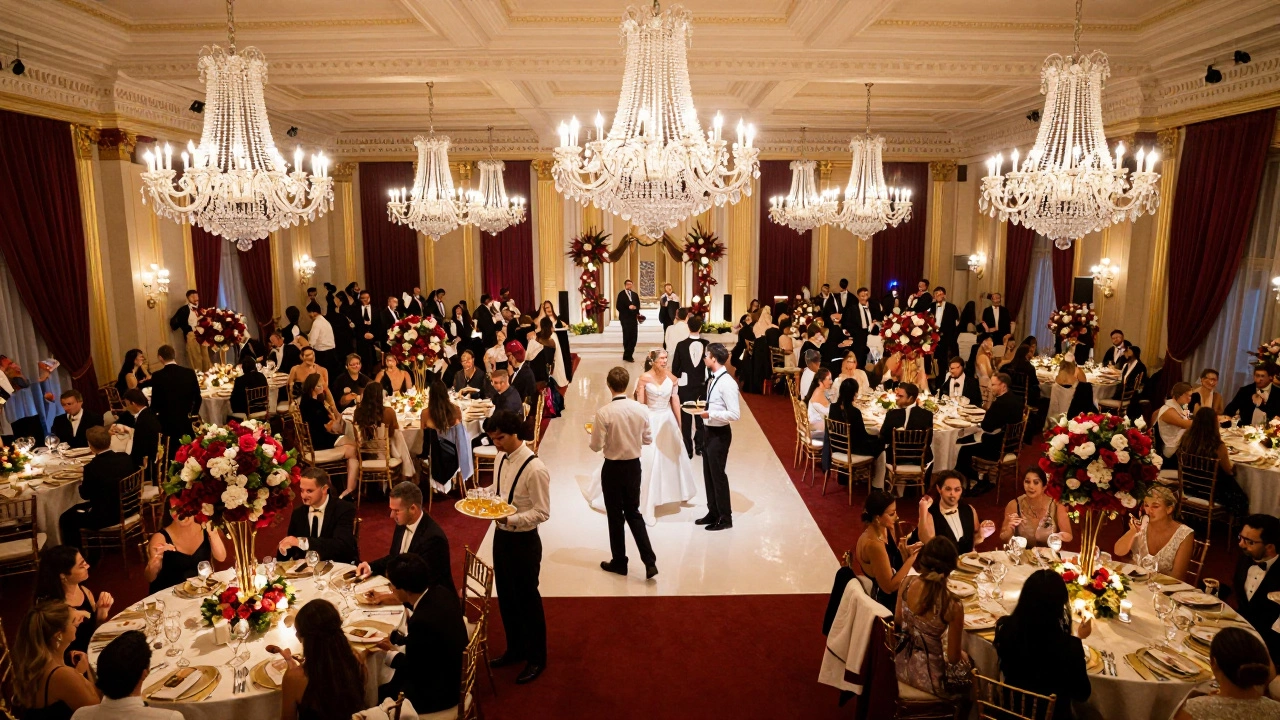
There is a trade-off to consider. Small weddings feel personal. Everyone knows everyone. The vibe is relaxed. Big weddings feel electric. The energy of three hundred cheering guests is something a group of thirty simply cannot replicate. The dance floor stays packed all night. The atmosphere is festive and grand.
But this energy requires management. Seating charts for three hundred people are puzzles that take hours to solve. You need to ensure families sit together, friends are grouped, and no one is left alone at a table. Buffet lines can become bottlenecks, causing long waits that kill the momentum of the evening. Plated service solves this but increases labor costs.
Restrooms are another hidden crisis point. Venues often underestimate bathroom capacity. For a big wedding, you might need to rent portable luxury restrooms outside to supplement the venue's facilities. It sounds extreme, but waiting twenty minutes for a toilet ruins the experience for many guests.
How to Decide If You Want a Big Wedding
So, should you go big? Ask yourself these questions:
- Who is paying? If you are self-funding, a big wedding requires significant savings or debt. If family is contributing, discuss boundaries early.
- Do you love crowds? Some couples thrive on attention and large groups. Others find them draining. Be honest about your personality.
- Is your social circle large? If you have cousins, childhood friends, college mates, and work colleagues you genuinely want to celebrate with, a medium-to-large wedding makes sense. If your inner circle is tight, forcing a big guest list creates stress.
- Can you handle the planning load? Coordinating three hundred lives is a part-time job. Are you prepared to spend months managing details, or do you want a simpler process?
If you decide on a big wedding, lean on professionals. Hire a coordinator or planner. Their expertise in crowd flow, vendor negotiation, and timeline management will save you from burnout. Your wedding invitations is the first step in communicating the scale and tone of the event to your guests. Make sure they reflect the grandeur you are aiming for, whether through elegant design or comprehensive digital information hubs.
Troubleshooting Common Big Wedding Issues
Even with the best plans, things go sideways. Here is how to handle common pitfalls:
- Crashing the venue: Always confirm your exact guest count with the venue manager. They have fire codes and safety limits. Never assume you can squeeze in extra people.
- Catering delays: Order food earlier than expected. For large groups, kitchen throughput is slow. Build buffer time into your timeline.
- Noise complaints: Large weddings are loud. Check local noise ordinances, especially if you are in a residential area or a historic building with strict rules.
- Lost guests: Use signage. Clear, bold signs pointing to restrooms, bars, and exits are essential. Don't rely on guests asking strangers for directions.
Is a 200-person wedding considered big?
Yes, a 200-person wedding is generally considered large. It falls into the upper end of "standard" or the beginning of "large" categories. It requires professional catering, significant venue space, and careful logistical planning compared to smaller gatherings.
What is the average cost of a big wedding in Ireland?
In Ireland, a big wedding with over 200 guests typically costs between €30,000 and €60,000+. This includes venue hire, catering (€150-€300 per head), photography, music, and decor. Prices vary significantly by region and season.
How do I manage invitations for a large guest list?
For large lists, use digital tools for tracking RSVPs. Send detailed invitations with clear timelines, parking info, and dress codes. Consider a wedding website for centralizing information like travel accommodations and FAQs to reduce repetitive questions.
Do I need a wedding planner for a big wedding?
While not legally required, a planner is highly recommended for weddings over 150 guests. They help manage vendor contracts, coordinate timelines, handle crowd flow, and troubleshoot issues on the day, allowing you to enjoy the event.
What are the biggest challenges of hosting a big wedding?
The main challenges are budget management, logistical complexity (seating, timing, restrooms), and maintaining a personal connection with all guests. Coordination becomes difficult, and small errors can have larger impacts due to the scale.