Wedding Budget Allocator
Enter your total estimated budget and number of guests to see a recommended breakdown. Adjust the sliders to match your specific priorities (e.g., foodie couple vs. photo-focused).
💡 Planner's Tip
Remember: Venue and catering are fixed costs that impact guest comfort directly. Photography is scalable by reducing hours or deliverables.
You’ve got a number in your head. Maybe it’s €20,000, maybe it’s €50,000, or maybe you’re still figuring out if you can afford cake at all. Then comes the panic: where does that money actually go? You look at Pinterest boards filled with floral arches and custom lighting, then you look at your bank account, and suddenly the math doesn’t add up.
Here is the truth most planners won’t tell you upfront: there is no single "right" answer for everyone, but there is a statistical norm that keeps things sane. For the vast majority of couples, the reception venue and catering should be the most expensive line item on your wedding budget. It usually eats up about 40-50% of your total spend. Why? Because it’s the only thing every single guest interacts with directly, and it’s the hardest to fake.
The Venue and Catering Reality Check
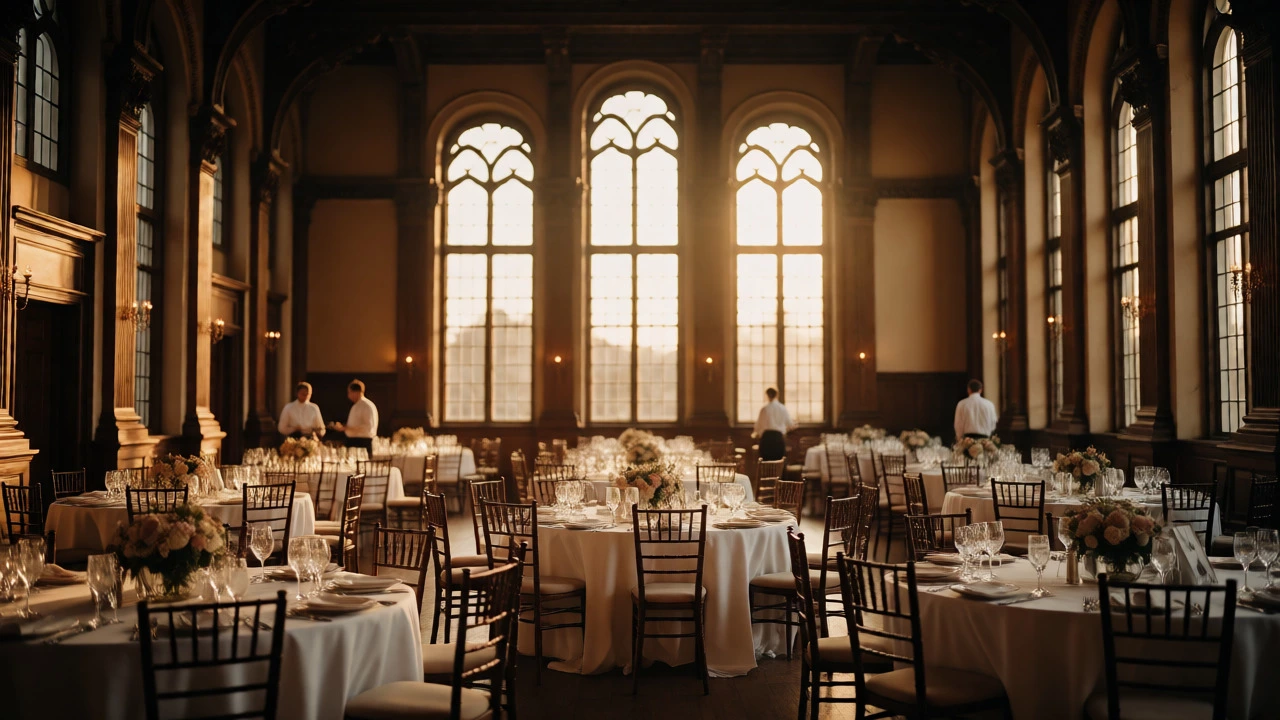
Think about what you are actually buying when you book a venue. You aren’t just renting four walls. You are buying the kitchen staff, the waiters, the electricity, the cleaning crew, the insurance, and often the tables and chairs. If you choose an all-inclusive package, you are also buying the food and drinks.
In Dublin, for example, the average cost per head for a sit-down dinner has climbed significantly in recent years. If you have 100 guests, and the venue charges €80 per person for food and service, that’s €8,000 right there before you’ve even bought a napkin. Add the venue hire fee (which can range from €2,000 to €10,000+ depending on exclusivity), and you see why this category dominates the budget.
If you try to cut costs here, you risk making your guests uncomfortable. Cheap food leads to hungry guests who leave early. A cramped room means people stand around awkwardly. A bad heating system in November means everyone is shivering in their suits. This is why experienced planners advise protecting this budget line above almost everything else.
Photography: The Only Tangible Memory
Once you’ve secured the venue, the next biggest contender for the "most expensive" title is photography. Some couples argue it should be #1. Here’s the logic: the flowers die, the food gets eaten, the dress goes back in the closet, but the photos remain. Forever.
A good photographer isn’t just pressing a shutter button. They are managing lighting, directing poses, capturing candid moments during chaos, and editing thousands of images. In Ireland, a professional wedding photographer might charge between €2,000 and €4,000 for a full day. That’s a significant chunk of change.
But here is a rule of thumb: do not skimp on photography if you care about memories. Do not ask your cousin with a nice iPhone to do it unless you truly don’t mind missing key shots. A missed first kiss or a blurry family portrait is something you cannot fix later. However, unlike the venue, you can scale photography. You can hire someone for 6 hours instead of 10. You can skip the engagement shoot. You can choose a digital-only album instead of printed books. The venue is harder to scale down without changing the entire vibe of the day.
The Dress and Attire Trap
Society tells us the dress is the centerpiece. Magazines feature them. Friends comment on them. But statistically, the bridal gown rarely beats the venue in terms of actual cash spent. Unless you are buying haute couture, the average wedding dress in Europe hovers around €1,500-€2,500. The groom’s suit is another €500-€1,000.
Compare that to a €10,000 venue bill. See the gap? The dress is important, yes. It makes you feel special. But it is a one-time wear item (usually). You can rent dresses now. You can buy off-the-rack. You can find vintage gems. You cannot easily "rent" a better meal experience if you booked a low-budget hall.
Don’t let the emotional weight of the dress trick you into overspending. If you love a dress, buy it. But don’t blow the catering budget because you wanted lace sleeves. Your guests will remember the steak more than the sleeve detail.

Flowers and Decorations: The Silent Budget Killer
This is where budgets explode. People underestimate how much fresh flowers cost. And they overestimate how much impact small decor items have. If you want a massive floral arch behind the altar, expect to pay €1,500+. If you want centerpieces for 10 tables, that’s another €1,000-€2,000.
Decorations are purely aesthetic. They make the room look pretty in photos. But if you had to choose between a slightly simpler flower arrangement and warm, well-lit rooms with comfortable seating, choose the latter. Comfort wins every time.
Pro tip: Use seasonal flowers. In November, peonies are out of season and expensive. Chrysanthemums, dahlias, and roses are abundant and cheaper. Also, consider potted plants as favors-they double as decoration and gifts, killing two birds with one stone.
| Category | Typical % of Budget | Why It Costs So Much | Can You Cut It? |
|---|---|---|---|
| Venue & Catering | 40-50% | Labor, food quality, space rental | Hard. Impacts guest comfort directly. |
| Photography & Video | 10-15% | Professional skill, equipment, editing time | Yes. Reduce hours or deliverables. |
| Attire & Beauty | 5-10% | Custom tailoring, high-end materials | Yes. Rent, buy sales, simplify. |
| Flowers & Decor | 8-12% | Perishable goods, labor-intensive setup | Yes. Use greenery, candles, DIY. |
| Music & Entertainment | 5-10% | Band fees, DJ equipment, travel | Yes. Playlist vs. Live Band. |
How to Decide What Matters to YOU
So, should the venue always be the most expensive thing? Not necessarily. It depends on your values. Are you a foodie couple who loves wine? Then catering might legitimately take 60% of your budget. Are you artistic and visual? Maybe flowers and design get the bigger slice.
Here is a simple exercise: Sit down with your partner. List three things you absolutely cannot compromise on. Then list three things you could live without. If "great food" is on your must-have list, protect that budget. If "Instagram-worthy backdrop" is a nice-to-have, cut it.
Remember, your guests will judge the day by three things: Did they eat well? Were they comfortable? Did they have fun? They won’t notice if the table runners were linen or cotton. They won’t know if the photographer used a Canon or a Sony. They will notice if the chicken was dry and the music stopped at 9 PM.
Pitfalls to Avoid When Allocating Budget
- Forgetting Hidden Fees: Venues often add service charges (12-15%) and corkage fees. Always ask for the "all-in" price.
- Over-decorating: More stuff doesn’t mean better. Empty space looks elegant. Clutter looks cheap.
- Ignoring Guest Count Impact: Every extra guest increases catering, seating, and favor costs linearly. Cutting 10 guests saves you roughly €800-€1,000 immediately.
- Last-Minute Changes: Changing your menu after finalizing contracts often incurs penalties. Lock in decisions early.
Final Thoughts on Spending Smart
There is no shame in having a modest budget. In fact, constraints breed creativity. Some of the most memorable weddings I’ve seen were held in community halls with potluck-style catering and string lights. The cost wasn’t high, but the heart was.
Focus your spending on what creates connection. Good food brings people together. Great music gets them dancing. A beautiful setting makes them feel special. Prioritize those experiences over objects. Objects depreciate; memories appreciate.
So, what should be the most expensive thing? For most people, it’s the venue and food. Make sure you get value there. Then, pour your remaining passion into photography so you never forget it. Everything else? Keep it simple, keep it meaningful, and keep it within your means.
Is it worth spending more on photography than flowers?
Generally, yes. Flowers wilt and are discarded after the event, while photographs are permanent records of the day. Many couples regret cutting photography budgets to save on decor, as they realize too late that the visual memory is irreplaceable.
Can I have a luxury wedding on a tight budget?
You can create a "luxury feel" without luxury prices by focusing on lighting, scent, and sound. Dimmable warm lighting, signature cocktails, and curated playlists elevate the atmosphere far more than expensive floral arrangements or designer tableware.
What percentage of the budget should go to the venue?
A standard guideline is that venue and catering combined should occupy 40-50% of your total wedding budget. If you exceed 50%, you likely need to reduce your guest count or choose a less exclusive location to avoid compromising other areas like photography or attire.
Do I really need a wedding planner if I’m watching my budget?
Not always, but they can save money. Planners often have vendor discounts and can prevent costly mistakes (like booking a venue that requires expensive external rentals). If your budget is under €15,000, DIY planning is feasible, but for larger weddings, partial coordination services are often cost-effective.
Should I prioritize the dress or the food?
Prioritize the food. Guests remember how they felt and what they ate long after they forget what you wore. A mediocre dress can be accessorized or forgotten, but bad food affects every single attendee’s experience throughout the evening.