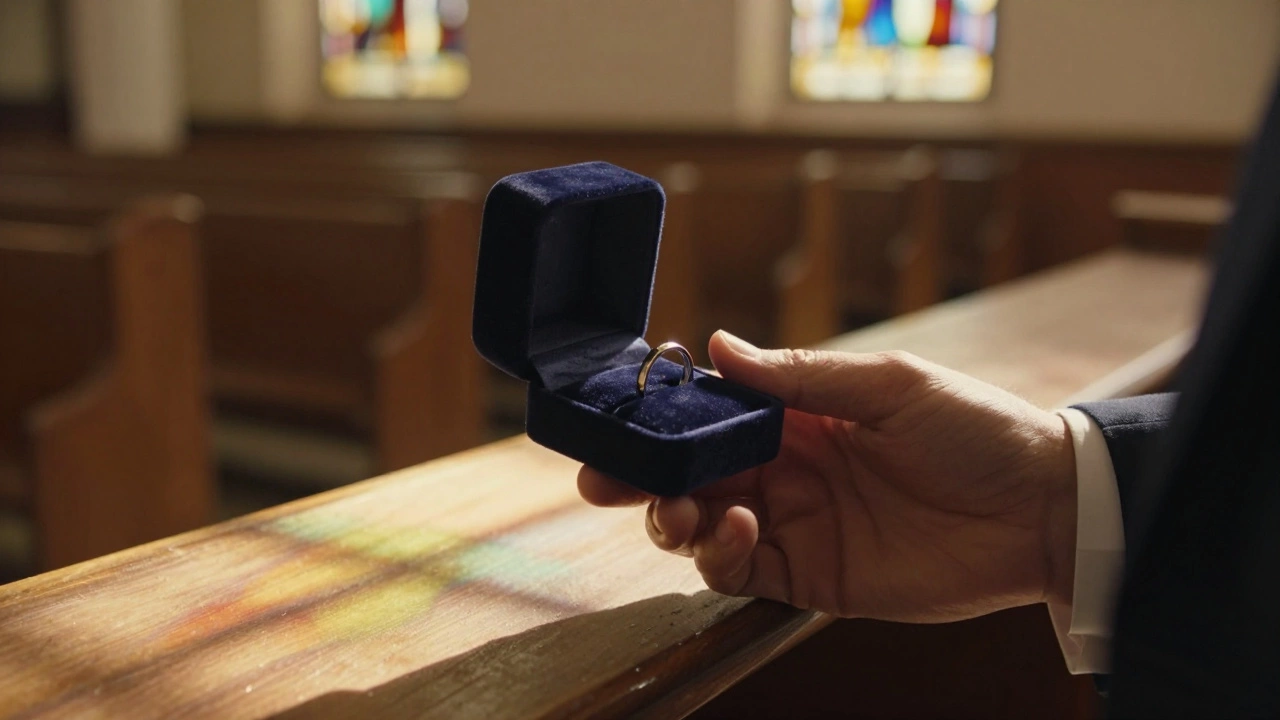
The Quiet Pressure of the Ring Moment
You have planned the flowers, picked the playlist, and chosen the cake. Yet, there is one tiny split-second where everything depends on you. This is the ring exchange. It is easy to think this part of the ceremony is automatic. You slide the band onto their finger while someone reads from a card. But silence hangs heavy if you do not know what to do. Standing there, holding that small metal circle, you might suddenly wonder if you missed the right words.
This pause isn't just about tradition; it is about your unique relationship. The words you speak here bind the ring to your heart. If you freeze, the guests notice. If you stumble, it lingers. You deserve a plan that makes you feel steady and prepared. We are breaking down exactly what you can say so you can walk away without worry.
Why the Ring Promise Needs Focus
The Ring Exchange
is a symbolic act in a wedding ceremony where partners give each other rings as a sign of commitment. While it happens quickly, it carries legal and emotional weight. In many cultures, the verbal promise attached to this action is actually the core binding element of the union. Without a clear statement, the gesture becomes merely jewelry swapping.Many couples treat the ring words as an afterthought. They copy-paste lines from a movie or ask a friend to improvise something last minute. That creates risk. When you hold the ring box open, you are physically transferring ownership and future care. Your voice gives context to the action. Even if you have long vows earlier, this specific moment needs its own identity.
Classic and Timeless Lines
If you want safety and elegance, traditional phrasing works perfectly. These lines have survived centuries because they capture the essential duty of marriage. They work well for formal church weddings or black-tie events where decorum is key.
- The Standard: "With this ring, I thee wed."
- The Promise: "Take this ring as a symbol of my love and fidelity to you."
- The Commitment: "Wear this ring as a sign of our love for each other."
- The Future Focused: "By giving you this ring, I promise to support you always."
Notice how short these are. Brevity helps you breathe. A classic phrase usually takes three seconds. You do not need to perform; you just need to deliver the message clearly. Using standard language means you can rely on muscle memory. If your mind goes blank, your mouth knows the rhythm of these sentences. Just remember to look at your partner while saying them.
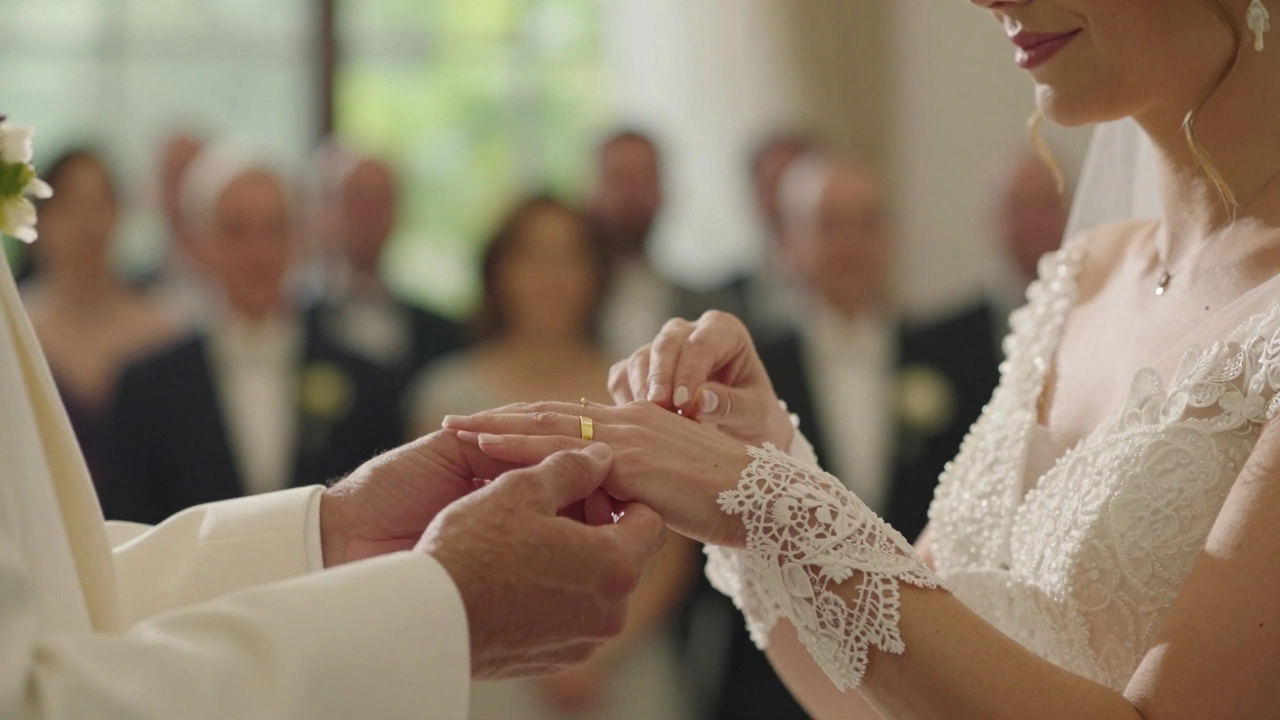
Modern and Personal Phrases
Modern Wedding Vows
are personalized statements that reflect contemporary values and specific relationship dynamics. Couples today often prefer authenticity over formality. You might want to acknowledge the history you have built together or mention the life you plan to share.Ditch the archaic "thee" and "thou" for conversational language that sounds like you. The goal is to sound like a real person promising something real.
- Simple Sincerity: "This ring stands for my promise to always be by your side."
- The Partner Focus: "May this band remind you of my devotion every time you look at your hand."
- Late Bloomer: "After years of friendship, I promise to be your lover and partner forever."
- Growth Oriented: "I give you this ring to mark our start on a new chapter of growing old together."
Avoid inside jokes that guests won't understand. Keep it universal enough that your grandmother gets it, but specific enough that your partner feels seen. The tone matters here more than the vocabulary. A slow delivery of a simple sentence beats a rush of complicated prose.
Funny and Lighthearted Options
Not everyone wants tears. If your relationship thrives on humor, a serious tone might feel off. A touch of comedy releases tension, even yours. However, balance is key. You still want to convey respect for the moment.
Try lines like this:
- "With this ring, I promise to be your favorite human, even when you annoy me."
- "This ring buys you my attention, loyalty, and all the fries in my french fry collection."
- "Take this ring, which looks great on you, just like my love for you looks great on us."
Humor works best when it doesn't undermine the commitment. Avoid anything that could hurt feelings later. Never joke about fidelity or money unless you both know the boundary is clear. Test these lines on a witness before the big day.
Tips for Perfect Delivery
Knowing what to say is half the battle. How you say it determines how the room receives it. Most people fail here because they rush. They want to get it over with.
- Practice with the Ring Box. Do not practice empty-handed. The weight of the box changes your grip. Hold the actual ring used in the rehearsal so you learn the mechanics.
- Find Eye Contact. Before speaking, look at the person. Not the officiant, not the ceiling. Look them right in the eyes. It anchors your focus.
- Breathe Before Speaking. Take a visible inhale. It tells your brain to stop fighting and start speaking. If you miss it, wait a beat. Silence feels longer to you than to anyone else.
- Slow Down. You naturally speak faster when nervous. Force yourself to cut your speed in half. Speak like you are reading poetry to a child. Clarity is king.
Your hands might shake. It is normal. If the ring drops, laugh it off. If your voice cracks, it shows emotion. The audience loves imperfection because it is human. Perfection is robotic; emotion is memorable.
Handling Nerves and Blanks
Public Speaking Anxiety
is the fear of performing in front of others, common even among experienced speakers. On your wedding day, this anxiety spikes because stakes feel higher. Preparation is the only cure.Sometimes you simply forget. You stand there, holding the gold circle, and the lines vanish. Panic sets in. Have a backup plan. Give your Officiant a printed card with your lines. If you stall, they can step in.
Ask the Officiant to cue you. You can agree on a signal, like a slight nod. Or, let the script flow through them entirely. Some ceremonies involve the officiant asking, "Who gives this bride/groom in marriage?" This external voice keeps things moving. Do not carry the weight alone.
Another trick is to memorize the first five words. Once you get rolling, the rest usually follows naturally. The brain hates incomplete tasks. If you get stuck, pause, take a sip of water, and restart from the beginning of the sentence. No one notices.
Short Versus Long Promises
There is a debate on length. Short is safe, but long is sweet. Too long, however, becomes a speech. Guests have been standing for two hours. Their bladders are full. Keep the ring words tight.
If you wrote a four-minute vow earlier in the ceremony, keep the ring words under ten seconds. Do not repeat the same promises twice. Use the main vows for the deep emotional story. Reserve the ring moment for the sealing of the deal.
| Type | Duration | Best For |
|---|---|---|
| Traditional One-Liner | 3-5 seconds | Religious ceremonies, very nervous couples |
| Personal Sentence | 10-15 seconds | Civil unions, intimate elopements |
| Extended Promise | 30+ seconds | Via video live stream or large audiences expecting speeches |
Decide what fits your energy. If you struggle with public speaking, choose the one-liner. It removes performance pressure while maintaining the sentiment. Consistency between the two partners is also wise. Do not have one person say a paragraph while the other nods silently. Practice together.
Frequently Asked Questions
Do we both have to say something?
Yes, traditionally both partners speak words during the ring exchange. Even if you have different lengths, it is polite and meaningful for both parties to contribute a line to seal the ceremony.
Can I read from a paper during the ring exchange?
Ideally, no. Reading requires two hands, and you need one hand to place the ring on the finger. It is safer to memorize one or two sentences beforehand. If you must read, the officiant can read the words while you listen.
What if I cry and cannot talk?
If tears block your voice, just smile and nod. The officiant is trained to handle this. You can whisper the last phrase or skip to the kiss. Emotion is accepted and celebrated.
Is it okay to add a private secret promise?
You can add a quiet aside once the microphone goes off, but avoid doing it while speaking formally. Public vows should remain inclusive. Save secret whispers for after the signing of the register.
Who decides the order of speaking?
Usually, the groom speaks first in traditional Western ceremonies. In modern settings, either person can start. Coordinate this with the planner or officiant ahead of time so no one waits awkwardly.