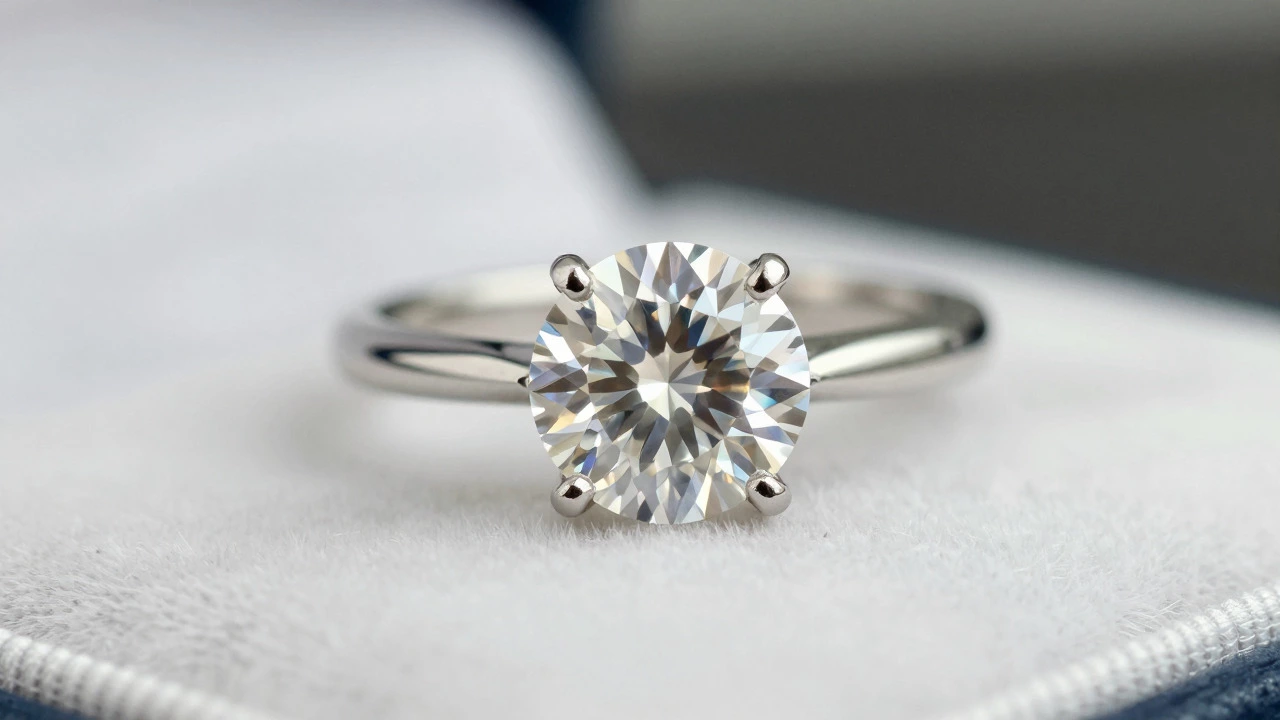
Wedding Ring Budget Optimizer (2026)
- Est. Carat Weight: -
- Color Grade: -
- Clarity Grade: -
- Cut Quality: -
- Stone Cost: -
You have $5,000. The question isn't just "what can I buy?" It's "what will look amazing and hold its beauty for decades?" In 2026, that budget puts you in a sweet spot. You are no longer shopping for tiny stones or compromised cuts. You are entering the realm of high-quality center stones with excellent craftsmanship. However, the market has shifted dramatically since the pandemic. Prices for natural diamonds have softened slightly, but demand for lab-grown diamonds has skyrocketed, offering significantly more size for your money.
If you walk into a traditional jeweler expecting a specific carat weight without understanding the 4Cs (Cut, Color, Clarity, and Carat), you will likely overpay. This guide breaks down exactly what a $5,000 budget buys you today, whether you choose natural or lab-created, and how to maximize visual impact without breaking the bank.
The Natural Diamond Reality: Quality Over Size
If you prefer a mined diamond, $5,000 is a respectable budget, but it requires strategic choices. You won't get a massive 3-carat stone here. Instead, you are looking at a beautiful, high-quality stone between 0.70 and 1.00 carats. The key is balancing the 4Cs so the eye sees brilliance, not flaws.
| Carat Weight | Cut Grade | Color Grade | Clarity Grade | Visual Result |
|---|---|---|---|---|
| 0.70 - 0.80 ct | Excellent/Ideal | G-H | VVS2-VS1 | Sparkly, clean, near-colorless |
| 0.90 - 1.00 ct | Very Good | I-J | VS2-SI1 | Larger look, slight warmth, eye-clean |
| 0.50 - 0.60 ct | Excellent/Ideal | D-F | IF/VVS1 | Smaller, but icy white and flawless |
Notice the trade-off. If you want a full carat (1.00 ct), you must sacrifice color (dropping to I or J) and clarity (VS2 or SI1). An SI1 clarity stone can still be "eye-clean," meaning you cannot see inclusions with the naked eye. This is where expert advice matters. A poorly cut 1-carat diamond looks dull. A well-cut 0.80-carat diamond often appears larger and brighter because light reflects better. Prioritize Cut above all else. It is the engine of sparkle.
The Lab-Grown Advantage: Bigger and Brighter
This is where the math changes completely. Lab-grown diamonds are chemically, physically, and optically identical to mined diamonds. They form under heat and pressure in a lab rather than underground. Because they don't carry the mining supply chain costs, they cost 60-80% less.
With $5,000, you can easily afford a 1.5 to 2.0-carat lab-grown diamond with top-tier specs. Think D color (colorless) and VVS1 clarity (very very slightly included). These are specs that would cost $15,000+ in natural diamonds. For many couples, this is the smartest financial move. You get the luxury look without the premium price tag. Plus, lab diamonds are often marketed as more ethical and environmentally friendly, though you should verify the energy source used by the manufacturer.
- Size: 1.50 - 2.00 carats
- Color: D-F (Colorless range)
- Clarity: VVS1-VVS2 or IF (Internally Flawless)
- Cut: Excellent/Ideal (Triple Ex)
Is it "real"? Yes. Is it valuable? In terms of resale, neither natural nor lab diamonds hold significant monetary value after purchase. But in terms of daily wear and aesthetic joy, a 2-carat lab diamond offers an undeniable presence.
Alternative Gemstones: Unique and Affordable
If you aren't married to the idea of a diamond, $5,000 opens up a world of stunning alternatives. Moissanite, sapphire, and morganite are popular choices that offer distinct character.
Moissanite is a silicon carbide gemstone known for its intense fire and brilliance. It sparkles more than a diamond in certain lights. A high-quality moissanite stone of 2-3 carats might cost only $300-$500. This leaves $4,500 for an incredible setting or other wedding expenses. Some people love this rainbow-like sparkle; others find it too flashy. Try it on before deciding.
Sapphires and morganites offer color. A 2-carat blue sapphire with good saturation and clarity could run $1,500-$3,000 depending on origin (Ceylon sapphires are prized). Morganite, a pink beryl, is softer and romantic. A large 3-carat morganite might cost $800-$1,500. These stones allow you to invest heavily in a custom platinum setting, making the ring feel luxurious and bespoke.
The Setting Matters More Than You Think
A beautiful stone in a cheap-looking band ruins the overall impression. Your budget must account for the metal and design. Platinum is durable and hypoallergenic but costs more than gold. White gold is affordable but requires rhodium plating every few years to stay bright. Yellow and rose gold are trendy and lower cost.
Consider these allocation strategies for your $5,000:
- The Stone Focus: Spend $4,200 on the diamond/gemstone and $800 on a simple solitaire setting. Best for maximizing stone quality.
- The Balanced Approach: Spend $3,000 on the stone and $2,000 on a detailed halo or vintage-inspired setting. Best for visual impact and complexity.
- The Custom Route: Spend $3,500 on the stone and $1,500 on a custom-designed band from an independent jeweler. Best for uniqueness.
Halo settings (small diamonds surrounding the center stone) make the center stone appear larger. Pavé bands (diamonds set along the shank) add extra sparkle. These designs cost more but enhance the perceived value of the ring.
Where to Buy: Retail vs. Online
Traditional brick-and-mortar jewelers have high overhead. Their prices reflect rent, staff, and inventory costs. Online retailers like Blue Nile, James Allen, or Brilliant Earth operate with lower margins, passing savings to you. For a $5,000 budget, online shopping often yields a higher-quality stone or larger size.
However, buying online means you can't try it on immediately. Look for retailers with virtual try-on tools or generous return policies. If you prefer personal service, seek out local independent jewelers who order stones directly from wholesalers. Avoid big-box chains unless you're getting a significant discount.
Always ask for certification. For natural diamonds, insist on GIA (Gemological Institute of America) or AGS (American Gem Society) reports. Avoid EGL or IGI certs for natural stones if possible, as they can be lenient. For lab-grown diamonds, IGI and GIA both provide reliable grading.
Common Pitfalls to Avoid
Don't fall for the "carat weight" trap. A 1-carat diamond with poor cut looks smaller and duller than a 0.90-carat diamond with excellent cut. Don't ignore fluorescence. Strong fluorescence in G-color or lower diamonds can make them look hazy or oily. Faint fluorescence is usually fine and can even save money. Don't skip insurance. Once you leave the store, insure the ring. Most homeowner's policies don't cover jewelry adequately without a rider.
Finally, consider lifestyle. If your partner works with their hands, a high-profile solitaire might snag. A bezel setting or a lower-set stone offers protection. Durability matters as much as beauty.
Can I get a 2-carat natural diamond for $5,000?
Generally, no. A 2-carat natural diamond with decent quality (G color, VS clarity) typically starts around $10,000-$15,000. For $5,000, you'd likely get a 2-carat stone with low color (K-L) and visible inclusions (SI2-I1), which may look yellowish or cloudy. Consider lab-grown for this size.
Are lab-grown diamonds worth less than natural ones?
Financially, yes. Lab-grown diamonds have little to no resale value compared to natural diamonds, which retain some secondary market value. However, you pay far less upfront. If you view the ring as a sentimental symbol rather than an investment, lab-grown offers superior value for the initial cost.
Which metal is best for a $5,000 ring?
Platinum is the most durable and hypoallergenic but costs 20-30% more than gold. 14k or 18k white gold is a cost-effective alternative that looks similar when rhodium-plated. Yellow and rose gold are also excellent choices, especially if you want a vintage look or plan to stack rings later.
Should I prioritize carat weight or cut?
Always prioritize cut. Cut determines how well the diamond reflects light. A poorly cut diamond looks dark and lifeless, regardless of size. A well-cut diamond appears brighter and often larger than its actual carat weight suggests. Aim for "Excellent" or "Ideal" cut grades.
Is moissanite a good alternative to diamond?
Yes, if you want maximum sparkle at a low cost. Moissanite is harder than most gems (second only to diamond) and has more fire (rainbow flashes). It's significantly cheaper, allowing you to buy a larger stone or save money elsewhere. Some people dislike its excessive sparkle, so try it on first.