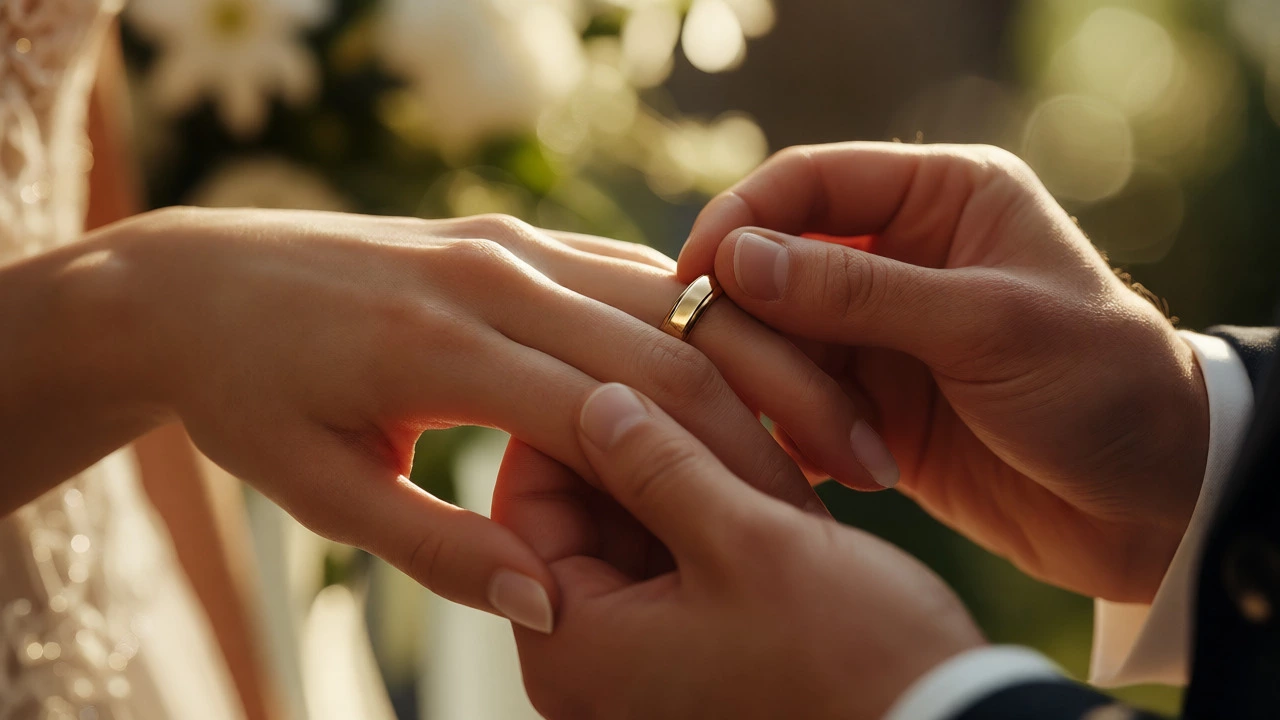
Wedding Ring Order Simulator
Select a scenario below to see how the rings are typically worn during and after the ceremony.
Traditional Rule
The wedding band is placed closest to the heart (palm side), followed by the engagement ring. This stems from the Roman 'vena amoris' myth.
You’re standing at the altar, heart pounding, holding two tiny circles of metal. One is for the promise you made months ago; the other is for the vow you’re about to make today. Then it hits you: who gets the wedding ring first? Is it supposed to go on before or after the engagement ring? Does it even matter if you put them on in the wrong order during the ceremony?
This isn’t just a trivia question for your best friend’s group chat. It’s a genuine logistical puzzle that trips up couples every single day. You want the photos to look right, the rings to sit comfortably, and the tradition to feel authentic to your relationship. The short answer? There is no police force arresting you for putting the wedding band on the wrong finger. But there are strong conventions, practical reasons, and modern twists that can help you decide what works best for you.
The Traditional Rule: Why the Wedding Band Goes First
In most Western traditions, including those common here in Ireland and the UK, the wedding band is placed on the finger closest to the heart. This means the wedding ring goes on first, followed by the engagement ring.
Why this specific order? It traces back to an ancient Roman belief that a vein called the vena amoris, or "vein of love," ran directly from the fourth finger of the left hand to the heart. While anatomy has since debunked this, the romantic symbolism stuck. By placing the wedding band closest to the palm, you’re symbolically keeping your marriage bond nearest to your heart. The engagement ring then sits on top, acting as a decorative crown or reminder of the journey that led to the marriage.
If you follow this route, the groom slides the plain gold (or platinum) band onto your finger during the exchange of vows. Afterward, you might slide the engagement ring back over it, or leave it off until later. Many brides choose to wear only the wedding band during the ceremony to avoid fumbling with two rings while trying to look poised, adding the engagement ring back on immediately after the kiss.
The Modern Approach: Engagement Ring First
Not everyone cares about ancient veins. Plenty of couples prefer the logical flow of time: the engagement came first, so the engagement ring goes on first. This approach is gaining traction, especially among younger generations who view the engagement ring as a piece of jewelry they’ve worn daily for years, not just a ceremonial prop.
Here’s why some people choose this order:
- Continuity: If you’ve worn the engagement ring for two years, taking it off feels like erasing that chapter. Putting it on first keeps the narrative linear.
- Aesthetics: Some engagement rings have high settings or large stones. Placing the wedding band underneath can make the stack look bulky or unstable. Wearing the engagement ring closer to the knuckle can sometimes balance the visual weight better.
- Simplicity: During the ceremony, if you keep the engagement ring on, the groom simply places the wedding band next to it. No swapping, no hiding, no confusion.
Is this "wrong"? Absolutely not. Etiquette experts today agree that personal preference trumps rigid rules. If you want your engagement ring closest to your heart because you love that diamond more than the plain band, do it. Your hand, your choice.
Practical Tips for the Ceremony Day
Deciding the order is one thing; executing it without dropping a $5,000 diamond into a flower arrangement is another. Here is how to handle the logistics so you don’t panic when the officiant says, "You may now place the ring."
| Scenario | Action | Pros | Cons |
|---|---|---|---|
| Traditional Swap | Remove engagement ring before ceremony. Groom puts wedding band on. Re-add engagement ring after. | Adheres to classic etiquette; ensures wedding band is closest to heart. | Risk of losing the engagement ring; requires a trusted person to hold it. |
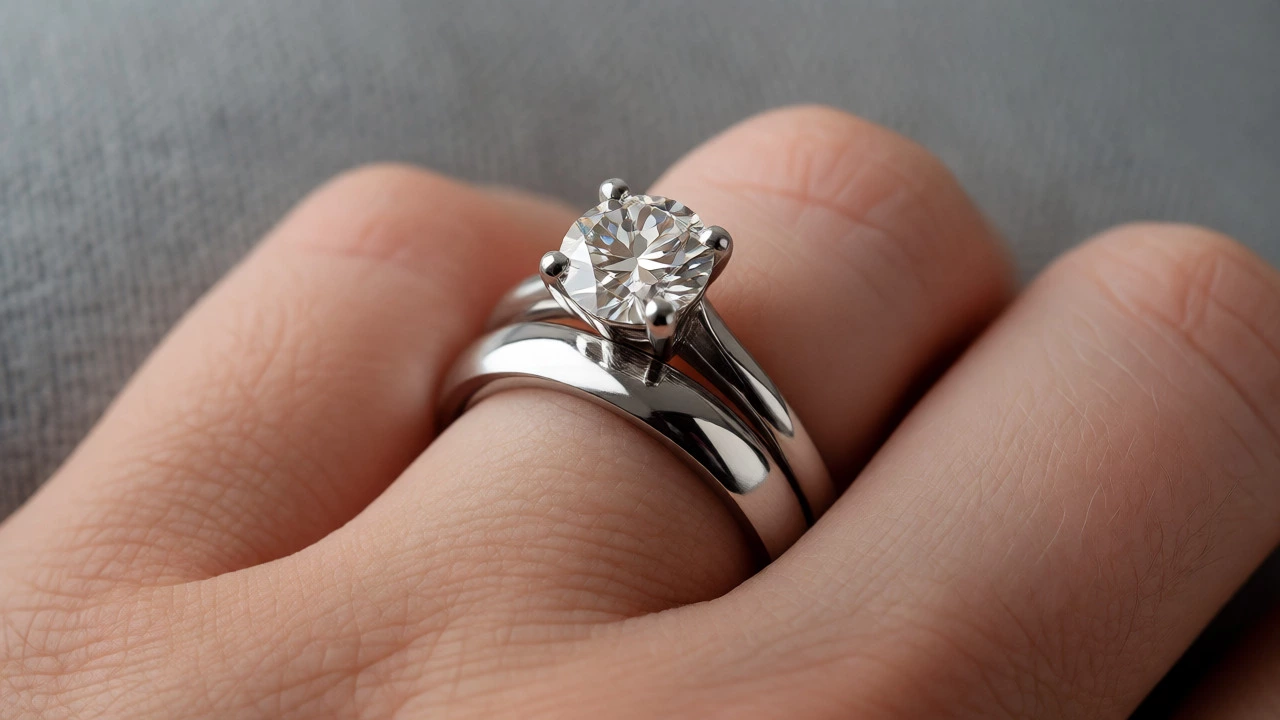
| Wear Both | Keep engagement ring on. Groom places wedding band next to it (on the side closer to the hand). | No risk of loss; seamless transition; shows both rings together. | Wedding band may not be "closest to heart" depending on fit; might look crowded. |
| Welded Set | Rings are soldered together permanently before the wedding. | Zero hassle; looks like one cohesive piece; never falls off. | Harder to resize; less flexibility if styles change; cannot remove easily. |
The Trusted Holder Strategy: If you go with the traditional swap, designate someone-usually the Maid of Honor or Best Man-to hold the engagement ring in their pocket or a small pouch. Don’t try to shove it in your dress pocket; it will fall out. Don’t leave it on the table where a waiter might bump it. Give it to a human being with pockets.
The Right-Hand Workaround: If you’re worried about losing the engagement ring but hate the idea of taking it off, move it to your right hand for the duration of the ceremony. In many cultures, the right hand is used for engagement rings anyway. This keeps your left hand clear for the wedding band, and you can switch the engagement ring back afterward if you wish.
Cultural Variations: It’s Not Always the Left Hand
If you’re reading this in Dublin, you likely default to the left hand. But globally, the rules shift dramatically. Understanding these variations can help if you have family from different backgrounds or if you’re planning a destination wedding.
In countries like Russia, Poland, Germany, Norway, and India, the wedding ring is traditionally worn on the right hand. This stems from religious traditions where the right hand is associated with oaths and honor. In these cultures, the concept of "which ring goes first" often applies to the right hand instead. The logic remains similar-the wedding band is prioritized-but the location changes.
Some Jewish traditions involve breaking a glass and placing the ring on the index finger initially, though most modern ceremonies have standardized to the left ring finger for simplicity. Orthodox Jewish men may wear the ring on the right hand, while women might use the left, creating a mixed-hand dynamic within the same couple.
If you’re marrying someone from a culture with different customs, talk about it early. Do you split the difference? Wear the wedding band on the left and the engagement ring on the right? Or do you adopt the host country’s custom? There is no universal law, only shared agreements between partners.
What About Men’s Rings?
Historically, men didn’t wear rings. That changed in the mid-20th century, largely due to WWII soldiers wanting a tangible reminder of home. Today, matching bands are standard. For men, the question of "who gets the ring first" is simpler because most men don’t wear engagement rings.
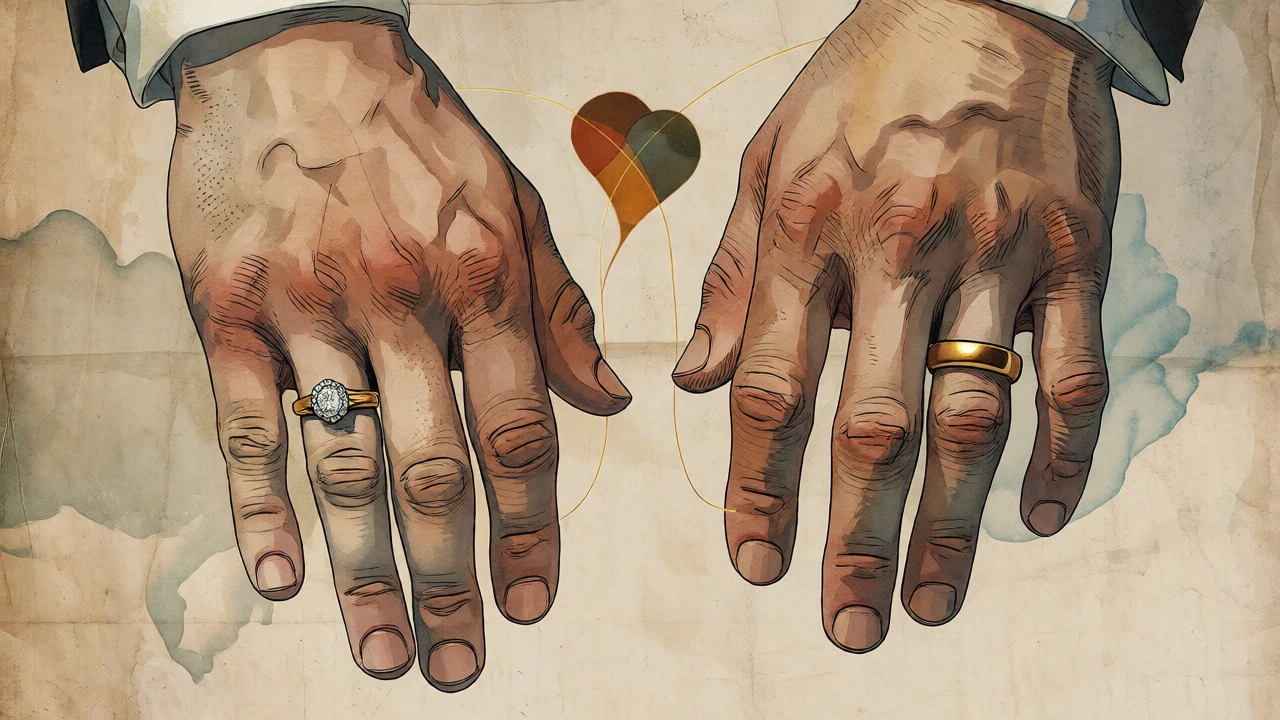
However, some modern grooms do receive an engagement-style band or a signet ring upon proposal. If your partner wears an engagement ring, the same stacking rules apply. Generally, the wedding band should still be closest to the heart. Since men’s hands are often larger and have thicker fingers, comfort becomes a bigger factor. Ensure the wedding band fits comfortably under any existing rings. If he plans to wear both, test the stack weeks in advance to ensure he doesn’t cut off circulation or irritate his skin.
After the Vows: Stacking and Maintenance
Once the ceremony is over and you’re celebrating, you’ll likely wear both rings daily. How you stack them affects their longevity.
Gold and platinum are soft metals. When two rings rub against each other all day, they scratch. If you wear the wedding band and engagement ring together, consider using a ring guard-a thin spacer that sits between them to prevent metal-on-metal friction. Alternatively, many jewelers offer to solder the two rings together. This turns them into a single unit, preventing spinning and scratching, but it makes resizing harder and cleaning slightly more complex.
Another option is to wear the engagement ring on your right hand and the wedding band on your left. This is becoming increasingly popular for professionals who type a lot or work with their hands. It reduces wear on the engagement ring’s prongs and allows the wedding band to stand alone as the primary symbol of marriage.
Frequently Asked Questions
Can I wear my engagement ring on my right hand during the wedding?
Yes, absolutely. Many brides choose to move their engagement ring to their right hand for the ceremony to keep their left hand clear for the wedding band. This prevents the risk of losing the engagement ring and simplifies the ring exchange process. You can switch it back to your left hand after the ceremony if you prefer the traditional stacked look.
Does it really matter if the wedding ring is closest to the heart?
It depends on your values. Traditionally, yes, because of the symbolic connection to the heart via the vena amoris myth. However, modern etiquette prioritizes personal comfort and aesthetic preference. If you prefer the engagement ring closest to your heart, or if you wear them separately, neither choice is "incorrect." What matters is that you and your partner agree on the meaning behind your choices.
Should I solder my wedding and engagement rings together?
Soldering is a great option if you plan to wear the rings together daily and want to prevent scratching and spinning. It creates a unified look and adds durability. However, it makes resizing more difficult and expensive, and you lose the flexibility to wear the rings separately on different occasions. Consider your lifestyle-if you travel frequently or anticipate significant weight changes, keeping them separate might be safer.
What if I don't have an engagement ring?
If you didn't have an engagement ring, the question of order disappears. You simply receive the wedding band during the ceremony. Some couples choose to buy a second band for the partner who didn't receive one, creating a matching set. Others stick with a single band. There is no requirement to have an engagement ring before getting married.
Who holds the rings during the ceremony?
Typically, the Best Man holds the groom's ring and the Maid of Honor holds the bride's ring (if she needs to remove her engagement ring). Sometimes a designated ring bearer carries them down the aisle, but they usually hand them off to the officiant or the parents before the exchange begins. Ensure whoever holds them has secure pockets or a dedicated box.