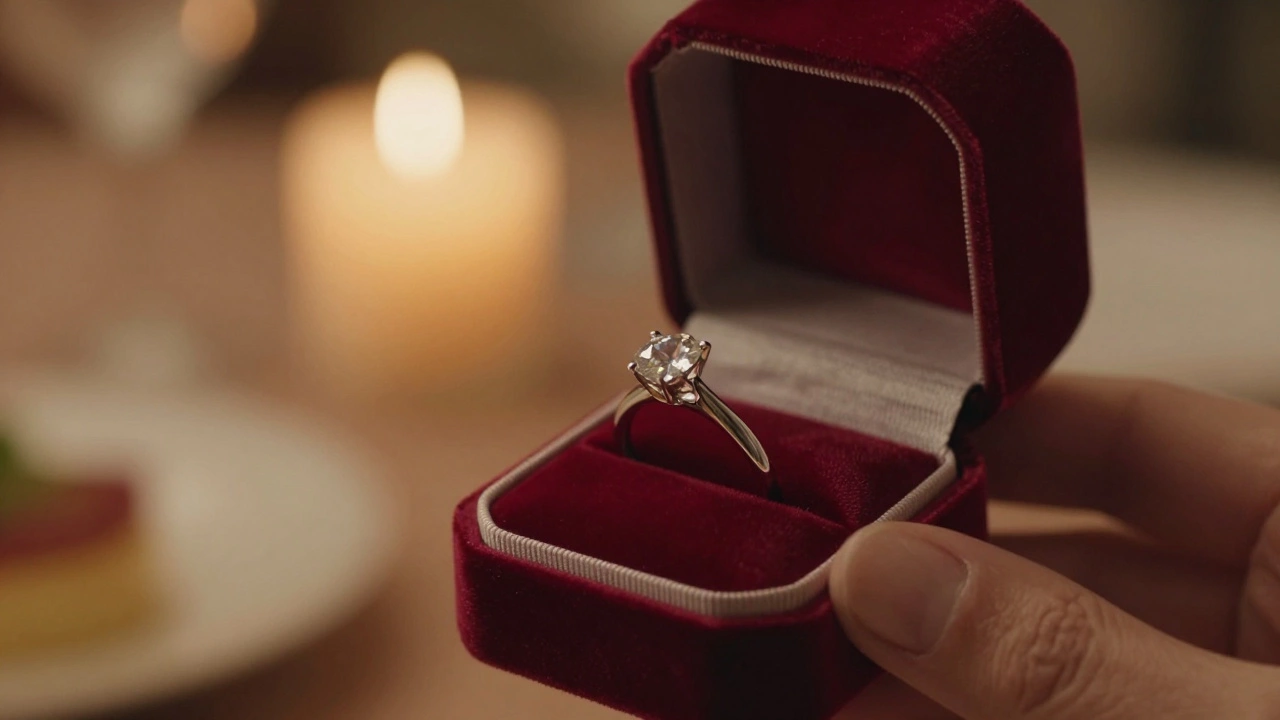
Engagement Ring Cost Split Calculator
Payment Breakdown
Enter a ring price to see the calculations.
Tip: The Proportional Model ensures that each partner contributes a percentage of the cost based on their earnings, making the expense more equitable relative to their individual financial situations.
The Big Question: Who Actually Foots the Bill?
If you've ever scrolled through social media or chatted with friends about proposals, you've probably noticed a massive gap between what the movies tell us and what actually happens in real life. For decades, the narrative was simple: the partner proposing saves up a small fortune and surprises their partner with a sparkling diamond. But we're in 2026, and the rules have shifted. Whether you're planning a surprise or just chatting about your future, the question of engagement ring cost is often less about a rulebook and more about your unique financial situation.
The truth is, there is no longer one 'correct' way to handle this. Some couples stick to the old-school script, while others treat it as their first joint financial venture. The stress usually doesn't come from the money itself, but from the expectations. If one person expects a traditional gesture and the other is thinking about a 50/50 split, that's where the tension starts. The goal isn't to follow a tradition, but to ensure both partners feel valued without ending up in debt before the wedding even starts.
The Traditional Approach: The Proposer Pays
For a long time, the standard was that the person initiating the proposal-historically the man-covered the entire cost of the ring. This was rooted in a time when men held the financial power and the ring served as a symbol of his ability to provide for a household. Even today, many people find this romantic. It's a tangible gesture of commitment and a way to start the marriage with a significant gift.
Engagement Rings are symbolic pieces of jewelry, typically featuring a gemstone, given to a partner to signify a promise of marriage. They are the cornerstone of the betrothal process in many Western cultures.
While this approach is still common, it's evolving. Many partners now prefer a 'budget-friendly' tradition. Instead of spending three months' salary-a marketing myth created by diamond companies in the mid-20th century-couples are focusing on quality over size. You'll find more people opting for Lab-Grown Diamonds, which offer the same chemical structure and brilliance as mined stones but at a fraction of the cost and with a smaller environmental footprint.
The Modern Shift: Splitting the Cost
As financial independence becomes the norm, more couples are choosing to split the cost of the ring. This is particularly common in relationships where both partners have established careers and want to enter marriage as equal financial stakeholders. Splitting the cost removes the pressure from one person and allows the couple to choose a ring that might be more expensive than what one person could afford alone.
There are a few ways people handle this. Some partners have a joint savings account specifically for the 'engagement phase.' Others might agree on a budget together before the proposal happens, so the surprise is the timing and the style, not the price tag. This approach prevents the 'sticker shock' that can lead to arguments and ensures the ring reflects a shared taste rather than a guess by the proposer.
| Payment Model | Who Pays? | Pros | Cons |
|---|---|---|---|
| Traditional | The Proposer | Romantic, follows custom | High financial pressure on one person |
| Equal Split | Both Partners | Fair, allows for higher quality | Less 'surprise' element |
| Proportional | Based on Income | Equitable based on earnings | Requires awkward money talks |
| Gift-Based | Either/Both | Flexible and low stress | Can feel unplanned |
The Proportional Approach: Fair vs. Equal
Sometimes, a 50/50 split isn't actually fair. If one partner makes $150,000 a year and the other makes $40,000, splitting the cost of a $5,000 ring could be a minor inconvenience for one and a financial crisis for the other. This is where proportional payment comes in. In this model, the cost is split based on the percentage of total household income each person contributes.
For example, if Partner A earns 70% of the combined income, they pay 70% of the ring's cost. This keeps the financial burden balanced and prevents resentment. It requires a level of transparency about salaries that some couples find uncomfortable, but it's often the most sustainable way to handle high-ticket items during the wedding planning process. It's a practical application of Financial Planning, which is essential for any couple moving toward a legal union.
Alternative Options: When the Budget is Tight
Not every couple has thousands of dollars sitting in a bank account. If you're both staring at a lean budget, there are plenty of ways to mark the occasion without breaking the bank. Many are turning to Moissanite, a gemstone that is almost as hard as a diamond and often more brilliant, but significantly cheaper. Other couples are choosing heirlooms, which not only save money but add a layer of family history and sentiment to the piece.
Some couples also choose 'placeholder' rings. They buy a simple, inexpensive band or a cubic zirconia ring for the proposal and then go shopping together for the 'forever ring' once they've settled their wedding budget. This removes all the guesswork and ensures the final piece of jewelry is exactly what the wearer wants. It transforms the process from a high-stakes gamble into a collaborative experience.
Navigating the Conversation Without the Stress
Talking about money is rarely the favorite part of a relationship, but it's the most important one when it comes to engagement. To avoid conflict, start the conversation long before the actual proposal. Instead of asking 'Who is paying?', try asking 'How do we feel about the financial side of engagements?' This opens the door for a discussion about values rather than just numbers.
Consider these specific talking points:
- Do we view the ring as a gift or a joint investment?
- Is there a specific budget we should stay under to avoid debt?
- Do we prefer a larger stone or a more sustainable option like lab-grown or recycled gold?
- How does the ring cost fit into our overall Wedding Budget?
Being honest about what you can afford is far more romantic than pretending you can afford a ring that requires a high-interest loan. A ring is a symbol of love, not a symbol of your credit limit. When both partners are on the same page, the proposal becomes about the commitment, not the invoice.
Is it rude to ask my partner to help pay for the ring?
Not at all, as long as you communicate it early. Many modern couples prefer to split the cost to ensure they get a ring they both love without stressing one person's finances. The key is to discuss it before the ring is purchased, rather than asking for money after the fact.
What is the 'three months' salary' rule?
The 'three months' salary' idea was a marketing campaign started by De Beers in the 1930s to increase diamond sales. It is not a legal requirement or a timeless tradition; it's a sales tactic. Most financial experts suggest spending what you can comfortably afford without going into debt.
Should we buy the ring together?
Many couples do! This ensures the style is perfect and the price is agreed upon. If you still want a surprise, you can agree on a budget and a general style, and then let the proposer pick the final specific ring from a curated list.
What are the cheapest alternatives to diamonds?
Moissanite and lab-grown diamonds are the most popular high-quality alternatives. Moissanite is particularly affordable and very durable. Other options include sapphires, emeralds, or even high-quality cubic zirconia for a temporary ring.
Who pays for the wedding bands?
Unlike the engagement ring, wedding bands are typically purchased as a pair. Most couples split this cost equally or buy their own respective bands, as they are seen as a joint symbol of the marriage rather than a proposal gift.
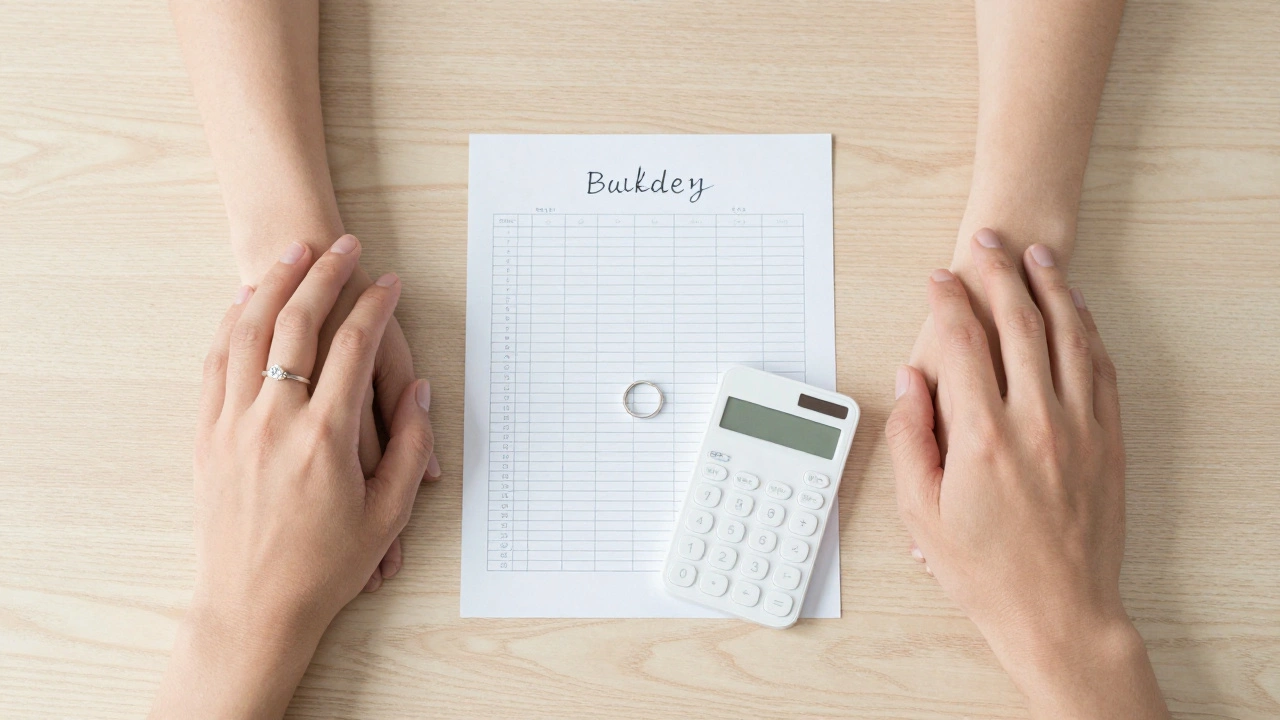
Next Steps for Your Budget
If you're currently in the 'planning' phase, your first move should be a budget audit. Look at your combined savings and decide how much you can realistically spend without affecting your ability to pay for the venue, catering, or a down payment on a home. Once you have a hard number, research Certified Gemologists or reputable jewelers to understand what that budget gets you in terms of carat weight and clarity.
For those who are undecided on the payment method, try a 'trial' conversation about other wedding costs. Who pays for the dress? Who pays for the invitations? Usually, the pattern you establish for the rest of the wedding will give you the answer to who should pay for the ring.