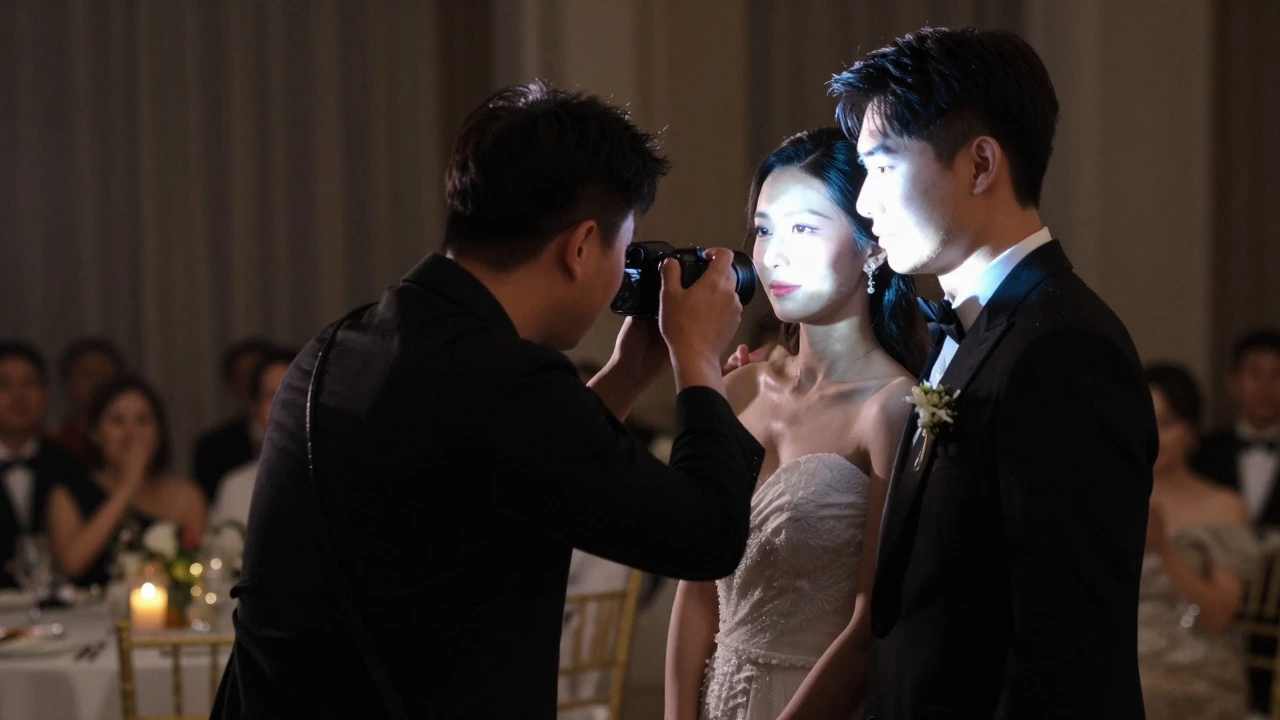
Wedding Photographer Attire Analyzer
Lighting Impact
Visual Distraction
Video Quality
Select a color and click Analyze to see how it impacts your wedding photos.
You’ve noticed it at every reception you’ve attended. While guests are in pastels, bright suits, or floral dresses, the person behind the camera is always dressed head-to-toe in black. It’s not a coincidence, and it’s certainly not just for style points. If you’re planning your wedding day look, you might be wondering if this is a strict rule you need to follow, or if there’s a practical reason hiding behind that uniform.
For wedding photographers, wearing black clothing serves multiple functional purposes beyond aesthetics, from blending into the background to managing heat under studio lights. Understanding why pros stick to this color palette can help you make better decisions about your own outfit and how you want your photos to look.
The Science of Light and Reflection
The most technical reason photographers wear black has nothing to do with fashion trends and everything to do with physics. When you take a photo, especially indoors or in low-light settings like evening receptions, light bounces around the room. This is called ambient light reflection.
If a photographer is wearing a white shirt, that fabric acts like a small reflector. It bounces cool, white light back onto the couple’s faces. This creates unwanted highlights and changes the color balance of the skin tones. Imagine taking a selfie with a bright white wall behind you; your face looks washed out. Now imagine the photographer standing next to you in white-it’s the same effect, but on a larger scale and harder to fix in post-production.
Black absorbs light rather than reflecting it. By wearing dark colors, the photographer becomes optically invisible in terms of lighting influence. They don’t cast colored reflections on the bride’s dress or the groom’s suit. This ensures that the lighting setup-whether natural window light or expensive strobes-is hitting the subjects exactly as intended, without interference from the shooter’s clothing.
| Clothing Color | Light Behavior | Effect on Subject | Post-Production Difficulty |
|---|---|---|---|
| White / Bright Pastels | Reflects light | Causes unwanted highlights, alters skin tone | High (requires masking) |
| Red / Orange | Reflects warm color | Creates red/orange cast on skin | Very High (color correction needed) |
| Black / Dark Navy | Absorbs light | No impact on subject lighting | Low (none required) |
Blending Into the Background
Wedding photography is often described as documentary-style storytelling. The goal is to capture candid moments-the tearful hug between parents, the first dance, the laughter during speeches-without the photographer becoming part of the scene. If the photographer stands out visually, they distract guests and subjects alike.
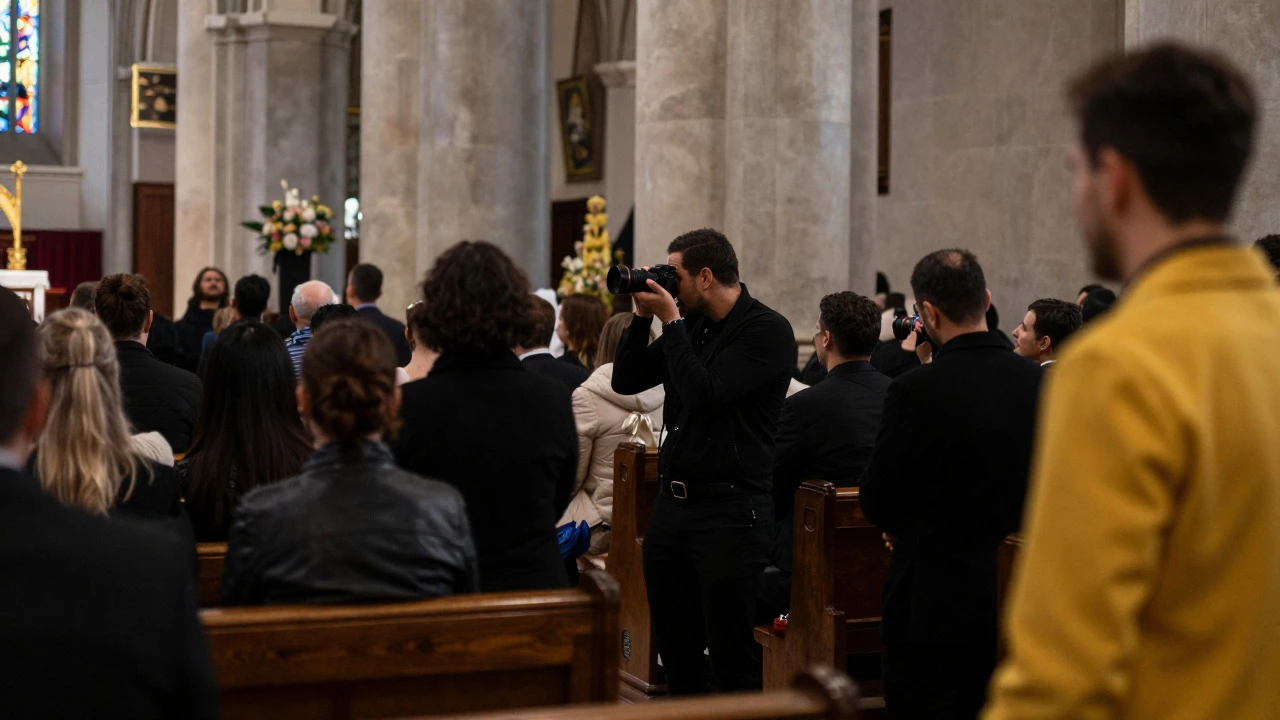
Think about a safari guide wearing khaki. They blend into the environment so animals don’t flee. Similarly, a photographer in black blends into shadows, corners, and darker areas of venues. In crowded reception halls, where space is tight, a bulky camera rig needs to move silently and invisibly. A bright yellow jacket draws the eye immediately. Black recedes. It allows the photographer to hover near the action without pulling focus away from the couple.
This is especially critical during ceremonies. Many churches and historic venues have strict rules about movement. A photographer who looks like part of the decor is less likely to cause a stir among conservative guests or officiants. You want the memory of the vow exchange, not the memory of the person in neon green documenting it.
Professionalism and Visual Hierarchy
There’s also a psychological component. Black is universally associated with authority, elegance, and professionalism. When you hire a vendor for your wedding, you’re paying for expertise. Dressing in sharp, dark attire signals that the photographer takes their job seriously. It sets them apart from guests, making it clear who is working and who is celebrating.
Consider the visual hierarchy of a photograph. The bride and groom are the focal points. Everything else should support them. If the photographer appears in a mirror reflection, a wide-angle shot, or an accidental inclusion in a group photo, their dark clothing ensures they remain secondary. A bright pattern or loud color competes for attention. Black keeps the viewer’s eye on the subjects, not the shooter.
In formal portraits, such as family formals, the photographer often steps out of frame entirely. But when they do appear-perhaps directing a large group-their neutral attire doesn’t clash with diverse guest outfits. It’s a safe, cohesive choice that works with any wedding theme, from rustic barns to black-tie galas.
Practical Benefits: Stains, Heat, and Durability
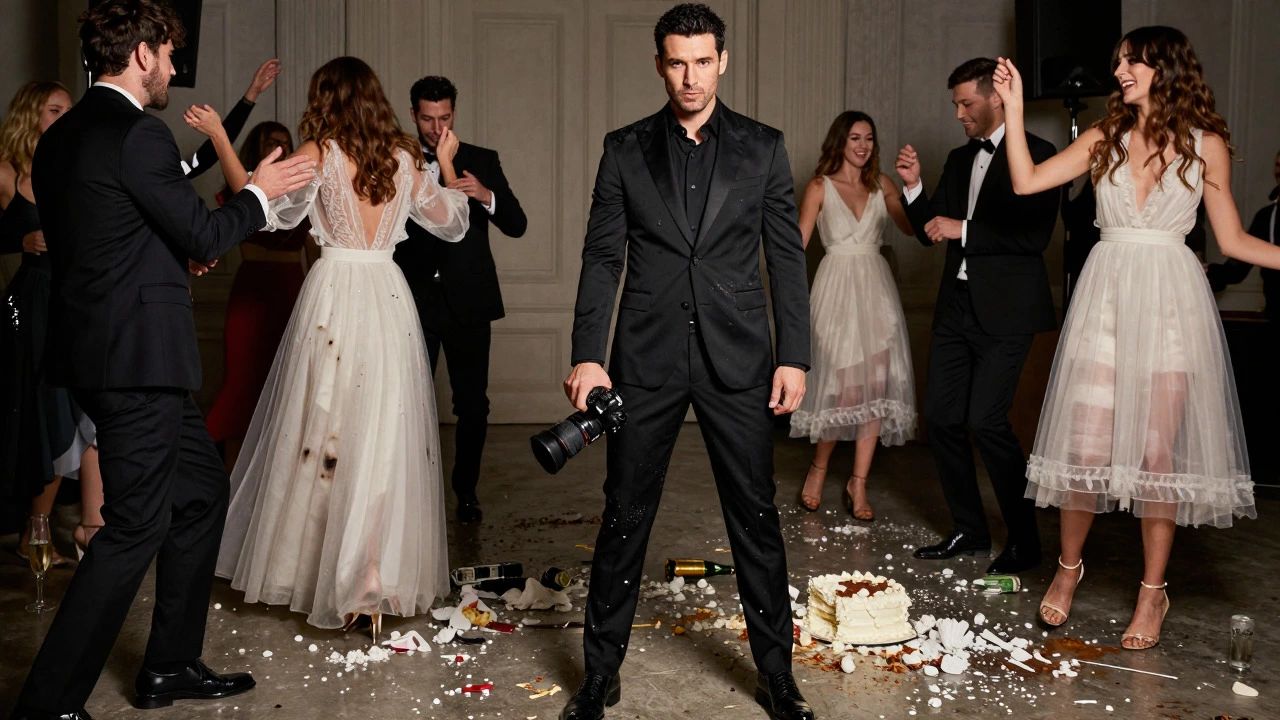
Let’s talk reality. Weddings are messy. Champagne spills happen. Cake gets thrown. Rain turns grass into mud. Black clothing hides stains far better than lighter colors. A splash of red wine on a navy blazer is barely noticeable. On a beige linen suit? It’s a disaster.
Heat management is another factor. While black absorbs heat from the sun, indoor venues are often air-conditioned. More importantly, photographers carry heavy gear-cameras, lenses, flashes-that generate warmth. Dark fabrics tend to be made from durable, wrinkle-resistant materials like wool blends or technical synthetics, which handle sweat and friction better than delicate silks or cottons that guests might wear.
Durability matters because photographers move constantly. They kneel, crouch, climb stairs, and navigate uneven terrain. A sturdy black outfit withstands this physical demand without looking rumpled or worn out by the end of the night. Guests’ clothes are designed for sitting and dancing; photographers’ clothes are designed for labor.
Exceptions and Modern Trends
Does every photographer have to wear black? Not strictly. Some modern shooters opt for dark gray, charcoal, or even deep burgundy to add subtle personality while maintaining functionality. The key is avoiding brightness and patterns. Stripes, checks, or logos create moiré effects in video and digital images-a wavy distortion that ruins footage.
In outdoor daytime weddings, some photographers choose lighter dark tones like olive green or slate blue to avoid overheating. However, these are still muted, non-reflective shades. The core principle remains: minimize visual distraction and optical interference.
As a couple, you can request specific attire if it aligns with your vision. Maybe you want your photographer to match the groomsmen’s vests. Just ensure the color is dark enough to absorb light and simple enough to avoid distractions. Communication is key. Most professionals are happy to adapt as long as it doesn’t compromise image quality.
What Should You Wear as a Couple?
While your photographer wears black to disappear, you want to stand out. But consider how your outfit interacts with theirs. If you’re both in black, you might merge visually in certain shots. That’s why contrast matters. Brides in white or ivory create natural separation. Grooms in navy or gray suits provide depth without clashing.
Avoid wearing the exact same shade of black as your photographer unless you’re aiming for a minimalist, high-fashion aesthetic. Even then, texture differences-like lace versus matte fabric-help distinguish you. The goal is harmony, not uniformity.
Do all wedding photographers wear black?
Most professional wedding photographers wear black or very dark colors for practical reasons related to lighting and visibility. However, some may choose dark gray, navy, or other muted tones depending on personal preference or venue requirements. The key is avoiding bright or reflective colors.
Can I ask my photographer to wear a different color?
Yes, you can request a change, but keep it dark and solid-colored. Avoid whites, pastels, or busy patterns. Discuss this early in your contract negotiations to ensure they have appropriate attire ready. Remember, the primary concern is minimizing light reflection and visual distraction.
Why shouldn't photographers wear white?
White reflects significant amounts of light, which can alter the exposure and color balance of your photos. It creates unwanted highlights on skin tones and competes with the bride's dress for attention. Additionally, white shows dirt and stains easily, which is problematic during active shooting days.
Is wearing black mandatory for second shooters?
While not legally mandatory, it’s highly recommended for consistency. Second shooters work closely with the lead photographer, and matching attire helps maintain a unified professional presence. It also prevents confusion among guests about who is staff and who is attending.
How does clothing affect video quality?
Clothing with fine patterns like stripes or checks can cause moiré effects in video-a distracting wavy pattern caused by sensor interference. Solid dark colors eliminate this risk. Additionally, noisy fabrics (like crisp cotton) can pick up sound on sensitive microphones, so smooth, quiet materials are preferred.