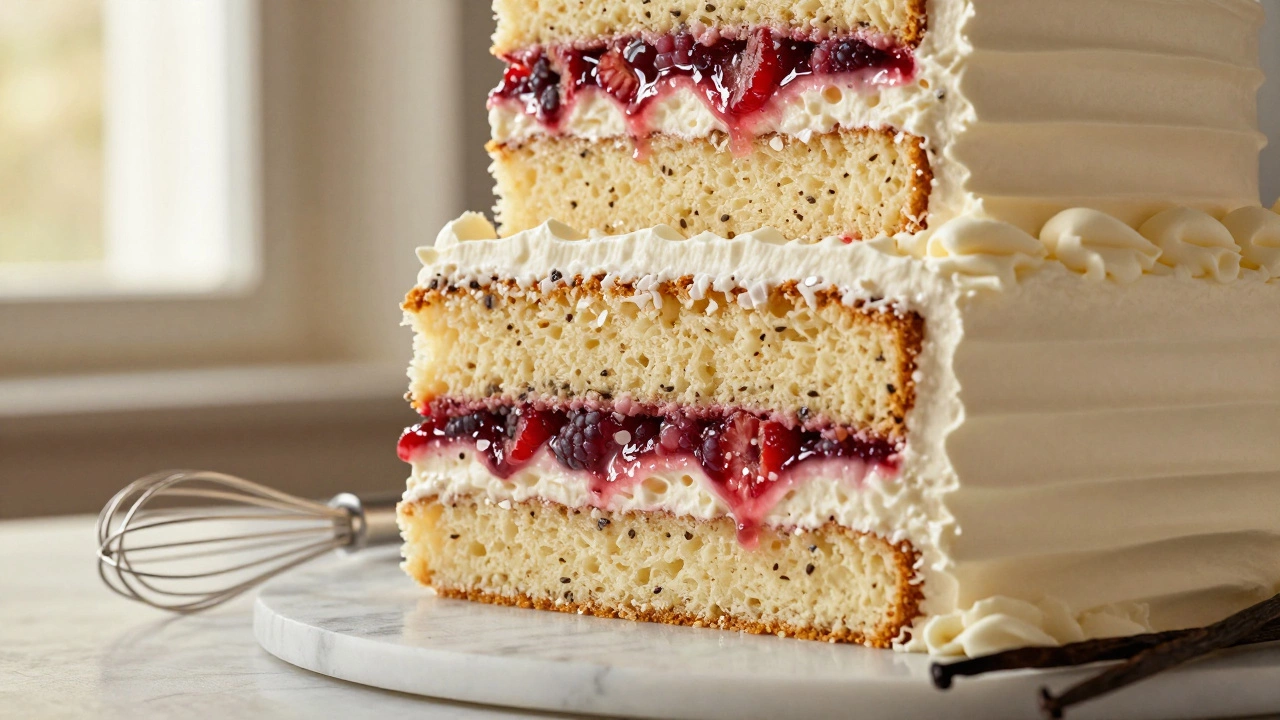
Wedding Cake Buttercream Calculator
How Your Buttercream Makes the Difference
Discover why wedding cakes taste distinct from regular cakes using the key differences explained in the article.
Buttercream Selection
Ingredient Comparison
| Ingredient | Regular Cake | Wedding Cake |
|---|---|---|
| Butter | Standard butter (80% fat) | European-style butter (82% fat) |
| Flavoring | Imitation vanilla extract | Real vanilla beans (hand-scraped) |
| Alcohol | None | Rum, brandy or champagne |
| Texture | Thick and sweet | Light, silky, less cloying |
| Technique | Quick mixing | Reverse creaming method |
Flavor & Texture Simulation
Select your preferences to see how they affect the final result:
Tasting Experience
Your Buttercream Profile
Flavor Profile
This buttercream will have a rich, creamy taste with subtle hints of vanilla and butter, characteristic of professional wedding cakes.
Texture
The texture will be light, silky, and melt-in-your-mouth rather than cloyingly sweet or heavy.
Key Ingredients
Ever taken a bite of a wedding cake and thought, why does this taste nothing like my birthday cake? You’re not imagining it. Wedding cakes don’t just look different-they taste different too. And it’s not just because they’re fancier. There’s a real, measurable reason behind the flavor gap.
It Starts With the Recipe
Regular cakes-like the ones you bake on a Sunday or buy at the grocery store-are designed for speed and affordability. They use simple ingredients: all-purpose flour, granulated sugar, vegetable oil, and maybe a packet of cake mix. The goal? Quick, sweet, and soft. That’s it. Wedding cakes are built differently. Professional bakers use high-ratio cakes, which means the sugar and liquid content is carefully balanced with flour to hold up under multiple tiers. That ratio changes how the crumb forms. More sugar means more moisture retention, but also a denser texture. The flour is often cake flour, not all-purpose. Cake flour has less protein, so it creates a finer, more delicate crumb. That’s why wedding cakes feel silkier in your mouth.Butter, Not Oil
Here’s where the biggest flavor shift happens: butter. Most home bakers use oil because it’s cheaper and keeps cakes moist longer. But professional wedding cake makers use real, unsalted European-style butter-sometimes with 82% fat content. Butter has flavor compounds oil simply doesn’t. It adds a rich, creamy depth that lingers. You taste it in the first bite, and you notice it’s gone when you eat a store-bought vanilla cake later. Some bakers even age their butter for 48 hours before using it. Sounds strange? It’s not. Cold butter holds air better during creaming, which leads to a lighter texture. But more importantly, aging lets the butter’s natural dairy notes develop. That’s why a well-made wedding cake tastes like real buttercream, not sweetened grease.Flavoring Isn’t Just Vanilla Extract
Regular cakes rely on vanilla extract-often imitation. Wedding cakes use real vanilla beans, scraped by hand. Some bakers steep the pods in cream or alcohol for weeks to pull out every ounce of flavor. Others use vanilla paste, which has real seeds suspended in syrup. You can see them. You can taste them. And it doesn’t stop there. Wedding cakes often feature layered flavors: a hint of orange zest in the sponge, a touch of cardamom in the buttercream, or bourbon-soaked cherries tucked between layers. These aren’t gimmicks. They’re intentional. A single-layer birthday cake doesn’t need complexity. A three-tier wedding cake needs balance. Each layer has to stand on its own but still harmonize with the others.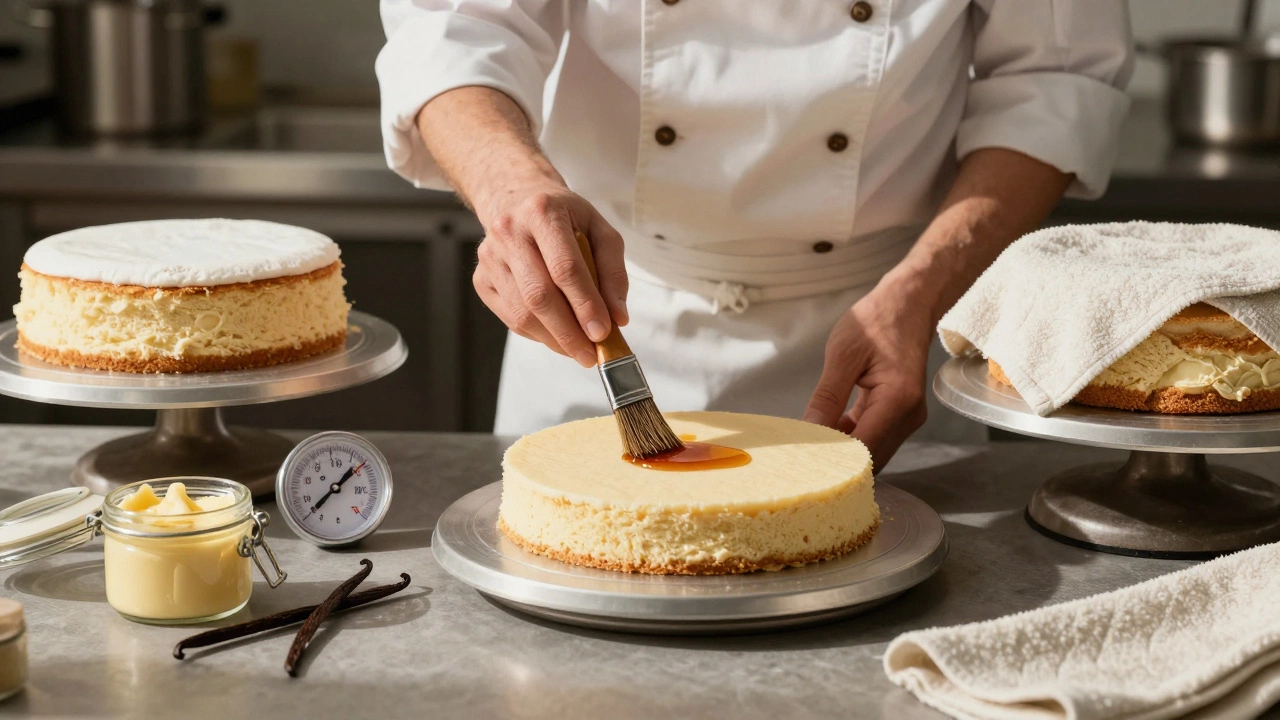
Alcohol Is a Secret Ingredient
You might be surprised, but alcohol is common in wedding cakes. Not to get guests drunk, but to enhance flavor and preserve moisture. A brush of rum, brandy, or even champagne on each layer before frosting helps the cake stay tender for days. Alcohol evaporates during baking, but it carries flavor compounds deep into the crumb. It also prevents staleness. That’s why a wedding cake can sit out for 48 hours and still taste fresh, while your leftover birthday cake turns dry by Tuesday. Some bakers even soak fruit in alcohol for months before using it in fruitcakes. That’s not tradition for show-it’s chemistry. The alcohol breaks down the fruit’s fibers, making them tender and letting their flavor bloom.Frosting Is the Real Game-Changer
Regular cakes use whipped cream or store-bought frosting. Wedding cakes use Swiss or Italian meringue buttercream. These aren’t just sweeter-they’re more complex. They’re made by cooking sugar syrup to a precise temperature (118°C for Swiss, 121°C for Italian), then whipping it into egg whites before adding butter. The result? A frosting that’s light, silky, and less cloying than American buttercream. American buttercream is just butter and powdered sugar. It’s thick, sweet, and can taste like sugar paste. Swiss meringue buttercream has a clean sweetness. It melts on the tongue. You taste the butter, the vanilla, the salt-not just sugar. That’s why people say wedding cake frosting doesn’t overwhelm the palate.It’s About Time and Technique
Wedding cakes take time. Real time. A cake might be baked on Monday, chilled for 24 hours, then filled and crumb-coated on Tuesday. It’s refrigerated again. Then the final frosting and decorations go on Wednesday. That’s not because the baker is slow-it’s because chilling firms up the cake, making it easier to carve, level, and frost without crumbling. It also lets the flavors meld. Think of it like a stew. The longer it sits, the better it tastes. The same goes for cake. The sugar, butter, and flavorings have time to settle into the crumb. That’s why a wedding cake baked two days before the event often tastes better than one baked the morning of.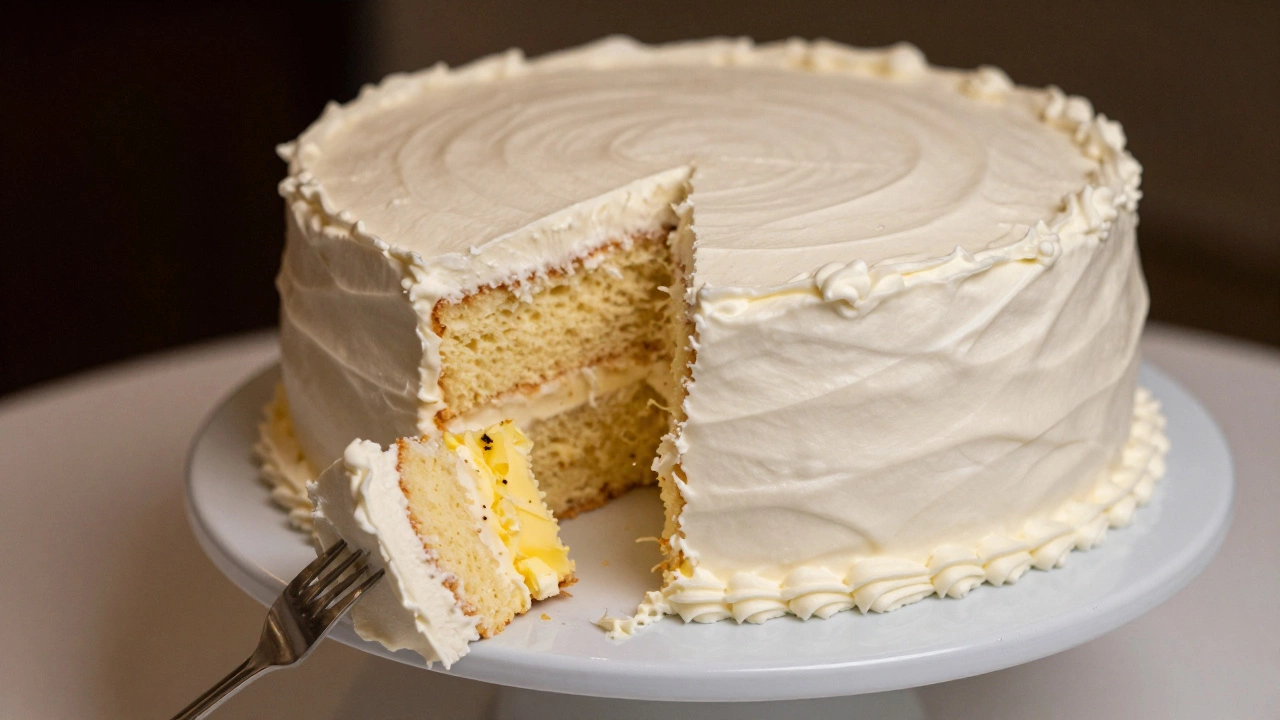
Texture Is Everything
You don’t just taste a wedding cake-you feel it. The crumb is finer, denser, and more cohesive. That’s because of the mixing method. Professional bakers use the reverse creaming method: flour is mixed with butter first, then liquids are added slowly. This limits gluten development. The result? A cake that doesn’t get gummy or chewy. It’s tender, almost melt-in-your-mouth. Compare that to a boxed cake mix, where you dump everything in and mix until smooth. That overmixing develops gluten. You get a spongy, rubbery texture. Wedding cakes avoid that. They’re engineered for elegance, not convenience.Why You Won’t Find This at the Supermarket
Supermarket cakes are made to last on shelves for weeks. They contain preservatives, emulsifiers, and artificial flavors. They’re baked in bulk, cooled fast, and packaged immediately. No time for flavor development. No room for butter quality. No patience for aging ingredients. Wedding cakes are the opposite. They’re made in small batches, with attention to each step. The baker tastes the batter. They adjust the salt. They test the frosting consistency. They know if the vanilla is from Madagascar or Tahiti. That level of detail doesn’t happen in a factory.It’s Not Just About Taste-It’s About Memory
People remember wedding cake because it’s part of a moment. But the reason they remember it? The taste. That buttery richness. The subtle spice. The way the frosting doesn’t stick to your teeth. It’s not magic. It’s craftsmanship. It’s science. It’s time. If you’ve ever had a wedding cake that felt like a revelation, now you know why. It’s not because it’s expensive. It’s because it was made with intention-every layer, every ingredient, every hour of waiting.That’s the difference.
Is wedding cake always more expensive because of the taste?
No. The price reflects labor, time, and materials-not just flavor. A wedding cake takes 15-30 hours to make, from baking to decorating. That’s full-time work for a day or two. The ingredients are higher quality, but the real cost is expertise. You’re paying for someone who knows how to balance flavors, stabilize tiers, and make it look flawless under lighting and heat.
Can I make a wedding cake taste like a regular cake?
Yes, but you’ll lose what makes it special. If you use boxed mix, oil, and store-bought frosting, you’ll get something sweet and soft-but it won’t have the depth, texture, or longevity of a professional cake. For a wedding, that’s a trade-off. Some couples prefer simplicity. Others want the experience. Neither is wrong-it’s just different.
Why do some wedding cakes taste dry?
Dryness usually comes from poor baking technique. Overbaking, skipping the alcohol soak, or using the wrong flour can all lead to a crumb that’s too tight. Even the best recipe fails if the oven temperature is off by 10°C. That’s why experienced bakers use thermometers and bake one cake at a time. If your cake is dry, it’s not the flavor-it’s the execution.
Do all wedding cakes use real butter?
Most do, but not all. Budget-conscious bakers sometimes use high-quality margarine or shortening blends to cut costs. These can mimic butter’s texture but lack its flavor. Ask your baker what they use. If they hesitate or say "it’s the same," they’re probably not using real butter. Real butter has a distinct smell and taste-you’ll know the difference.
What’s the best flavor for a wedding cake?
There’s no single best flavor-it’s about what you love. Vanilla bean with raspberry filling is classic. Chocolate with sea salt caramel is rich and modern. Lemon elderflower is light and fresh. The key is balance. Avoid overly sweet or artificial flavors. Go for something that feels grown-up, not like a birthday party. Taste tests are essential. Don’t pick a flavor based on what’s popular-pick what makes your mouth water.
If you're choosing a wedding cake, don’t just look at the design. Ask about the recipe. Ask about the butter. Ask how long the cake will rest before serving. The best cakes aren’t the ones with the most flowers-they’re the ones made with patience.