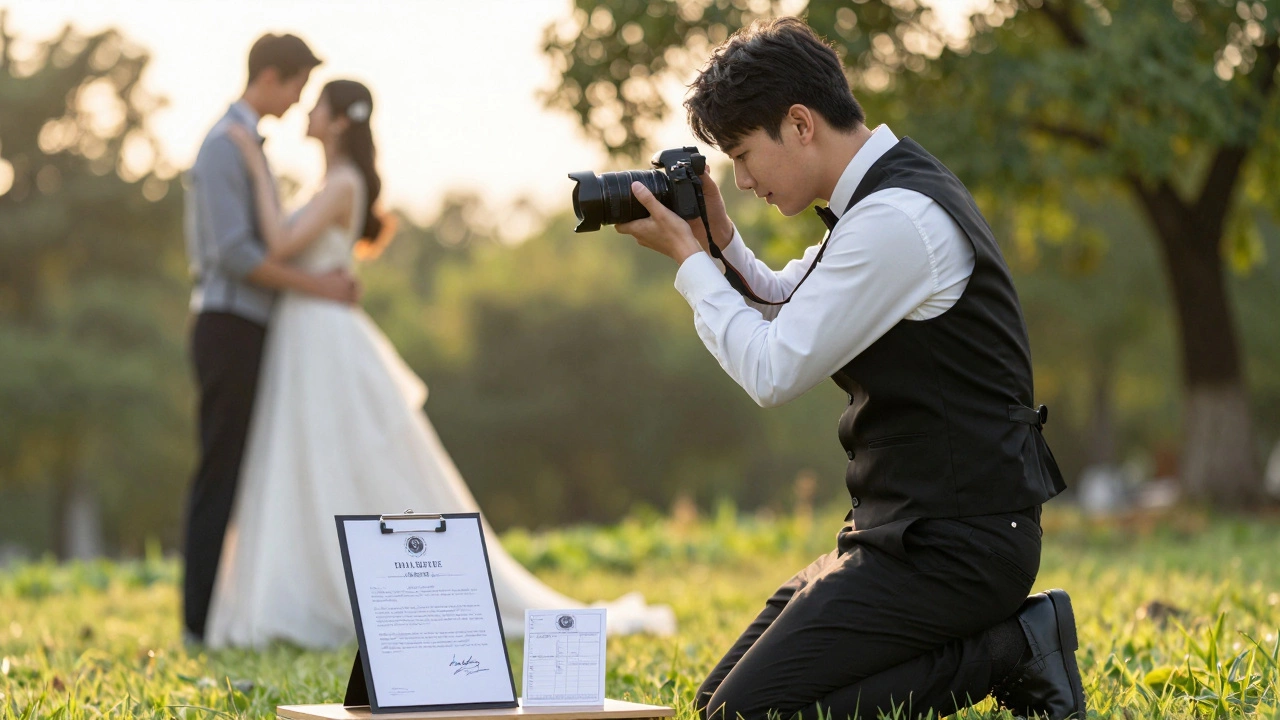
Wedding Photographer Deposit Calculator
How Much Should You Pay?
Use this calculator to determine standard deposit amounts based on industry norms discussed in the article.
Your Payment Breakdown
Deposit: $0
Final Payment: $0
Final payment due approximately 30 days before wedding
Important Notes
• 92% of photographers require a deposit (2023 PPA survey)
• Standard deposit range: 30%-50% of total cost
• Avoid photographers asking for 100% upfront
• Always get a written contract before paying
It’s completely normal to pay a wedding photographer before your big day. In fact, most professional photographers require a deposit to secure your date-and for good reason. Wedding photography isn’t like ordering coffee. It’s a full-day commitment, often involving months of preparation, travel, editing, and emotional labor. When you book a photographer, you’re not just buying photos-you’re reserving their time, energy, and expertise on one of the most important days of your life.
Why Do Photographers Ask for Upfront Payments?
Think of it like booking a flight or reserving a hotel room. You don’t wait until you land to pay. Photographers lock in your date on their calendar, turning down other clients who might want that same day. That’s lost income if you cancel last minute. A deposit protects them from financial risk.
Most photographers ask for 30% to 50% of the total fee upfront. That’s standard across the industry. It’s not a trick. It’s a business practice. A 2023 survey by the Professional Photographers of America found that 92% of wedding photographers require a deposit, with the average amount being 40%. That number hasn’t changed much in the last decade.
Without a deposit, photographers can’t plan. They need to know if they’ll be shooting in the rain or snow. They need to scout locations, coordinate with vendors, and even schedule their own assistants. If you cancel two weeks before the wedding, they can’t just fill that slot. Weddings aren’t like restaurant tables-you can’t turn them over in an hour.
What Should a Deposit Cover?
Your deposit isn’t just a handshake. It’s part of a legal contract. A solid contract will clearly state:
- How much the deposit is
- When the final payment is due (usually 30 days before the wedding)
- Whether the deposit is refundable
- What happens if you reschedule or cancel
Most photographers make deposits non-refundable. That doesn’t mean they’re being harsh-it means they’re protecting their livelihood. If you cancel, they lose the day. But many will let you reschedule within 12 months if you give enough notice. That’s fair.
Some photographers offer payment plans. You might pay 30% upfront, 30% at 90 days, and the final 40% two weeks before the wedding. That’s common with higher-end packages. Always ask. It’s not pushy to request flexibility.
Red Flags to Watch Out For
Not all photographers are trustworthy. Here’s what to avoid:
- Someone who asks for 100% upfront. That’s a warning sign. Even top photographers usually leave a final balance.
- No written contract. Verbal promises don’t hold up if something goes wrong.
- Payment only via cash or Venmo with no receipt. Always use a traceable method-credit card, PayPal, or bank transfer.
- No portfolio or client reviews. If they can’t show you real weddings, they’re not established.
Reputable photographers will have a website with galleries, testimonials, and a clear contract you can read before paying anything. If they push you to pay without showing proof of work, walk away.

What If You Can’t Afford the Deposit?
It’s okay to be on a budget. But if you can’t afford the deposit, you might not be ready to book yet. Photography is one of the top three wedding expenses-right after the venue and catering. If you’re struggling with the deposit, consider:
- Choosing a shorter package (6 hours instead of 10)
- Booking a weekday or off-season wedding (often 20-30% cheaper)
- Asking about payment plans
- Waiting until next year if your budget doesn’t allow it
Don’t settle for someone who seems cheap. You’ll regret it when you can’t find your wedding photos a year later. I’ve seen too many couples who saved $500 upfront and ended up with blurry, poorly lit images and no album. That’s not a win.
When Is the Final Payment Due?
Most photographers require the final payment 30 days before the wedding. That gives them time to prepare without pressure. If you’re late, they can delay your gallery delivery. That’s standard. Don’t treat it like a bill you can ignore.
Some photographers will hold your photos hostage if you don’t pay. That’s legal if it’s in the contract. You signed it. That’s why reading the contract matters. If they say, “We’ll send you the photos once you pay,” that’s normal. If they say, “We’ll send you a few sneak peeks,” that’s a bonus-not a promise.

What Happens If the Photographer Cancels?
This is rare, but it happens. If your photographer gets sick, has an emergency, or goes out of business, your deposit should be fully refunded. A good contract will include a contingency clause. They should have backup photographers lined up, or they owe you your money back.
If they offer a replacement photographer you don’t like, you’re entitled to a refund. You paid for their style, not just any photographer. That’s not negotiable.
Real Talk: Why This Matters
Wedding photos are the only thing you’ll have from your entire day that lasts forever. Your dress will fade. Your cake will be eaten. Your flowers will die. But your photos? They’re the only tangible memory you’ll pass down to your kids.
That’s why paying upfront isn’t just normal-it’s necessary. It ensures you get the best person for the job, not just the cheapest. It protects you too. If something goes wrong, you have a paper trail. If they disappear, you can dispute the charge. If they deliver magic, you’ve already done your part.
Don’t feel guilty for paying early. You’re not being taken advantage of. You’re being professional. You’re honoring their work. And you’re securing the one thing you can’t recreate: your wedding day.