RSVP Response Card: What It Is, Why It Matters, and How to Use It
When you send out wedding invitations, the RSVP response card, a small card included with invitations to collect guest replies. Also known as a guest response card, it’s not just a formality—it’s the tool that turns guesswork into planning. Without it, you’re flying blind on catering, seating, and even the size of your cake. Most couples get back only 75 to 85% of responses, and that gap? That’s where the real stress starts.
Think of the RSVP response card as the first real conversation you have with your guests. It’s not just asking "Are you coming?"—it’s asking "How many are you bringing?" and "Do you have dietary needs?" and even "Will you be staying overnight?" These details shape your entire day. A well-designed card cuts down on follow-up texts and emails. It tells people exactly what to do, when to do it, and why it matters. And yes, the deadline matters too. Most planners set RSVP deadlines 3 to 4 weeks before the wedding, giving you just enough time to finalize numbers with your vendors.
Related to this are the wedding guest list, the official count of people invited to the wedding, and wedding RSVP, the process of collecting and tracking guest confirmations. These aren’t separate tasks—they’re linked. Your RSVP card feeds your guest list. And your guest list drives your budget. If you’re spending €50 per person on food, a 10-person no-show saves you €500. A 10-person no-show you didn’t expect? That’s €500 wasted on unused plates, chairs, and napkins.
Some couples skip the physical card and use digital RSVPs. That works—but not everyone has a smartphone, and not everyone trusts online forms. A printed card feels personal. It’s something guests can hold, write on, and mail back. It’s a small gesture that says, "We want you here, and we’re making this easy for you." And when you get those replies back? You’re not just counting heads—you’re building a day that fits your people, not your assumptions.
You’ll find posts here that dig into how many invites actually get returned, what to do when people don’t reply, and how to handle last-minute changes. You’ll see real numbers from real weddings. You’ll learn how to design a card that gets responses—not ones that get tossed in a drawer. And you’ll see how this tiny piece of paper connects to bigger things: your catering budget, your seating chart, even your photographer’s timeline. This isn’t about stationery. It’s about control. About clarity. About making sure your wedding day runs the way you planned it—because you knew who was coming.
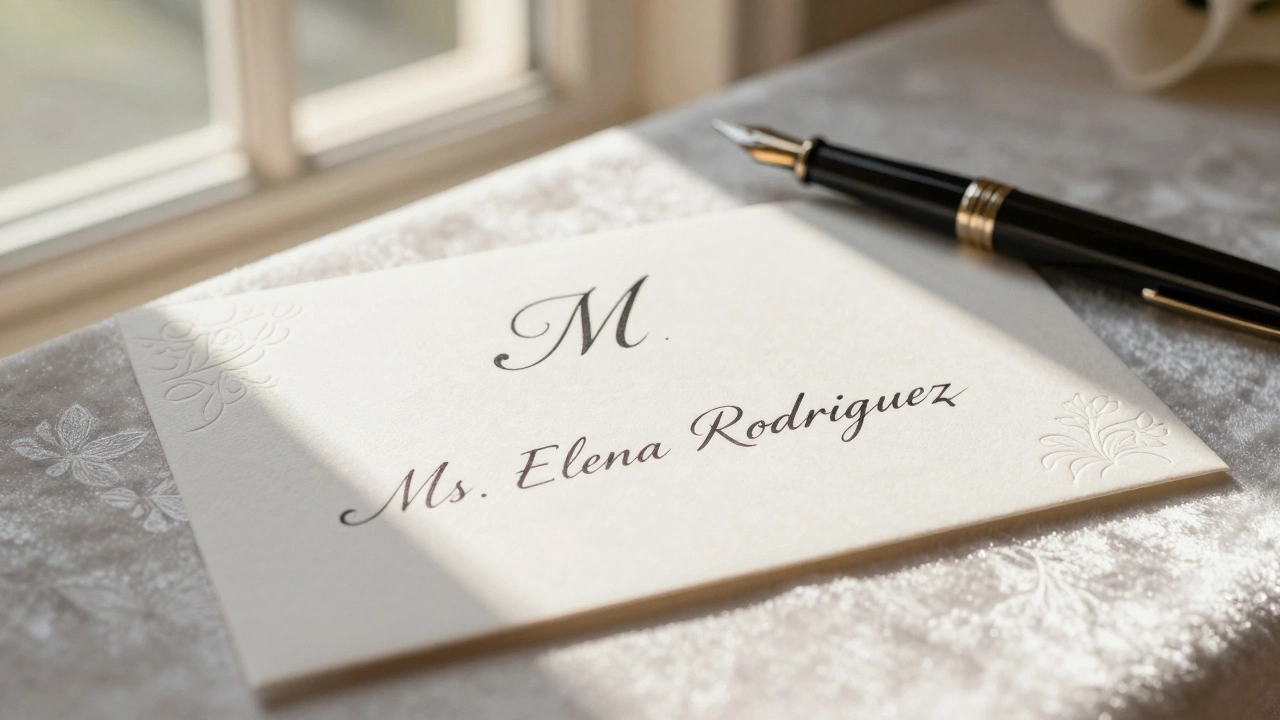
What Does M Mean on an RSVP? Simple Guide to Wedding Response Cards
The 'M' on an RSVP stands for Mr., Mrs., Ms., or Miss - it's a prompt to write your formal title before your name. Learn how to respond correctly without overthinking wedding etiquette.